Inonotus obliquus (Ach. ex Pers.) Pilát / Chaga, popularly known as the chaga mushroom, is a parasitic fungus belonging to the family Hymenochaetaceae. This organism was described by Acharius in 1801, validated by Persoon, and reclassified by Pilát in 1942, and it grows predominantly on birch trees and other hosts in cold-climate regions of the Northern Hemisphere. Its sterile growth, which resembles burnt charcoal, is not the fungus’s fruiting body but rather a sclerotium, a melanin-rich mass of mycelium, and chaga has been used in the traditional medicine of various cultures, especially in Russia and northern European countries, to address a range of health conditions.
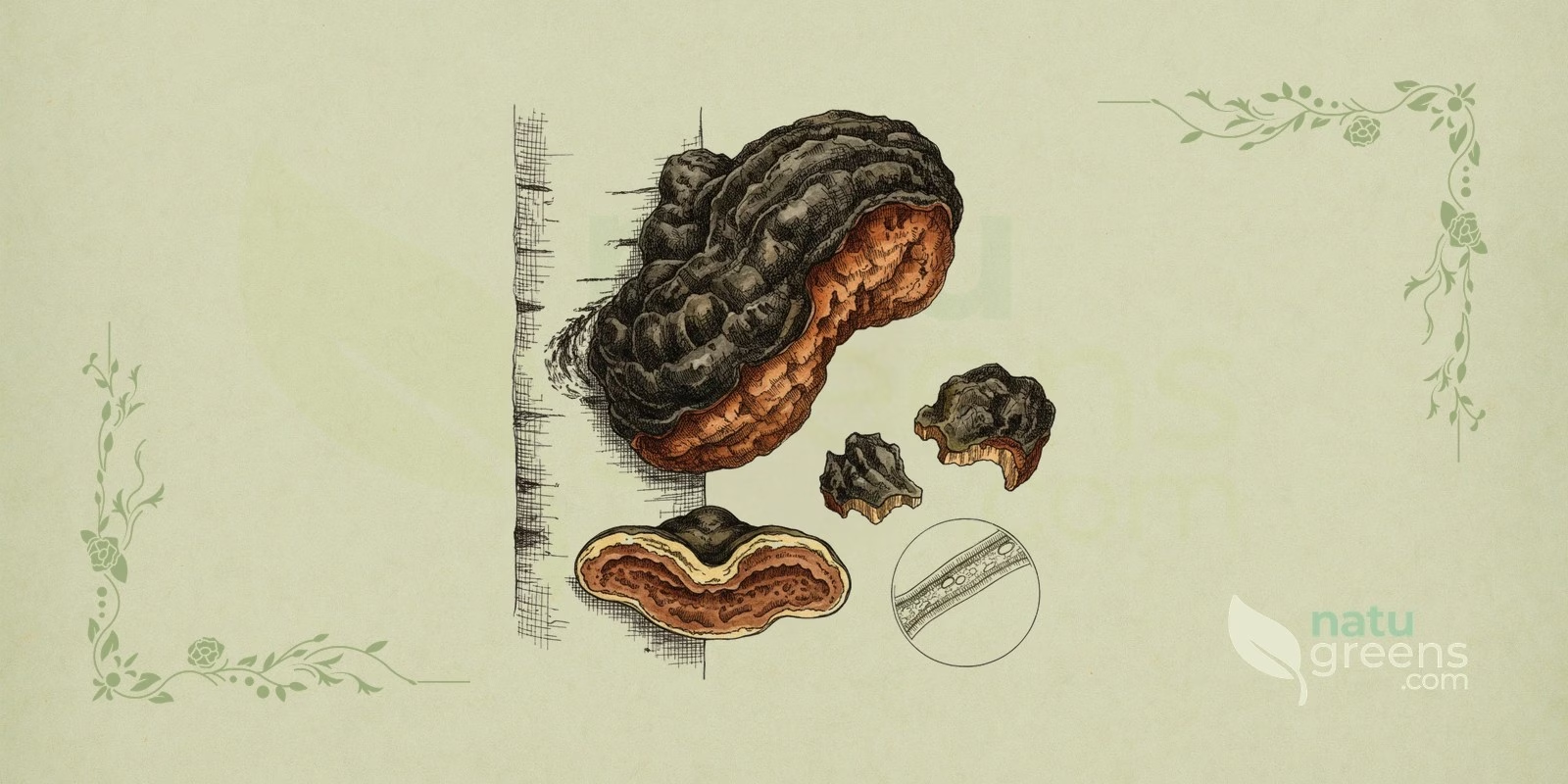
Herbal tradition attributes to chaga properties traditionally associated with relief of gastrointestinal disorders and support in chronic conditions, and its complex phytochemical composition, which includes triterpenoids and polyphenols, is cited as responsible for the antioxidant and anti-inflammatory effects observed in studies. Modern scientific research has been exploring, and in part investigating, some of chaga’s traditional uses, consolidating its reputation as a medicinal fungus of great interest, although the quality and consistency of chaga products available on the market can vary significantly due to inconsistent processing methods and labeling.
Popular and International Names of Chaga
- English: birch canker polypore, black mass, chaga mushroom, cinder conk, clinker polypore, sterile conk trunk rot of birch.
- Spanish: chaga, hongo chaga.
- Portuguese: chaga, cogumelo chaga.
- French: chaga, champignon chaga.
- Italian: chaga, fungo chaga.
- German: Chaga-Pilz, Schiefer Schillerporling.
Botanical Synonyms of Inonotus obliquus
Inonotus obliquus has an extensive botanical synonymy, reflecting its complex taxonomic history and the different interpretations made over time. Among the most notable synonyms is Boletus obliquus Ach. ex Pers. (1801), which represents one of the earliest descriptions of the fungus, along with Polyporus obliquus (Ach. ex Pers.) Fr. (1821) and Poria obliqua (Ach. ex Pers.) P.Karst. (1881), which classified it under different polypore genera. This diversity of synonyms underscores the difficulty of classifying fungi and the evolution of mycological knowledge.
Boletus obliquus Ach. ex Pers. (1801), Fomes obliquus (Ach. ex Pers.) Cooke (1885), Fuscoporia obliqua (Ach. ex Pers.) Aoshima (1951), Mucronoporus obliqua (Ach. ex Pers.) Ellis & Everh. (1889), Phaeoporus obliquus (Ach. ex Pers.) J.Schröt. (1888), Phellinus obliquus (Ach. ex Pers.) Pat. (1900), Physisporus obliquus (Ach. ex Pers.) Chevall. (1826), Polyporus obliquus (Ach. ex Pers.) Fr. (1821), Poria obliqua (Ach. ex Pers.) P.Karst. (1881), Scindalma obliquum (Ach. ex Pers.) Kuntze (1898), Xanthochrous obliquus (Ach. ex Pers.) Bourdot & Galzin (1928).
Botanical Family: Hymenochaetaceae
The family Hymenochaetaceae comprises a diverse group of basidiomycete fungi, characterized by fruiting bodies that vary widely in morphology, from resupinate to pileate forms, and notable for the presence of hymenial setae, microscopic structures important for taxonomic identification. Many members of Hymenochaetaceae are wood decomposers, playing a crucial role in forest ecosystems by recycling nutrients, even though some genera, such as Inonotus, include parasitic species that cause rot in living trees.
Inonotus obliquus, as a member of this family, shares characteristics that set it apart, such as its parasitic habit and the formation of a woody sclerotium, and Hymenochaetaceae is also recognized for producing a wide range of bioactive compounds, including polyphenols and triterpenoids, which have been the subject of intense research due to their potential medicinal applications. The chemical and ecological diversity of this family contributes significantly to fungal biodiversity and to the discovery of new compounds of pharmacological interest.
Parts of Chaga Used
- Mycelium
- Sclerotium (sterile conk)
Ethnobotanical and Traditional Uses
- Consumed as a coffee- or tea-like beverage, with a strong flavor reminiscent of Chinese herbal tea.
- Folk remedy in Russia and northern Europe, traditionally indicated for various ailments, including, according to this tradition, cancer and diabetes.
- Relief of gastrointestinal disorders, such as gastritis and ulcers.
- Support in the treatment of tuberculosis and liver diseases.
- Tinder to keep a fire going, used by the Potawatomi people (called shkitagen).
Therapeutic Properties of Chaga
- Antidiabetic (helps regulate blood sugar levels); traditional use, without established clinical efficacy
- Antifungal (fights infections caused by fungi)
- Anti-inflammatory (effect studied in reducing inflammatory processes in the body)
- Antioxidant (protects cells against damage caused by free radicals)
- Antiproliferative (activity observed in laboratory studies, without clinical proof)
- Antiviral (helps fight viral infections); traditional use, without established clinical efficacy
- Hepatoprotective (protective effect studied on the liver against damage)
- Hypoglycemic (contributes to lowering blood glucose levels); traditional use, without established clinical efficacy
- Immunomodulatory (effect studied on the immune system)
Detailed Phytochemical Profile of Chaga
- Beta-D-glucans
- Chitin (reticular)
- Melanin
- Oxalates
- Phenolic acids (gallic, protocatechuic, p-hydroxybenzoic)
- Polyphenols
- Triterpenoids (inonotusol A, G, inonotusic acid, lanosterol)
Preparation and Administration Forms of Chaga
- Decoction (hot-water extraction of pieces of the fungus)
- Tea (infusion of fine powder)
Synergy with Other Medicinal Plants
Combination with Adaptogenic Plants
Chaga, recognized in tradition for its adaptogenic and immunomodulatory properties, is sometimes combined with other plants of a similar profile. Pairing it with Rhodiola rosea or Eleutherococcus senticosus (Siberian ginseng) is traditionally used to support the body’s ability to cope with physical and mental stress, since these plants are said, according to this tradition, to work together to favor the balance of the nervous and endocrine systems. Chaga, with its beta-glucans and triterpenoids, would complement the glycosides and eleutherosides of these adaptogens, reinforcing, from the traditional perspective, the individual’s overall resilience and vitality.
Antioxidant and Anti-Inflammatory Support
For more comprehensive antioxidant and anti-inflammatory support, chaga is sometimes combined with plants rich in polyphenols and flavonoids. Turmeric (Curcuma longa), with its curcumin, and ginger (Zingiber officinale), with its gingerols, are cited as traditional partners, since the synergy between chaga’s compounds and those of these roots is described as capable of amplifying free-radical neutralization and the modulation of inflammatory pathways. This combination is traditionally associated with chronic conditions involving oxidative stress and inflammation, without replacing specialized medical follow-up.
Recipes and Usage Protocols of Chaga
Daily Chaga Infusion
Ingredients: a small amount of chaga powder or small pieces, filtered water.
Preparation: heat the water until nearly boiling (about 80 to 90°C), add the chaga powder or pieces, and let it steep for 15 to 30 minutes; for a stronger decoction, simmer the chaga pieces over low heat for 1 to 2 hours, strain, and drink hot or cold, adding honey or lemon to taste if desired. This infusion is traditionally used day to day as a companion to general well-being and immune function, but due to chaga’s high oxalate concentration and the risk of kidney strain with frequent use, the amount and frequency of consumption should be guided by a health professional.
Concentrated Chaga Extract
Ingredients: chaga pieces, filtered water.
Preparation: place the chaga pieces and water in a pot, bring to a boil, then reduce the heat and let simmer for 2 to 4 hours, or until the volume of water reduces by half; strain and store the concentrated liquid in a sterilized glass container in the refrigerator. Because this is a more concentrated preparation in active compounds and in oxalates, its use should be occasional and guided by a health professional, who will indicate the appropriate amount and frequency for each case.
The preparations above follow traditional records and do not replace professional guidance. Before any internal use, check the contraindications and interactions described in this article.
Associated Therapies
Herbal Medicine
In herbal medicine, chaga is valued for properties traditionally described as adaptogenic, antioxidant, and immunomodulatory, and it is frequently used as a companion to the immune system, to stress resistance, and to gastrointestinal health. Standardized chaga extracts are used as complementary support in chronic inflammatory conditions, metabolic disorders, and oncological support, always as adjuncts and never as substitutes for medical treatment. Modern herbal medicine incorporates chaga into wellness protocols, taking into account its composition of polyphenols, triterpenoids, and beta-glucans, with dosage and form of administration individualized to each patient’s needs and combined, when appropriate, with other medicinal plants.
Mycotherapy
Mycotherapy, which focuses on the medicinal use of fungi, recognizes chaga as one of its pillars. Its sclerotium, rich in bioactive compounds, is studied for its capacity to modulate the immune response and for exhibiting, in laboratory studies, antiproliferative effects on tumor cells, without this representing clinical proof in humans. In mycotherapy, chaga is used as a companion to vitality, detoxification, and cellular function, and research in this field has been exploring the mechanisms by which chaga compounds, such as melanin and triterpenes, would contribute to health. The application of chaga in this therapy involves the use of aqueous or alcoholic extracts, aimed at greater bioavailability of its active components as complementary support for various conditions.
Contraindications and Side Effects of Chaga
General Contraindications
Chaga is contraindicated in individuals with known hypersensitivity to fungi or to any of its components. Due to its immunomodulatory properties, it should be used with caution by people with autoimmune diseases, such as lupus or rheumatoid arthritis, since it may theoretically stimulate the immune system in an undesirable way, and patients who have undergone organ transplants or who take immunosuppressant medications should avoid chaga altogether. Pregnant and breastfeeding women should refrain from using chaga due to the absence of conclusive studies on its safety in these groups, and prudence always advises consulting a physician before starting any supplementation with chaga.
Common Side Effects
Excessive consumption of chaga, especially in concentrated forms, can lead to side effects because of its high oxalate concentration. Oxalate nephropathy, a serious kidney condition, has been reported in cases of prolonged ingestion and high doses, and symptoms such as nausea, diarrhea, and abdominal discomfort can occur in sensitive individuals. It is crucial to respect recommended dosages and monitor kidney function, especially in people with a history of kidney problems, and interaction with anticoagulant medications is also a concern, since chaga may potentiate their effects, increasing the risk of bleeding.
Drug Interactions
Chaga can interact with various medications, altering their effectiveness or increasing the risk of adverse effects. Due to its hypoglycemic properties, it may potentiate the effect of diabetes medications, leading to hypoglycemia, and patients being treated with anticoagulants, such as warfarin, should avoid chaga, as it may increase the risk of bleeding. Chaga may also interfere with immunosuppressant medications, decreasing their effectiveness, so it is essential that patients inform their doctor about chaga use in order to avoid potentially dangerous interactions and adjust medication dosages if necessary.
Historical Notes and Interesting Facts
The Siberian “Diamond of the Forest”
Chaga is revered in Siberia and other northern regions as the “Diamond of the Forest” or the “King of Herbs,” a designation that reflects its importance in traditional medicine and its rarity. Indigenous Siberian peoples used chaga not only for medicinal purposes but also in spiritual rituals, attributing to it properties of purification and longevity, and its ability to grow in extreme climate conditions and to draw nutrients from birch trees contributed to its mystique and to the belief in its healing qualities. The history of chaga is deeply intertwined with the culture and survival of the communities that inhabit the boreal forests.
Use in World War II
During World War II, chaga gained notoriety in Finland as a coffee substitute, since, amid the shortage of imported goods, Finns turned to this fungus, abundant in their forests, to create a hot, stimulating beverage. Although its flavor is quite different from coffee, chaga offered a viable, and, more importantly, accessible alternative, and this period highlighted chaga’s versatility and its ability to be worked into the daily diet in times of need. Its use as a coffee substitute stands as a testament to human ingenuity and to the adaptability of natural resources in times of crisis.
Frequently Asked Questions about Chaga
Can Chaga Tea Help with Immunity?
Chaga tea is often associated with immune support. Chaga contains beta-glucans, polysaccharides known for their immunomodulatory properties, which may help balance the immune response, favoring the body’s defenses against pathogens. Preliminary studies suggest that chaga may stimulate the production of immune cells and cytokines relevant to the immune response, but, although promising, more research is still needed to fully confirm these effects in humans. Regular, moderate consumption of the tea can be a useful companion to maintaining a healthy immune system, without replacing medical guidance.
What Is the Best Way to Prepare Chaga Tea?
The best way to prepare chaga tea depends on the desired strength and personal preference. For a milder infusion, chaga powder or small pieces can be used, letting them sit in hot, not boiling, water for 15 to 30 minutes, while for a more potent extract a decoction is recommended, simmering the chaga pieces over low heat for 1 to 2 hours, which extracts a greater amount of active compounds. It is important to avoid excessive boiling, since very high temperatures can degrade some heat-sensitive phytochemicals, and the choice between infusion and decoction should take into account the intended use and individual tolerance for the more intense flavor of the decoction.
Are There Side Effects to Drinking Chaga Tea?
Yes, drinking chaga tea can have side effects, especially at high doses or over prolonged periods. The main concern lies in chaga’s high oxalate concentration, which can lead to the formation of kidney stones and, in rare cases, to oxalate nephropathy, in addition to mild gastrointestinal symptoms, such as nausea and diarrhea, which may also occur. Chaga may also interact with anticoagulant and diabetes medications, potentiating their effects, so it is essential to consult a health professional before starting regular chaga tea consumption, especially in the presence of preexisting medical conditions or the use of other medications.
Is Chaga Safe for Everyone?
No, chaga is not safe for everyone. Individuals with autoimmune diseases, such as lupus or rheumatoid arthritis, should avoid its consumption because of the fungus’s immunomodulatory properties, and people who have undergone organ transplants or who use immunosuppressant medications should also refrain from it. Pregnant and breastfeeding women, as well as children, should not consume chaga due to the lack of safety studies in these groups, and its high oxalate concentration makes it unsuitable for people with a history of kidney stones or other kidney conditions. The safety of chaga use depends on dose, duration, and individual health conditions.
Are Chaga and Other Medicinal Mushrooms Interchangeable?
Not necessarily: although chaga shares compounds such as beta-glucans and triterpenoids with other medicinal mushrooms, such as reishi and cordyceps, each species has its own phytochemical profile and traditional uses. Chaga is particularly associated, in tradition, with immune support and relief of gastrointestinal disorders, while other species are usually indicated for other purposes. For this reason, the choice among them should weigh the intended purpose and, ideally, be guided by a health professional.
What Is the Difference between the Sclerotium and the Fruiting Body of Chaga?
What is harvested and used as chaga is the sclerotium, the dark, hardened, melanin-rich mass that grows on the bark of parasitized birch trees, and not the fungus’s fruiting body, which is the true reproductive structure, normally formed only after the death of the host tree and rarely seen or harvested commercially. This distinction explains why chaga sold as a medicinal product always refers to the sclerotium.
Notice: this content is for informational purposes and does not replace professional medical advice. Consult a physician or herbal practitioner before using medicinal plants, especially during pregnancy, breastfeeding, or alongside medication.
References and Scientific Studies
- PMC2021 Szychowski, K. A., Skóra, B., Pomianek, T., & Gmiński, J. (2021). Inonotus obliquus – from folk medicine to clinical use. Journal of Traditional and Complementary Medicine, 11(1), 1-10. PMC
- PEER2024 Camilleri, E., Blundell, R., Baral, B., Karpinski, T. M., & Aruci, E. (2024). A brief overview of the medicinal and nutraceutical importance of Inonotus obliquus (chaga) mushrooms. Heliyon, 10(1), e23249. ScienceDirect
- PMC2023 Ern, P. T. Y., Quan, T. Y., Yee, F. S., & Yin, A. C. Y. (2023). Therapeutic properties of Inonotus obliquus (Chaga mushroom): A review. Mycology, 14(4), 317-330. PMC
- PMC2025 Wang, Y., Gu, J., Wu, J., et al. (2025). Natural Products and Health Care Functions of Inonotus obliquus. Current Issues in Molecular Biology, 47(4), 269. PubMed