Terminalia arjuna (Roxb. ex DC.) Wight & Arn. / Arjuna, a large deciduous tree of the Combretaceae family, is native to the Indian subcontinent. Recognized for its notable therapeutic properties, Terminalia arjuna has been a pillar of Ayurvedic medicine for centuries. Its traditional applications range from cardiovascular support to the treatment of various health conditions. The bark of the tree is the most widely used part, valued for its bioactive compounds. Modern studies have validated many of its ancestral uses, cementing its importance in global phytotherapy. The plant is an example of India’s rich medicinal biodiversity.
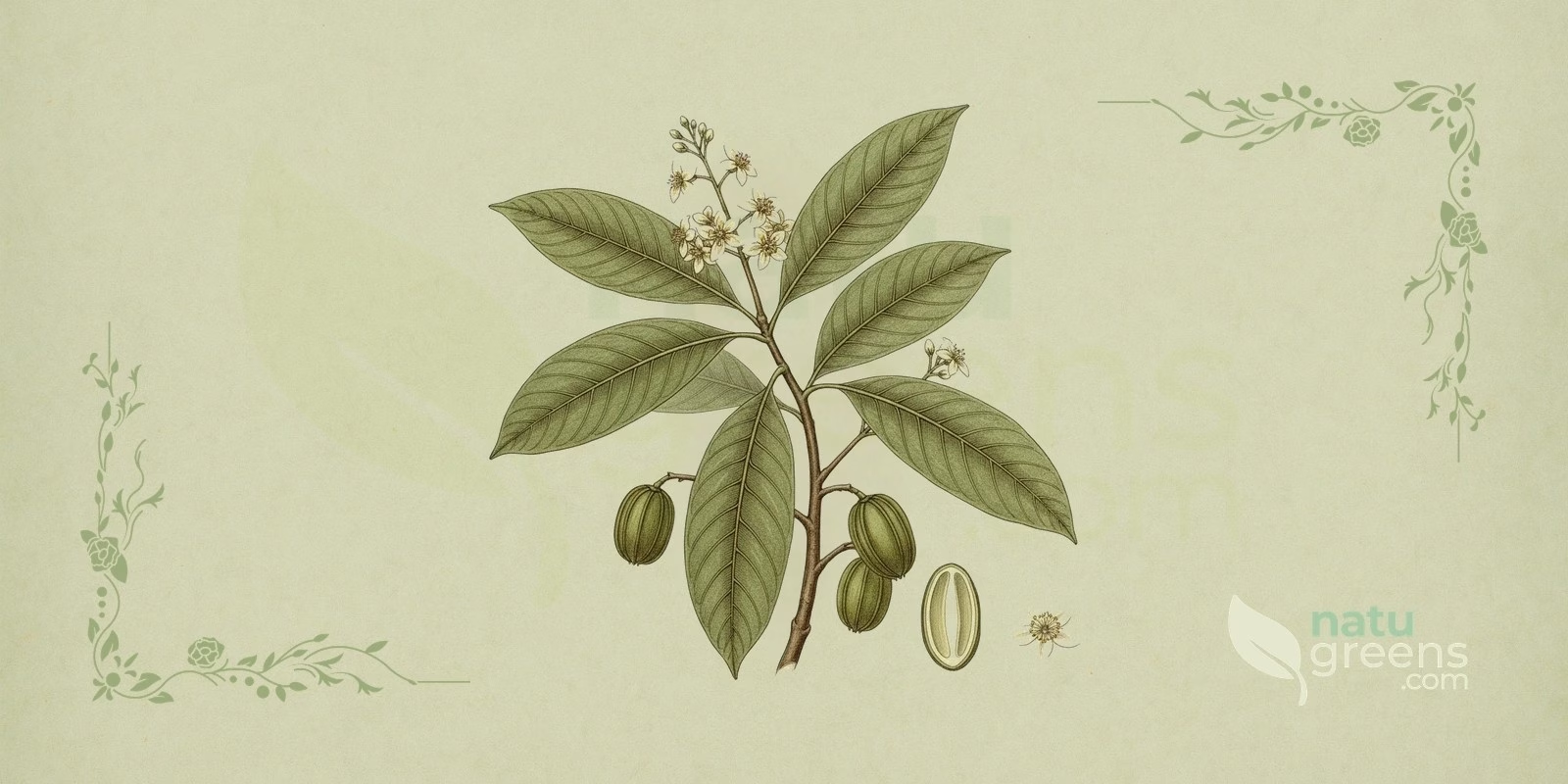
Popular and International Names of Arjuna
- English: arjun tree, arjuna, arjunolic myrobalan, white marudah, white murdh.
- Spanish: arjuna.
- Portuguese: arjuna.
- French: arjan des Indes, arjuna.
- Italian: arjuna.
- German: arjun, arjun-baum, arjuna-rinde.
Botanical Synonyms of Terminalia arjuna
Pentaptera arjuna Roxb. ex DC. is one of the best-known botanical synonyms of Terminalia arjuna. Other designations include Terminalia arjuna (Roxb.) Wight & Arn., Myrobalanus cuneata (B.Heyne ex Roth) Kuntze, Pentaptera angustifolia Roxb., and Pentaptera glabra Roxb. These taxonomic variations reflect the complexity of botanical classification over time and across regions. The current name, Terminalia arjuna (Roxb. ex DC.) Wight & Arn., is widely accepted in the scientific literature and botanical databases.
Botanical Family: Combretaceae
Terminalia arjuna belongs to the Combretaceae family, a family of flowering plants comprising about 500 species distributed across tropical and subtropical regions. This family is known for including trees and shrubs, many of which hold economic and medicinal importance. Species in the Combretaceae family are often characterized by simple leaves, small flowers, and distinctive fruits. The family is rich in secondary compounds, such as tannins and triterpenes, which contribute to the therapeutic properties of many of its plants.
Parts of Arjuna Used
- Bark (mainly from the trunk)
- Fruits
- Leaves
Ethnobotanical and Traditional Uses
- Antioxidant properties
- Improved blood circulation
- Improvement of skin conditions such as eczema, acne, and wounds (due to antimicrobial and anti-inflammatory properties)
- Reduction of cholesterol and blood pressure
- Stress relief
- Support for heart health (cardiotonic, strengthening of the heart muscle, rhythm regulation)
- Treatment of aconite poisoning
- Treatment of heart failure, ischemia, cardiomyopathy, and atherosclerosis
Therapeutic Properties of Arjuna
- Anti-hypertensive (studied effect on blood pressure)
- Anti-inflammatory (studied effect in reducing inflammation)
- Antimicrobial (studied activity against microorganisms)
- Antioxidant (studied activity against free radicals)
- Antithrombotic (studied for preventing clot formation)
- Cardioprotective (studied protective effect on the heart)
- Hypocholesterolemic (studied effect in reducing cholesterol)
- Hypolipidemic (studied effect in reducing blood lipid levels)
- Inotropic (studied effect on the force of heart contraction)
Detailed Phytochemical Profile of Arjuna
- Alkaloids
- Arjunetosides
- Arjunolic acid
- Flavonoids
- Glycosides
- Lactones
- Polyphenols
- Saponins
- Tannins
- Triterpenoids
Preparation and Administration Forms of Arjuna
- Capsules
- Decoction (bark tea)
- Liquid extract
- Powder (from the bark)
- Supplements
Synergy with Other Medicinal Plants
With Ashwagandha (Withania somnifera)
The combination of arjuna with ashwagandha (Withania somnifera) is often used in Ayurvedic medicine to enhance cardioprotective and adaptogenic effects. While arjuna focuses on cardiovascular health, ashwagandha contributes to lower stress and greater overall bodily resilience. This synergy can be beneficial for people seeking comprehensive support for the heart and mental well-being, working toward lower blood pressure and greater cardiovascular resilience.
In Herbal Formulas (Chatuphalathika)
Arjuna is a key component in certain herbal formulas, such as the Ayurvedic recipe Chatuphalathika, which includes Terminalia chebula, Terminalia bellirica, and Terminalia arjuna. This combination has shown synergistic antioxidant activity that may surpass that of each plant on its own. The synergy of these components contributes to more robust protection against oxidative stress, benefiting overall and cardiovascular health.
Recipes and Usage Protocols of Arjuna
Bark Decoction (Arjuna Tea)
To prepare a decoction, add 10 grams of powdered arjuna bark to 2 cups of water. Boil the mixture until it reduces to half a cup. Strain and drink warm. This preparation is traditionally used for heart health. It can be taken once a day.
Bark Powder with Milk or Water
Mix ½ to 1 teaspoon of arjuna bark powder with warm water or milk. Drink this mixture daily. It is a common way to support heart function. It can be taken 1 to 3 times a day, after meals.
Topical Use for the Skin
Make a fresh paste with arjuna bark powder and honey. Apply evenly to the face or affected areas of the skin. Leave on for 4 to 5 minutes. Rinse with plain water. This method can be used 2 to 3 times a week for skin issues.
The preparations above follow traditional records and do not replace professional guidance. Before any internal use, check the contraindications and interactions described in this article.
Associated Therapies
Ayurveda
In Ayurvedic medicine, arjuna is one of the most revered herbs for heart health. It is classified as a cardiac rasayana, meaning it acts as a rejuvenating tonic for the cardiovascular system. It is widely used to strengthen the heart muscle, support circulation, and help regulate heart rhythm. Arjuna is often prescribed for conditions such as angina, congestive heart failure, and dyslipidemia, and it is an essential component in many Ayurvedic heart formulas.
Homeopathy
In homeopathy, Terminalia arjuna is used in mother tinctures and dilutions to support cardiovascular health. It is indicated to help maintain healthy blood pressure levels, support heart function, and promote overall heart well-being. The homeopathic preparation of arjuna is regarded as a support for the circulatory system, working gently to restore balance and vitality.
Contraindications and Side Effects of Arjuna
Arjuna is generally considered safe when used at recommended doses. However, it is important to be aware of possible contraindications and side effects, especially given its potent action on the cardiovascular system.
Bleeding Disorders and Anticoagulant Medications
Terminalia arjuna may slow blood clotting, increasing the risk of bruising and bleeding. People with bleeding disorders or those taking anticoagulant medications (such as warfarin) should exercise caution and consult a healthcare professional before using arjuna, given the potential for interaction and increased risk of hemorrhage.
Interactions with Blood Pressure and Diabetes Medications
Because of its ability to lower blood pressure and blood sugar levels, arjuna should be used with caution by people taking medications for hypertension or diabetes. The combination may lead to an excessive drop in blood pressure or blood glucose, requiring careful monitoring and dose adjustment of medications under medical supervision.
Common Side Effects
In some cases, mild side effects may occur, such as abdominal pain, nausea, vomiting, digestive problems (gas, bloating, diarrhea), headaches, body aches, and gastritis. Skin rashes have also been reported. These symptoms are generally transient and may be related to high doses or individual sensitivity.
Enzyme Interactions
In vitro studies suggest that arjuna extracts may inhibit the activity of the CYP3A4, CYP2D6, and CYP2C9 enzymes. These enzymes are responsible for metabolizing many medications in the liver. This inhibition may lead to significant drug interactions, altering the effectiveness or increasing the toxicity of other drugs. It is essential to inform your doctor about arjuna use, especially if you are taking other medications.
Historical Notes and Interesting Facts
Origin of the Name and Indian Mythology
The name Arjuna, given to this tree, has deep roots in Hindu mythology. It is named after Arjuna, one of the warrior heroes of the epic Mahabharata, symbolizing strength and protection. In India, the tree is considered sacred, and its leaves are often offered in rituals to promote heart health and good blood circulation. This connection to mythology underscores the cultural reverence for the plant and its medicinal properties.
History in Ayurvedic Medicine
Terminalia arjuna has been an essential component of Ayurvedic medicine for centuries, with mentions dating back to the Vedic period. The renowned Indian physician Vagbhata was among the first to recommend the use of arjuna bark to treat heart disease in the 7th century AD. Its long history of traditional use as a cardiotonic solidifies its position as one of the most important medicinal plants for cardiovascular health in the Indian subcontinent.
Frequently Asked Questions about Arjuna Tea
Can Arjuna Tea Help Lower High Blood Pressure?
Yes, studies indicate that arjuna has properties that may help reduce blood pressure. Its active compounds contribute to relaxing blood vessels and improving heart function. However, its use should be supervised by a healthcare professional, especially if you are already taking medication for hypertension, to avoid interactions or excessive drops in blood pressure.
What Are the Main Benefits of Arjuna Tea for the Heart?
Arjuna tea is widely recognized for its cardioprotective benefits. It helps strengthen the heart muscle, supports blood circulation, and may help regulate heart rhythm. It also contributes to lowering LDL cholesterol (the “bad” cholesterol) and triglycerides while raising HDL cholesterol (the “good” cholesterol), promoting overall cardiovascular health.
Is It Safe to Drink Arjuna Tea on an Empty Stomach?
Generally, arjuna tea can be consumed on an empty stomach. However, people with a sensitive stomach or a tendency toward acid reflux may prefer to drink it after meals. Paying attention to how your body reacts is important, and if discomfort occurs, drinking it after meals is recommended. Consulting a specialist can provide personalized guidance.
Are There Side Effects to Drinking Arjuna Tea?
Although arjuna is considered safe in most cases and at recommended doses, some mild side effects may occur. These include abdominal pain, nausea, vomiting, diarrhea, headaches, and skin rashes. It is important not to exceed the recommended dose and to seek medical advice if any adverse effect persists or is severe. People with bleeding disorders or those taking anticoagulants should exercise caution.
Notice: this content is for informational purposes and does not replace professional medical advice. Consult a physician or herbal practitioner before using medicinal plants, especially during pregnancy, breastfeeding, or alongside medication.
References and Scientific Studies
Peer-Reviewed Scientific Studies (4)
- PMC2017 Amalraj, A., & Gopi, S. (2017). Medicinal properties of Terminalia arjuna (Roxb.) Wight & Arn.: a review. Journal of Traditional and Complementary Medicine, 7(1), 65-78.
- PMC2014 Dwivedi, S. (2014). Revisiting Terminalia arjuna, An Ancient Cardiovascular Drug. Journal of Traditional and Complementary Medicine, 4(4), 224-231.
- PMC2013 Mandal, S., Patra, A., Samanta, S., Roy, S., & Mandal, A. (2013). Analysis of phytochemical profile of Terminalia arjuna bark extract with antioxidative and antimicrobial properties. Asian Pacific Journal of Tropical Biomedicine, 3(12), 960-966.
- PMC2024 Rajaram, V., Namasivayam, A., Shanmugam, R., Mahendra, J., Sudhakar, U., Munusamy, T., & Subbiah, U. (2024). Terminalia arjuna: An overview of its magical properties. Bioinformation, 20(12), 2080-2085.
Supplementary Readings (1)
- 2023 Ramesh, P., & Palaniappan, A. (2023). Terminalia arjuna, a Cardioprotective Herbal Medicine – Relevancy in the Modern Era of Pharmaceuticals and Green Nanomedicine: A Review. Pharmaceuticals, 16(1), 126.