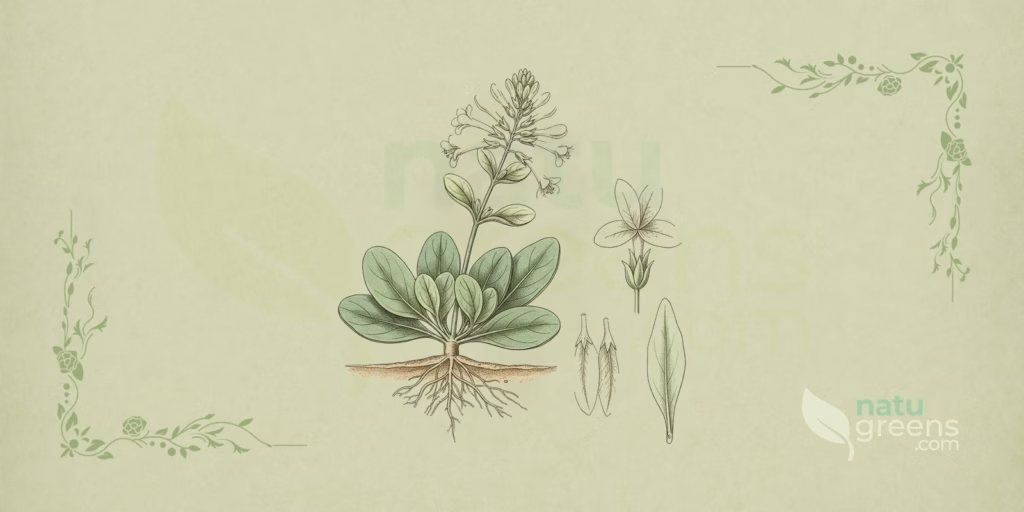
Gnaphalium uliginosum L. / Marsh Cudweed, also known by common names such as low cudweed, marsh everlasting, and wayside cudweed, is an annual herbaceous plant of the Asteraceae family, described by Carl Linnaeus in 1753. Native to Europe and Asia, this plant has spread across every continent, carrying with it centuries of traditional use of its properties. Marsh cudweed has been used for centuries in traditional European medicine and is mentioned in medical texts dating back to antiquity. Its flowers, made up of white petals with a yellow center, are gathered at peak bloom for the preparation of infusions, extracts, and other herbal products.
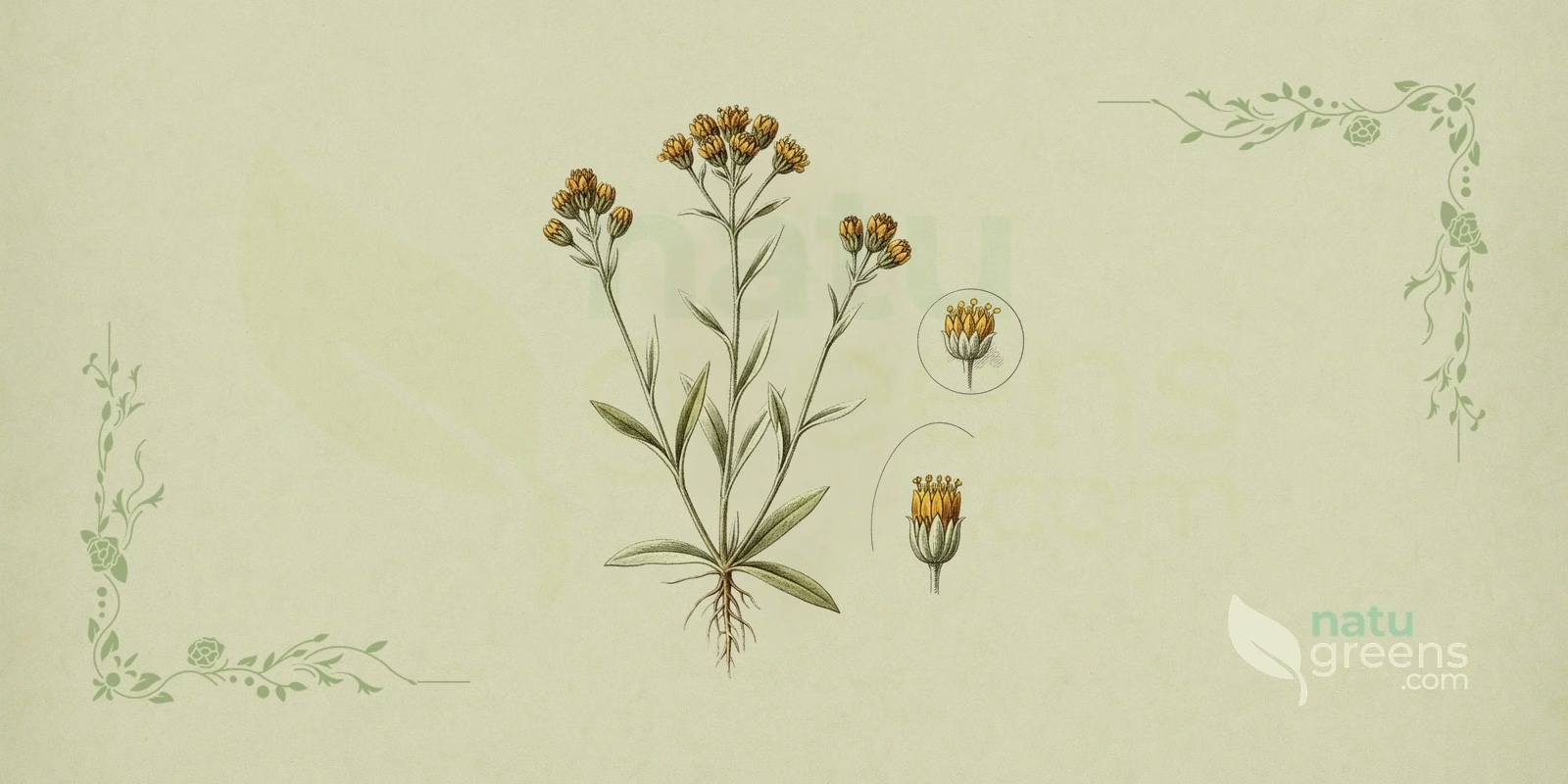
In Portuguese and European herbal tradition, marsh cudweed holds a prominent place as an astringent and anti-inflammatory plant, with traditional applications ranging from the care of gastrointestinal disturbances to the relief of anxiety and insomnia. The plant is recognized for its rich phytochemical composition, especially in flavonoids and phenolic compounds, which support its traditional use. Modern scientific research has investigated many of the traditional uses of marsh cudweed, reinforcing its place among the most studied medicinal plants today.
Popular and International Names of Marsh Cudweed
- English: cotton weed, low cudweed, marsh cudweed, marsh everlasting, mouse-ear, wayside cudweed.
- Spanish: siempreviva de las cumbres, yerba de alcaudones, yerba de la golondrina.
- Portuguese: gnafa-cinzenta, gnafálio-cinzento (Portugal); macela-dos-arrozais (Brazil).
- French: gnaphale des vases.
- Italian: canapicchia palustre.
- German: Sumpf-Ruhrkraut.
Botanical Synonyms of Gnaphalium uliginosum
Filaginella uliginosa (L.) Opiz is the botanical synonym most frequently found in contemporary scientific literature. This name was proposed by Philipp Maximilian Opiz in 1839. Although Gnaphalium uliginosum L. remains the name accepted by most botanical authorities, Filaginella uliginosa is widely used in pharmacological and phytochemical publications.
Botanical Family: Asteraceae
The Asteraceae family, formerly known as Compositae, is one of the largest families of flowering plants, comprising around 1,900 genera and more than 32,000 species distributed throughout the world. This family is characterized by its head-shaped inflorescence, in which numerous small flowers are clustered into a structure that resembles a single flower. Asteraceae includes plants of great economic, culinary, and medicinal importance, such as lettuce, sunflower, artichoke, and marigold.
Marsh cudweed shares morphological traits typical of the family, including flowers made up of tubular florets in the central disc and ray florets along the margins. The Asteraceae family is known for producing bioactive compounds, especially sesquiterpene lactones, flavonoids, and essential oils, which give many of its species their medicinal properties. The chemical diversity of this family has been the subject of intense pharmacological research, contributing to the development of phytopharmaceuticals and dietary supplements.
Parts of Marsh Cudweed Used
- Aerial parts (flowers, leaves, stems)
Ethnobotanical and Traditional Uses
- Anxiety
- Asthma
- Cough
- Diarrhea
- Gastric ulcers
- Hypertension
- Mouth sores and ulcers
- Sore throat
- Tonsillitis
Therapeutic Properties of Marsh Cudweed
- Antibacterial (activity studied against bacteria)
- Anti-inflammatory (effect studied for reducing inflammation)
- Antiseptic (studied for infection prevention)
- Astringent (contracts tissues)
- Diuretic (effect studied on urine production)
- Expectorant (helps clear mucus)
- Healing (effect studied on wound healing)
- Hypotensive (effect studied for lowering blood pressure)
Detailed Phytochemical Profile of Marsh Cudweed
- Alkaloids
- Carotenoids
- Coumarins
- Essential oils
- Flavonoids (gnaphaloside A, luteolin, 6-hydroxyluteolin, scutellarein)
- Resins
- Saponins
- Tannins
- Vitamin C
Preparation and Administration Forms of Marsh Cudweed
- Compresses
- Decoction
- Gargle
- Infusion
- Oil
- Poultice
- Tincture
Synergy with Other Medicinal Plants
Hypertension
The combination of marsh cudweed with European mistletoe (Viscum album) and common hawthorn (Crataegus monogyna) is traditionally said to potentiate the hypotensive effects of these plants, according to their traditional use. This combination is traditionally used as a support in cases of mild to moderate arterial hypertension, since marsh cudweed contributes its diuretic and vasodilatory properties, while mistletoe and hawthorn act on the cardiovascular system, supporting a reduction in blood pressure. People undergoing pharmacological treatment for hypertension should seek medical guidance before combining these plants, due to the risk of potentiating the hypotensive effect described in the Drug Interactions section.
Respiratory Conditions
The combination of marsh cudweed with marsh mallow (Althaea officinalis) and echinacea (Echinacea purpurea) is traditionally used for the relief of cough, sore throat, and other respiratory conditions. Marsh cudweed acts as an expectorant, marsh mallow as a demulcent that soothes irritated mucosa, and echinacea as an immunostimulant that helps the body cope with infection.
Recipes and Usage Protocols of Marsh Cudweed
Gargle for Sore Throat
Ingredients: 2 tablespoons of dried marsh cudweed aerial parts, 250 ml of boiling water.
Preparation: Prepare a concentrated infusion by letting the aerial parts steep for 15 minutes. Strain carefully and let cool to room temperature. Use the infusion to gargle 3 to 4 times a day. This preparation is traditionally used to soothe a sore throat, with the potential to reduce local inflammation and bacterial activity, according to popular use.
Infusion for Hypertension
Ingredients: 1 teaspoon of dried marsh cudweed aerial parts, 200 ml of boiling water.
Preparation: Place the aerial parts in a cup and add freshly boiled water. Cover and let steep for 10 minutes. Strain and drink 2 to 3 cups a day. This infusion is traditionally used to support a reduction in blood pressure and anxiety. People already taking medication for blood pressure should consult a healthcare professional before adding this infusion to their routine, since marsh cudweed may potentiate this effect.
The preparations above follow traditional records and do not replace professional guidance. Before any internal use, check the contraindications and interactions described in this article.
Associated Therapies
Homeopathy
In homeopathy, Gnaphalium uliginosum is a remedy traditionally indicated for sciatic and rheumatic pain, especially when the pain is accompanied by numbness. The homeopathic remedy is prepared from the fresh flowering plant, following the dilution and succussion process characteristic of homeopathy. Gnaphalium uliginosum is often prescribed in low potencies (6CH, 9CH) for acute symptoms.
Contraindications and Side Effects of Marsh Cudweed
General Contraindications
Marsh cudweed is contraindicated in individuals with a known allergy to plants of the Asteraceae family, including chrysanthemums, daisies, ragweed, and marigold. Allergic reactions may present as contact dermatitis, hives, or, in more severe cases, anaphylaxis. Pregnant or breastfeeding women should avoid consuming marsh cudweed due to the lack of studies on its safety in these populations.
Drug Interactions
Marsh cudweed may interact with hypertension medications, potentiating their effects. Individuals taking blood pressure medication should consult a healthcare professional before using marsh cudweed.
Historical Notes and Interesting Facts
The genus name, Gnaphalium, comes from the Greek ‘gnaphalon,’ meaning ‘a tuft of wool,’ referring to the woolly appearance of the plant’s leaves and stems. The specific epithet, uliginosum, comes from Latin and means ‘of the marshes,’ referring to the damp habitat where the plant is often found.
Frequently Asked Questions about Marsh Cudweed
Can Marsh Cudweed Be Used in Children?
Using marsh cudweed in children is not recommended due to the lack of studies on its safety in this population. Always consult a healthcare professional before giving any medicinal plant to a child.
What Is the Best Way to Take Marsh Cudweed?
The most common way to take marsh cudweed is as an infusion. However, it can also be used as a decoction, tincture, gargle, compress, or poultice, depending on the intended purpose.
What Are the Main Traditional Uses of Marsh Cudweed?
Marsh cudweed is traditionally used as an astringent, anti-inflammatory, and expectorant plant, applied in cases of sore throat, cough, diarrhea, and gastric ulcers. Its diuretic and hypotensive properties also support its traditional use as an aid for mild arterial hypertension. The most common preparation is an infusion of the flowering aerial parts, though poultices and gargles are also part of its popular use.
Can Marsh Cudweed Be Used during Pregnancy or Breastfeeding?
No. Pregnant or breastfeeding women should avoid consuming marsh cudweed, since there is a lack of studies confirming its safety in these populations. The same caution applies to anyone with a known allergy to plants of the Asteraceae family, such as chrysanthemums and marigold, due to the risk of allergic reactions.
What Is the Difference between Gnaphalium Uliginosum and Filaginella Uliginosa?
There is no botanical difference between the two names: Filaginella uliginosa is simply a more recent synonym, proposed by Philipp Maximilian Opiz in 1839, for the same species. Gnaphalium uliginosum L. remains the name accepted by most botanical authorities, but the synonym appears frequently in pharmacological and phytochemical publications.
Can Marsh Cudweed Be Combined with Hypertension Medications?
This combination requires caution: marsh cudweed may potentiate the effect of medications used to control blood pressure. For this reason, anyone already undergoing pharmacological treatment for hypertension should consult a healthcare professional before adding the plant to their routine, to avoid an excessive drop in blood pressure.
Notice: this content is for informational purposes and does not replace professional medical advice. Consult a physician or herbal practitioner before using medicinal plants, especially during pregnancy, breastfeeding, or alongside medication.
References and Scientific Studies
- PEER2010 Shikov, A. N., Kundracikova, M., Palama, T. L., Pozharitskaya, O. N., Kosman, V. M., Makarov, V. G., … & Verpoorte, R. (2010). Phenolic constituents of Gnaphalium uliginosum L. Phytochemistry Letters, 3(1), 45-47.
- PMC2024 Davydova L, et al. Phytochemical Study of Ethanol Extract of Gnaphalium uliginosum L. and Evaluation of Its Antimicrobial Activity. Antibiotics (Basel). 2024.
- PMC1953 Buturlin VV. Results of application of Gnaphalium uliginosum in hypertension. Sovetskaia Meditsina. 1953.
- PMC1956 Kulinchenko TV. Pharmacology of Gnaphalium uliginosum. Farmakologiia i Toksikologiia. 1956.