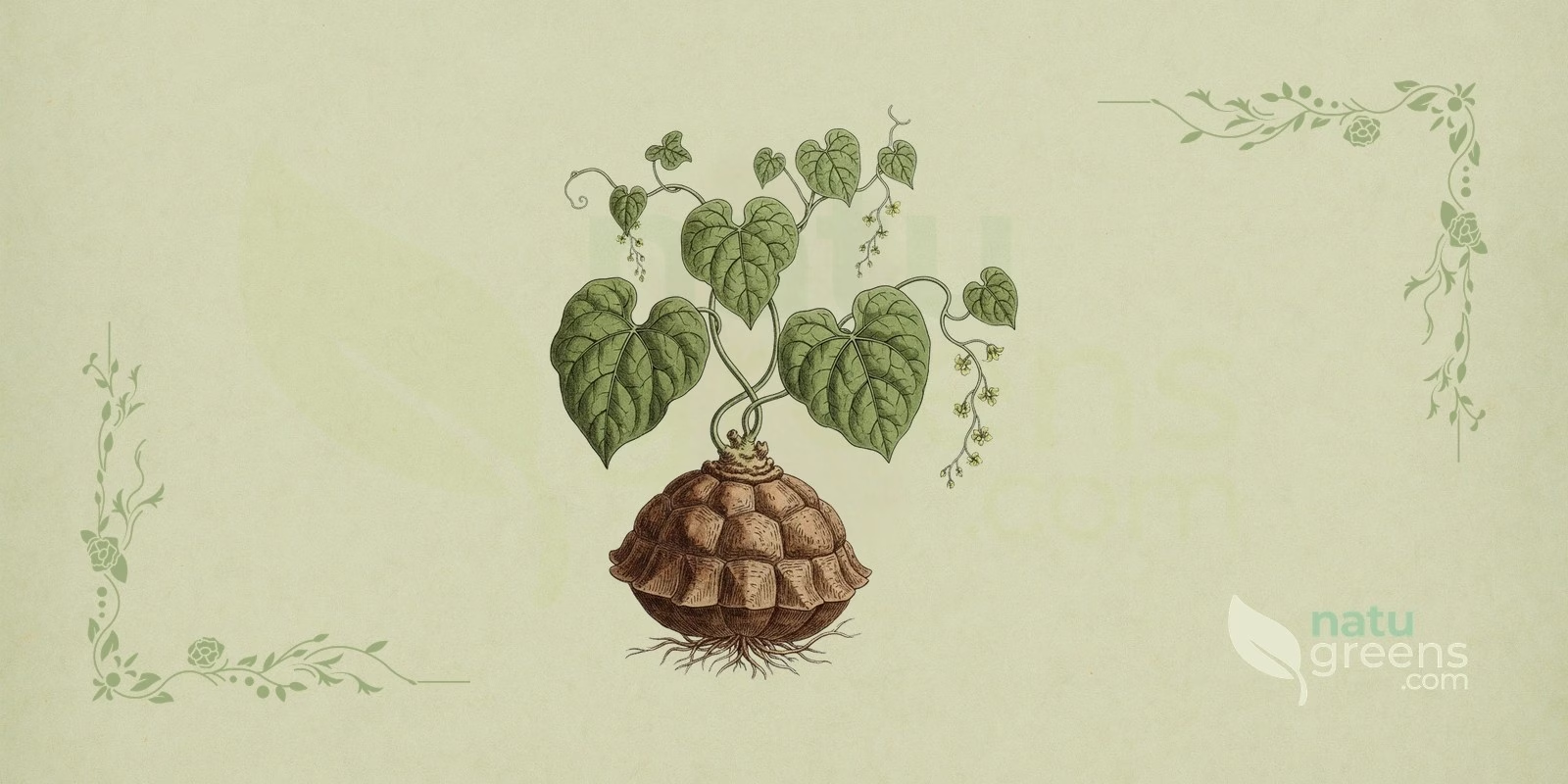
Dioscorea mexicana Scheidw. / Mexican Yam, commonly known as Mexican yam or wild Mexican yam, is a remarkable caudiciform plant of the Dioscoreaceae family, described by Scheidweiler and native to the tropical and subtropical regions of Central America, in a range that stretches from the state of San Luis Potosí, in northeastern Mexico, to Panama. Its most striking feature is the woody, protruding caudex, which can reach up to 90 centimeters in diameter and 25 centimeters in height and resembles a tortoise shell, a likeness that earned it the common name “tortoise plant”.
Throughout the 20th century, Dioscorea mexicana played a decisive role in the history of the pharmaceutical industry, because its rhizome is a rich source of diosgenin, a steroidal sapogenin that became the raw material for the laboratory synthesis of steroid hormones such as progesterone. This advance paved the way for the contraceptive pill and other hormonal medicines. The conversion, however, happens only through industrial chemical processes, and the human body does not turn diosgenin into hormones when the plant is eaten or applied to the skin. Today the species is still studied for the chemistry of its saponins and is grown as an ornamental by collectors of caudiciform plants.
Popular and International Names of Mexican Yam
- English: barbasco, cabeza de negro, Mexican yam, tortoise plant, turtle plant, turtle shell vine, wild Mexican yam.
- French: igname mexicaine.
- German: mexikanische Yamswurzel.
- Italian: igname messicano.
- Portuguese: inhame mexicano, inhame-selvagem-mexicano, yam mexicano.
- Spanish: barbasco, cabeza de negro, ñame mexicano.
Some of these names are not exclusive to the species, since barbasco also refers to other diosgenin-rich Mexican members of the Dioscoreaceae, and the label wild yam is attached in commerce mainly to the North American Dioscorea villosa. For this reason, the binomial is the safest way to identify the plant in products and studies.
Botanical Synonyms of Dioscorea mexicana
The taxonomy of Dioscorea mexicana includes several botanical synonyms that reflect changes in its classification over time. Other names were used in different scientific and regional contexts before the currently accepted name, Dioscorea mexicana Scheidw., became established. Knowing these synonyms helps locate the species accurately in herbaria, databases and older botanical or pharmacological studies, where it may appear under any of the names below.
- Dioscorea anconensis R.Knuth
- Dioscorea astrostigma Uline
- Dioscorea bilbergiana Kunth
- Dioscorea deamii Matuda
- Dioscorea deppei Schiede ex Schltdl.
- Dioscorea leiboldiana Kunth
- Dioscorea macrophylla M.Martens & Galeotti
- Dioscorea macrostachya Benth.
- Dioscorea macrostachya var. sessiliflora Uline
- Dioscorea mexicana var. sessiliflora (Uline) Matuda
- Dioscorea propinqua Hemsl.
- Dioscorea tuerckheimii R.Knuth
- Testudinaria cocolmeca Procop.
- Testudinaria macrostachya (Benth.) G.D.Rowley
The last two names point to the former genus Testudinaria, whose name comes from the Latin testudo (tortoise) and was applied to members of the Dioscoreaceae with a shell-like caudex, the same feature that inspired the species’ common names in English.
Botanical Family: Dioscoreaceae
Dioscorea mexicana belongs to the Dioscoreaceae family, a group of monocots with more than 600 species, found mainly in tropical and subtropical regions of the world. The group is known for tubers and rhizomes rich in starch and in steroidal saponins, such as those that give rise to diosgenin, of economic and medicinal importance. Many species in the family are grown as staple foods in various cultures, while others are valued for their bioactive compounds and industrial use.
Plants in this family are usually climbers, with stems that twine around supports, and they bear leaves of varied shapes. The diversity of secondary metabolites in the Dioscoreaceae keeps the family at the center of research in phytochemistry and pharmacology, which continues to investigate the possible applications of these compounds and the still little-explored potential of many of its species.
Parts of Mexican Yam Used
- Rhizome (caudex)
The caudex, the woody storage organ where diosgenin is concentrated, is the only part with recorded use, both in industrial extraction and in traditional preparations. Eating the raw rhizome, however, is not recommended.
Ethnobotanical and Traditional Uses
The uses below come from folk medicine records and compilations on wild yams, with no confirmation from clinical trials on the species. Diosgenin extraction, in turn, is an industrial use rather than a traditional one.
- Body aches (traditional use)
- Bruises and sprains, applied topically (traditional use)
- Cramps and colic (traditional use)
- Diverticulosis (folk use, no clinical studies)
- Industrial source of diosgenin for the laboratory synthesis of steroid hormones
- Leg and lower back pain (traditional use)
- Menstrual problems (traditional use)
- Rheumatoid arthritis (traditional use, no clinical proof)
Therapeutic Properties of Mexican Yam
- Anti-inflammatory (diosgenin activity observed in laboratory and animal studies, with no clinical proof)
- Antispasmodic (traditionally used to relieve cramps and spasms, with no clinical studies on the species)
- Industrial hormone precursor (diosgenin becomes a steroid only through laboratory synthesis, not in the body)
Detailed Phytochemical Profile of Mexican Yam
- Diosgenin
- Steroidal saponins
In the rhizome, diosgenin occurs bound to sugars in the form of steroidal saponins and is released as a free sapogenin only through acid hydrolysis, the first step of the industrial process that leads to hormone synthesis. The saponins are also what explains the gastrointestinal discomfort, nausea and diarrhea reported with high internal doses.
Preparation and Administration Forms of Mexican Yam
- Capsules
- Extracts
- Tinctures
- Topical creams
Extracts, tinctures and capsules are sold in health food stores and compounding pharmacies, while the creams appear in massage products. For any form of internal use, the dose should be set by a health professional, since safety studies specific to the species are lacking.
Synergy with Other Medicinal Plants
Combination with Adaptogenic Plants
In traditional formulations aimed at well-being during the menopausal transition, Dioscorea mexicana appears alongside adaptogenic plants such as ashwagandha (Withania somnifera) and maca (Lepidium meyenii), which tradition uses for general vitality and the body’s response to stress. No studies have evaluated these combinations. Since diosgenin does not act as a hormone in the body, the combination should not be seen as a means of hormonal balance, nor should it replace medical follow-up during menopause.
Combination with Plants Traditionally Used for Joints
For joint discomfort, herbal tradition pairs the species with devil’s claw (Harpagophytum procumbens) and Indian frankincense (Boswellia serrata), plants whose extracts are studied for anti-inflammatory activity through different pathways. The idea behind these combinations is to bring together compounds with complementary actions and lower the dose of each plant on its own. Their combined efficacy in conditions such as rheumatoid arthritis, however, has not been proven, and anyone taking anticoagulants or anti-inflammatory drugs should talk to their doctor before combining these plants.
Recipes and Usage Protocols of Mexican Yam
Mexican Yam Topical Cream for Joint Massage
An external preparation traditionally used to massage sore joints, bruises and sprains, with no connection to any hormonal effect.
Ingredients:
- 10 g of Dioscorea mexicana dry extract
- 50 g of neutral cream base (fragrance-free)
- 5 drops of lavender essential oil (optional, for scent)
Method:
- In a clean container, mix the Dioscorea mexicana dry extract with the neutral cream base.
- Stir vigorously until the mixture is smooth and free of lumps.
- If desired, add the drops of lavender essential oil and mix again.
- Transfer the cream to a sterilized jar with a lid.
Dosage: apply a small amount of the cream to the desired area, massaging gently until fully absorbed, 2 to 3 times a day, and do a patch test on a small area of skin before the first application. Stop using it if redness, itching or swelling appears.
Traditional Mexican Yam Tincture
An alcohol-based preparation that folk records describe for menstrual cramps and discomfort. It does not replace prescribed hormone therapy and should not be used during pregnancy or breastfeeding, or by children.
Ingredients:
- 50 g of dried Dioscorea mexicana rhizome (grated or powdered)
- 250 ml of 70% grain alcohol
Method:
- Place the grated or powdered rhizome in a sterilized glass jar.
- Pour the grain alcohol over the rhizome, making sure it is completely submerged.
- Seal the jar tightly and shake it daily for 2 to 4 weeks.
- After the maceration period, strain the mixture through a fine cloth or coffee filter, separating the liquid (tincture) from the plant material.
- Store the tincture in a dark glass bottle, in a cool place away from light.
Dosage: the internal dose must be set on an individual basis, so consult a health professional before use. Avoid high doses because of the saponin content, which can cause gastrointestinal discomfort, and stop using it if nausea or diarrhea occurs.
The preparations above follow traditional records and do not replace professional guidance. Before any internal use, check the contraindications and interactions described in this article.
Associated Therapies
Herbal Medicine
In herbal medicine, Mexican yam is remembered mainly for its diosgenin content and appears in formulations marketed for menopause and menstrual discomfort. Science, however, indicates that the body does not convert this compound into hormones. A clinical trial of wild yam cream in menopausal women found no relevant effect on symptoms or hormone levels compared with placebo. Tradition also uses the plant for the anti-inflammatory and antispasmodic properties attributed to it, in extracts, tinctures, capsules and creams aimed at muscle aches and spasms, always without clinical proof specific to the species.
Homeopathy
In homeopathy, the remedy known as Dioscorea is traditionally prepared from the North American species Dioscorea villosa, and the specific homeopathic use of Dioscorea mexicana is poorly documented. According to the principles of this practice, remedies are highly diluted and seek to stimulate the body’s capacity for self-healing. Along these lines, the genus is usually indicated for intense colic, acute pain and spasms, especially when movement or pressure brings relief. The choice and dosage of a homeopathic remedy should be left to a qualified homeopath, after an individualized assessment of the patient’s symptoms.
Contraindications and Side Effects of Mexican Yam
Wild Mexican yam (Dioscorea mexicana) contains diosgenin, historically used as an industrial raw material to synthesize steroid hormones in the laboratory, but the human body does not convert diosgenin into progesterone or other hormones through digestion or skin absorption. For this reason, claims of “natural progesterone” in wild yam creams have no scientific support. Since safety studies specific to the species are also lacking, any form of use calls for caution and professional guidance.
Contraindications
- Children: use is not recommended, given the lack of safety studies in this age group.
- High Internal Doses: avoid internal use in high doses because of the saponin content, which can cause gastrointestinal discomfort, nausea and diarrhea.
- Hormone-Sensitive Conditions: use caution in hormone-sensitive conditions (history of breast cancer, endometriosis) until medical guidance is obtained, as a precaution, even without evidence of direct hormonal activity; the same prudence applies to a history of ovarian or uterine cancer and to uterine fibroids.
- Pregnancy and Breastfeeding: do not use during pregnancy and breastfeeding without medical guidance, as there are no safety data for these stages.
- Prescribed Hormone Therapy: do not use as a substitute for prescribed hormone therapy, nor in place of contraceptives or hormone replacement prescribed by a doctor.
Side Effects
- Allergic Reactions: although rare, skin rashes, hives or swelling may occur in sensitive people, including with topical creams.
- Gastrointestinal Disorders: nausea, vomiting, diarrhea or abdominal discomfort may occur in some people, especially with high doses, an effect attributed to the saponins.
Drug Interactions
As a precaution, the species is considered potentially able to interact with hormonal medications, such as contraceptives and replacement therapies, with anticoagulants and with other drugs, altering their efficacy or increasing the risk of adverse effects. These interactions, however, have not been studied specifically in Dioscorea mexicana. Anyone taking long-term medication should consult their doctor before using the plant.
Historical Notes and Interesting Facts
The Tortoise Plant
The common name “tortoise plant” refers directly to the appearance of the caudex, whose woody rhizome develops over time a rough surface segmented into polygonal plates, much like a tortoise shell. This feature makes the species a highly prized ornamental among collectors of succulents and caudiciforms. It also serves an ecological function, since the caudex stores water and nutrients and allows the plant to get through dry periods in arid, seasonal environments.
From Yam to the Contraceptive Pill
The identification of Dioscorea mexicana as an abundant source of diosgenin, and the use of this compound as a starting point for the synthesis of steroid hormones, left a lasting mark on the history of medicine. In the 1940s, the American chemist Russell Marker began extracting diosgenin from Mexican roots and converting it into progesterone in the laboratory using an efficient chemical method. The process lowered the cost of hormone production and paved the way for the development of the contraceptive pill, with an impact on the reproductive health of millions of women worldwide. Dioscorea mexicana and other species of the genus, which later became the main industrial source, were decisive for this pharmaceutical revolution, which always depended on laboratory chemistry rather than on simply eating the plant.
Frequently Asked Questions about Mexican Yam
What Is Mexican Yam?
Mexican yam, or Dioscorea mexicana, is a caudiciform plant native to Mexico and Central America, known for its large woody rhizome (caudex) that stores water and nutrients. It is valued mainly for its diosgenin content, a compound used by the pharmaceutical industry as raw material for the laboratory synthesis of steroid hormones. The plant also appears in records of traditional medicine.
What Is Mexican Yam Used For?
In folk medicine, Mexican yam is traditionally used for joint pain, cramps and menstrual discomfort, without proof from clinical studies on the species. In industry, the diosgenin extracted from the rhizome served as a starting point for making progesterone and other steroids used in contraceptives and hormone therapies. This transformation, however, only happens through chemical synthesis, not in the body of the person who consumes the plant.
What Benefits Are Attributed to Mexican Yam?
Tradition credits the plant with relieving joint and menstrual pain and menopausal discomfort, and laboratory studies are investigating the anti-inflammatory activity of diosgenin. These benefits have not been confirmed in clinical trials. A study of wild yam cream in menopausal women found no relevant effect on symptoms, so the plant should not be seen as a natural alternative for hormonal support.
Does Mexican Yam Cream Contain Natural Progesterone?
No, because the human body does not convert diosgenin into progesterone or other hormones through digestion or skin absorption. This transformation depends on chemical steps carried out only in the laboratory. For this reason, claims of “natural progesterone” in wild yam creams have no scientific support, and these products should not be used as a substitute for prescribed hormone therapy.
How Is Mexican Yam Used?
Mexican yam is usually found as extracts, tinctures or capsules in health food stores and compounding pharmacies, as well as in creams for massaging sore joints. The dose and form of use should always be guided by a qualified health professional, especially because of the saponin content and possible drug interactions. Eating the raw rhizome is also not recommended.
Are There Contraindications for Mexican Yam?
Yes, and the main one is not to use the plant during pregnancy and breastfeeding without medical guidance, as well as to avoid it in children, due to the lack of safety studies. People with hormone-sensitive conditions, such as a history of breast cancer or endometriosis, need caution and medical guidance, as a precaution, even without evidence of direct hormonal activity. High internal doses can cause nausea and diarrhea. Anyone using contraceptives, hormone therapy or anticoagulants should consult their doctor before starting to use it.
Notice: this content is for informational purposes and does not replace professional medical advice. Consult a physician or herbal practitioner before using medicinal plants, especially during pregnancy, breastfeeding, or alongside medication.
References and Scientific Studies
Peer-Reviewed Scientific Studies (2)
- PMC2001 Komesaroff PA, et al. Effects of wild yam extract on menopausal symptoms, lipids and sex hormones in healthy menopausal women. Climacteric. 2001.
- PMC2023 Seeman JI. Russell Earl Marker and the Beginning of the Steroidal Pharmaceutical Industry. Chem Rec. 2023.
Supplementary Readings (1)
- 2025 “Dioscorea mexicana Scheidw.”. Plants of the World Online (POWO). Royal Botanic Gardens, Kew. Accessed October 11, 2025.