Symplocarpus foetidus (L.) Salisb. ex W.P.C.Barton / Skunk Cabbage, known in English as skunk cabbage or eastern skunk cabbage, is a perennial herbaceous plant in the Araceae family, first described by Carl Linnaeus in 1753 under the name Dracontium foetidum. Native to eastern North America, the species stands out for its ability to produce its own heat, a phenomenon known as thermogenesis, which allows it to bloom between late winter and early spring, often while the ground is still covered in snow. The common name comes from the strong, unpleasant odor the leaves give off when bruised, a trait interpreted as a form of defense against herbivorous animals.
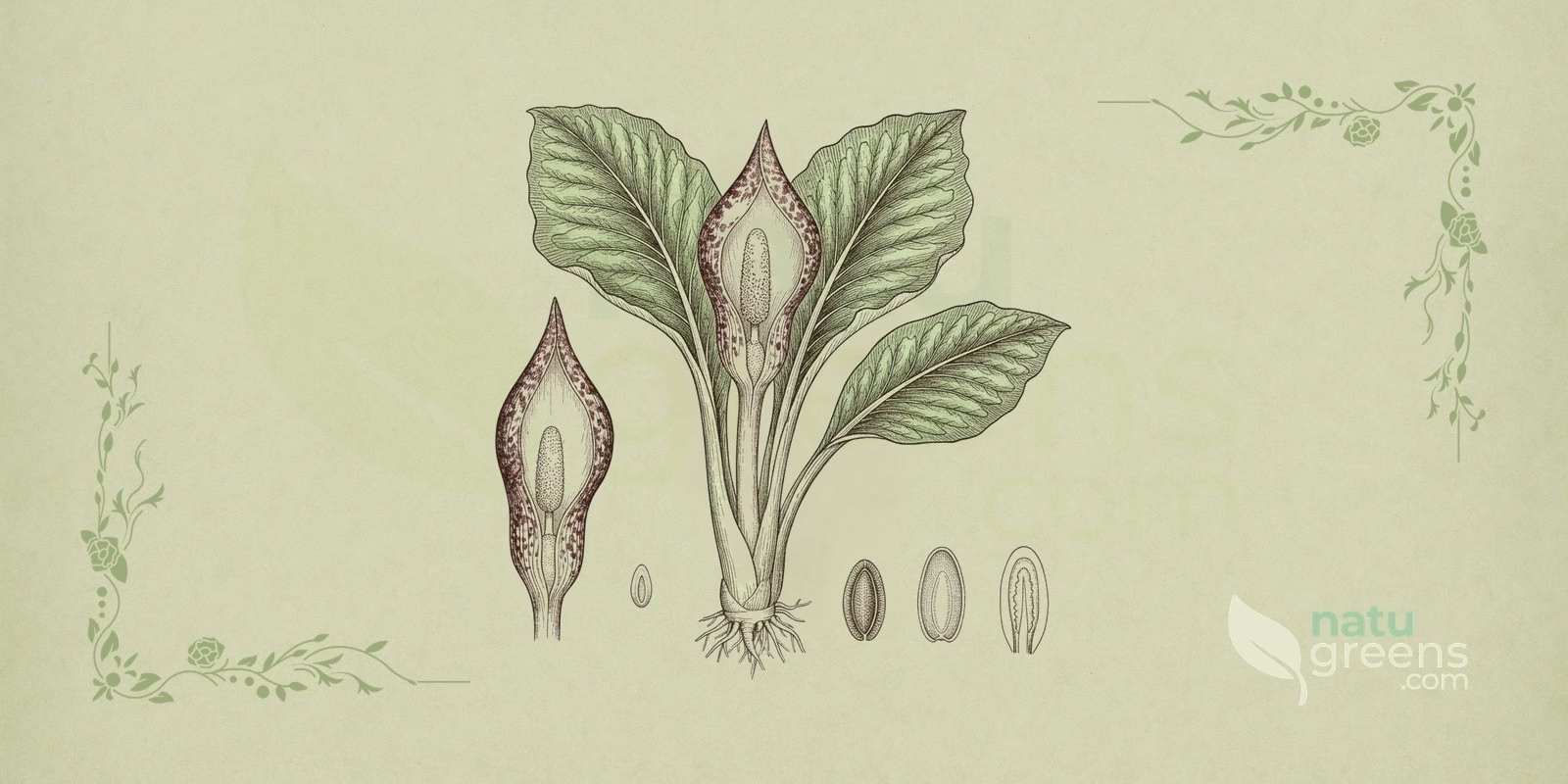
In the traditional medicine of North America’s Indigenous peoples, skunk cabbage held a prominent place, and its roots and rhizomes were used for respiratory complaints, nervous disorders, and rheumatic pain. The plant, however, contains calcium oxalate crystals in all of its fresh parts, which are responsible for the burning sensation and the toxicity when it is eaten raw, so any preparation calls for extra care. Modern scientific research has focused mainly on the species’ thermogenesis and scent chemistry, while pharmacological studies remain scarce and no clinical trial has confirmed the traditional uses.
Popular and International Names of Skunk Cabbage
- English: clumpfoot cabbage, eastern skunk cabbage, foetid pothos, meadow cabbage, polecat weed, skunk cabbage, swamp cabbage.
- French: chou puant, tabac du diable.
- German: Stinktierkohl.
- Italian: cavolo puzzola.
- Portuguese: couve-de-gambá and couve-gambá (Portugal), repolho-gambá (Brazil).
- Spanish: col de los pantanos, col de los prados, col de mofeta.
Almost all of these names refer to the plant’s distinctive smell or to the waterlogged habitats where it usually grows, such as swamps, floodplains, and stream banks, while the comparison with cabbage comes from the broad leaves that unfold after flowering.
Botanical Synonyms of Symplocarpus foetidus
The basionym, that is, the original name given by Linnaeus, is Dracontium foetidum L. Over time the plant was reassigned to several different genera, which produced a number of synonyms, and the current name, Symplocarpus foetidus, was validly published by William P. C. Barton, who attributed it to Richard Salisbury, with a genus name that, from the Greek, alludes to the fruits joined together in a compound structure.
- Dracontium foetidum L. (basionym)
- Ictodes foetidus (L.) Bigelow
- Pothos foetidus (L.) Aiton
- Pothos putorii Barton
- Spathyema angusta Raf.
- Spathyema foetida (L.) Raf.
- Spathyema lanceolata Raf.
- Spathyema latifolia Raf.
- Symplocarpus foetidus f. variegatus Otsuka
Botanical Family: Araceae
The Araceae family, which also includes anthurium, calla lily, and Swiss cheese plant, comprises about 140 genera and nearly 4,000 species, found mainly in tropical regions. What unites the group is its characteristic inflorescence, made up of a spadix, a fleshy spike of tiny flowers, wrapped in a modified bract called a spathe, and several species in the family are known for producing heat and strong odors that attract specific pollinators.
Skunk cabbage shares these traits with other thermogenic aroids, such as European species of the genus Arum, among them Arum maculatum, and the corpse flower (Amorphophallus titanum), native to Sumatra. Heat production also occurs outside the family, for example in the flowers of the giant water lily (Victoria amazonica), which belongs to the Nymphaeaceae family. Many aroids also accumulate bioactive compounds, such as alkaloids, saponins, and calcium oxalate crystals, which account for both the medicinal use of some species and the toxicity of several others.
Parts of Skunk Cabbage Used
- Leaves
- Roots (rhizome)
The root and rhizome account for most of the medicinal records and were used after drying, while the leaves appear in external applications and, in the historical food record, boiled in several changes of water, a practice that should not be reproduced without expert guidance.
Ethnobotanical and Traditional Uses
- Asthma
- Dropsy (fluid buildup in the body)
- Expectorant
- Mystical talisman
- Nervous disorders
- Respiratory ailments
- Rheumatic pain
- Seasoning
These uses belong to the traditional record of several North American Indigenous peoples, who used the plant as a remedy, a seasoning, and a talisman, and to nineteenth-century American herbal medicine, with no confirmation from modern clinical studies. In a laboratory screening of plants used by Canadian First Nations communities for lung diseases, the aqueous extract of S. foetidus was not among those showing significant antimycobacterial activity.
Therapeutic Properties of Skunk Cabbage
- Antispasmodic (traditional record of relief from spasms, such as those of coughing and asthma)
- Diaphoretic (attributed by tradition, said to promote sweating)
- Diuretic (traditional record of increased urine output)
- Emetic (causes vomiting at high doses, an unwanted effect and a sign of excess)
- Expectorant (traditional use to help bring up phlegm)
- Mild narcotic (sedative effect described in historical literature, without clinical confirmation)
None of these properties has been demonstrated in clinical trials, and the descriptions come from ethnobotanical literature and the North American materia medica, which is why they should be read as a historical record rather than as an indication for use.
Detailed Phytochemical Profile of Skunk Cabbage
- Aliphatic esters and alcohols (floral scent)
- Benzenoids (floral scent)
- Calcium oxalate crystals (all fresh parts)
- Furans, such as 2-pentylfuran (essential oil of the aerial parts)
- Monoterpenes (floral scent)
- Phthalides, such as (Z)-ligustilide (essential oil of the aerial parts)
- Volatile nitrogen compounds (floral scent)
- Volatile phenols, such as p-vinylguaiacol (essential oil of the aerial parts)
- Volatile sulfur compounds, such as dimethyl disulfide (floral scent and essential oil of the aerial parts)
Calcium oxalate crystals are the most relevant component for safety, because they cause intense burning and irritation of the mouth and throat when the fresh plant is chewed or swallowed. The other compounds on the list come from two chemical studies of the species’ odor, the first of which analyzed the essential oil of the leaves and stems and identified p-vinylguaiacol, 2-pentylfuran, and (Z)-ligustilide as the main constituents, with dimethyl disulfide among those contributing most to the smell.
The second study, published in 2024, examined the scent of the inflorescences and found a wide variety of nitrogenous, sulfur-containing, monoterpene, benzenoid, and aliphatic volatile compounds, with two distinct chemotypes among the individuals analyzed. Comprehensive analyses of the nonvolatile substances in the root are still lacking, even though it is the part with the most traditional use, which limits any conclusion about the mechanisms of action attributed to the plant.
Preparation and Administration Forms of Skunk Cabbage
- Decoction of the dried root
- Drying of roots and leaves
- Leaves boiled in several changes of water (historical food record)
- Poultice of warmed leaves (external use)
In every form, tradition works with dried or extensively processed material, and the fresh plant should never be taken internally because of its calcium oxalate content. Careful drying of the root is the step that comes before any traditional use, but it does not make the plant risk-free, since excessive doses can still cause nausea, vomiting, and dizziness, so the amount and frequency must be set by a qualified professional.
Synergy with Other Medicinal Plants
Respiratory Complaints
In North American herbal tradition, skunk cabbage appears alongside gumweed (Grindelia robusta) and lobelia (Lobelia inflata) in formulas traditionally used for asthma and other respiratory complaints. Gumweed is described in herbal medicine as an expectorant and antispasmodic, which would add to the properties attributed to skunk cabbage, while lobelia is recorded as a bronchial relaxant, although it contains lobeline and has known toxicity, which makes this combination a matter strictly for an experienced practitioner.
Rheumatic Pain
For rheumatic pain, the traditional record pairs skunk cabbage with devil’s claw (Harpagophytum procumbens) and white willow bark (Salix alba). Devil’s claw is studied for its anti-inflammatory and analgesic activity, and white willow bark contains salicin, a precursor of salicylic acid, a substance associated with reduced pain and inflammation, which is why both plants call for caution in people who take anticoagulants or are allergic to salicylates.
Recipes and Usage Protocols of Skunk Cabbage
Dried Root Decoction for Respiratory Complaints
Recorded in Indigenous medicine and in North American herbal medicine, the decoction of dried skunk cabbage root was traditionally used to relieve coughing, wheezing, and other respiratory complaints, always with root that had been dried beforehand and never with fresh material.
Ingredients:
- Skunk cabbage root, carefully dried and processed, in an amount set by a health professional
- Water
Preparation:
- Place the dried root and the water in a saucepan.
- Bring to a boil and keep boiling for 10 to 15 minutes.
- Remove from the heat and strain before use.
There is no established safe dose for this preparation, and the amount and frequency of use should not be decided on your own, so a health professional must be consulted before any use, bearing in mind that excessive doses can cause nausea, vomiting, and dizziness.
Warm Leaf Poultice for Rheumatic Pain
An external application traditionally used to ease rheumatic pain, according to North American folk records, made with warmed leaves and without any ingestion of the plant.
Ingredients:
- Fresh skunk cabbage leaves
Preparation:
- Wear gloves when handling the fresh leaves, which can cause contact dermatitis.
- Warm the leaves in hot water or over steam.
- Before applying, test on a small patch of skin and wait a few minutes to watch for any reaction.
- Apply the warm leaves to the affected area, cover with a cloth, and leave on for 20 to 30 minutes.
- Remove immediately if burning, redness, or itching occurs, and never apply to broken skin.
The preparations above follow traditional records and do not replace professional guidance. Before any internal use, check the contraindications and interactions described in this article.
Associated Therapies
Herbal Medicine
In North American herbal tradition, skunk cabbage is used with caution because of its toxicity when fresh. Preparations, usually made with the dried root, were historically used for spasmodic conditions such as asthma and whooping cough and for the relief of rheumatic pain, always under the supervision of a qualified health professional, since no clinical trials have established efficacy or a safe dose.
Homeopathy
In homeopathy, the remedy Symplocarpus foetidus is prepared from the fresh plant in dilutions, and the homeopathic materia medica describes it for symptoms such as headache, vertigo, and respiratory complaints, especially when accompanied by a feeling of swelling and congestion. Prescription follows the match between the patient’s symptoms and the remedy’s proving, a principle specific to homeopathy, and the efficacy of this type of preparation has not been demonstrated in controlled clinical trials.
Contraindications and Side Effects of Skunk Cabbage
Skunk cabbage (Symplocarpus foetidus) contains high concentrations of calcium oxalate in all of its fresh parts, causing intense burning and irritation of the mouth and throat if chewed or swallowed raw, as well as possible swelling along the gastrointestinal tract.
Precautions for Use
- Never use the fresh plant internally.
- The root must be carefully dried and processed before any traditional use, and even then excessive doses can cause nausea, vomiting, and dizziness.
- Use only under the guidance of a qualified professional, given the lack of robust safety and dosage studies.
Specific Contraindications
- Children: do not use.
- Oxalate kidney stones: contraindicated, because of the plant’s content of this compound.
- Pregnancy and breastfeeding: do not use, partly because of the lack of safety studies.
Common Side Effects
- Burning, irritation, and swelling of the mouth and throat if the plant is chewed or swallowed raw.
- Nausea, vomiting, and dizziness: high doses of the root, even when dried, can cause these disturbances.
- Skin irritation: handling the fresh leaves can cause contact dermatitis.
Drug Interactions
There is not enough information on the drug interactions of skunk cabbage, so caution is advised when combining the plant with any long-term medication, with particular attention to the groups below.
- Anticoagulants and antiplatelet drugs: the traditional combinations with white willow, a source of salicin, and with devil’s claw require professional assessment in people taking these medications.
- Sedatives and central nervous system depressants: since historical literature describes a mild narcotic effect, this combination should be avoided without professional guidance.
Historical Notes and Interesting Facts
- Alternative respiration: the heat comes from the intense activity of the mitochondria in the spadix, from which researchers partially purified, in 1993, the cyanide-resistant alternative oxidase, an enzyme linked to heat production in thermogenic plants.
- Cycling thermostat: Japanese researchers observed that the heat production of the spadix oscillates in cycles of about 60 minutes and responds to temperature changes smaller than 0.9 °C, working as a highly precise natural thermostat.
- Longevity: skunk cabbage is a long-lived plant that can survive for several decades, and its contractile roots pull it deeper into the soil each year, making it increasingly hard to uproot.
- Official pharmacopeia: the root was listed in the United States Pharmacopeia from 1820 to 1882 under the name Dracontium, a period when it was indicated for respiratory diseases, nervous disorders, rheumatism, and dropsy.
- Pollination: the characteristic odor attracts flies and other insects that feed on decaying matter, identified as its main pollinators, and researchers are debating the hypothesis that the scent mimics these food sources.
- Thermogenesis: in a study published in the journal Science in 1974, the spadix kept an internal temperature 15 to 35 °C above that of the air, with ambient temperatures between -15 and +15 °C, and for at least 14 days consumed oxygen at a rate comparable to that of homeothermic animals of similar size, producing enough heat to melt the surrounding snow.
- Two scent profiles: a 2024 study identified two floral scent chemotypes among the plants analyzed, which may explain why some old descriptions speak of a fetid smell and others of a pleasant, apple-like odor.
Frequently Asked Questions about Skunk Cabbage
Is Skunk Cabbage Tea Safe to Drink?
There is no established safe dose for skunk cabbage tea, and tradition prepares it only with carefully dried and processed root, never with the fresh plant, which is toxic when taken internally. Even with dried root, excessive doses can cause nausea, vomiting, and dizziness, so it should only be used under the guidance of a qualified professional.
What Is Skunk Cabbage Tea Used For?
In the traditional record, tea made from the dried root was used by North American Indigenous peoples and by nineteenth-century herbal medicine to relieve respiratory complaints, such as asthma, and rheumatic pain. These uses have not been confirmed by clinical studies, and the plant should not replace medical care for these conditions.
Can I Harvest and Prepare My Own Skunk Cabbage?
This is not recommended, because correct identification of the plant and safe preparation require specific knowledge to avoid the toxicity of the calcium oxalate in the fresh parts. Anyone with a professional recommendation to use skunk cabbage should turn to products from a reliable source and follow the guidance received.
Why Does Skunk Cabbage Cause a Burning Sensation in the Mouth?
All fresh parts of skunk cabbage contain high concentrations of calcium oxalate crystals, which cause intense burning and irritation of the mouth and throat when the plant is chewed or swallowed raw. For this reason, the fresh plant should never be used internally, and simply handling the leaves can irritate the skin.
Can People with Oxalate Kidney Stones Use Skunk Cabbage?
No, skunk cabbage is contraindicated for people with oxalate kidney stones because of the plant’s content of this compound. The species should also not be used during pregnancy, while breastfeeding, or in children, and any other use requires guidance from a qualified professional, given the lack of robust safety and dosage studies.
How Does Skunk Cabbage Manage to Bloom in the Snow?
Skunk cabbage produces its own heat through very intense respiration in the cells of the spadix, which can become 15 to 35 °C warmer than the surrounding air. This heat melts the snow around the inflorescence and allows the plant to bloom between late winter and early spring, ahead of most other species.
Notice: this content is for informational purposes and does not replace professional medical advice. Consult a physician or herbal practitioner before using medicinal plants, especially during pregnancy, breastfeeding, or alongside medication.
References and Scientific Studies
View All 9 Cited References
Peer-Reviewed Scientific Studies (6)
- PMC1993 Berthold DA, Siedow JN. Partial purification of the cyanide-resistant alternative oxidase of skunk cabbage (Symplocarpus foetidus) mitochondria. Plant Physiol. 1993.
- PMC2024 Goodrich KR, Gibernau M. Floral scent of eastern skunk cabbage (Symplocarpus foetidus: Araceae). Phytochemistry. 2024.
- PMC2004 Ito K, et al. Temperature-triggered periodical thermogenic oscillations in skunk cabbage (Symplocarpus foetidus). Plant Cell Physiol. 2004.
- PMC1974 Knutson RM. Heat production and temperature regulation in eastern skunk cabbage. Science. 1974.
- PMC2015 Miyazawa M, et al. Chemical Composition and Aroma Evaluation of Essential Oils from Skunk Cabbage (Symplocarpus foetidus). J Oleo Sci. 2015.
- PMC2010 Webster D, et al. Antimycobacterial screening of traditional medicinal plants using the microplate resazurin assay. Can J Microbiol. 2010.
Supplementary Readings (3)
- 1996 Chevallier A. The Encyclopedia of Medicinal Plants. London: Dorling Kindersley. 1996.
- Stritch L. Eastern Skunk Cabbage (Symplocarpus foetidus (L.) Salisb. ex W.P.C. Barton). United States Department of Agriculture, Forest Service. n.d.
- Williams KA. A Botanical Study of Skunk Cabbage, Symplocarpus foetidus. Torreya. 1919;19(2):21-29.