Prunus africana (Hook.f.) Kalkman, popularly known as African cherry, African plum or pygeum, is a large evergreen tree of the Rosaceae family, first described by Joseph Dalton Hooker and later reclassified by Cornelis Kalkman. Native to the mountainous regions of Central and Southern Africa and to islands such as Bioko and Madagascar, the species can reach 30 to 40 meters in height and stands out for its dense crown and its bark, which ranges from black to brown and cracks into a characteristic rectangular pattern. Flowering takes place between October and May, with small greenish-white flowers that give rise to red to brown drupes, which take several months to ripen after pollination.
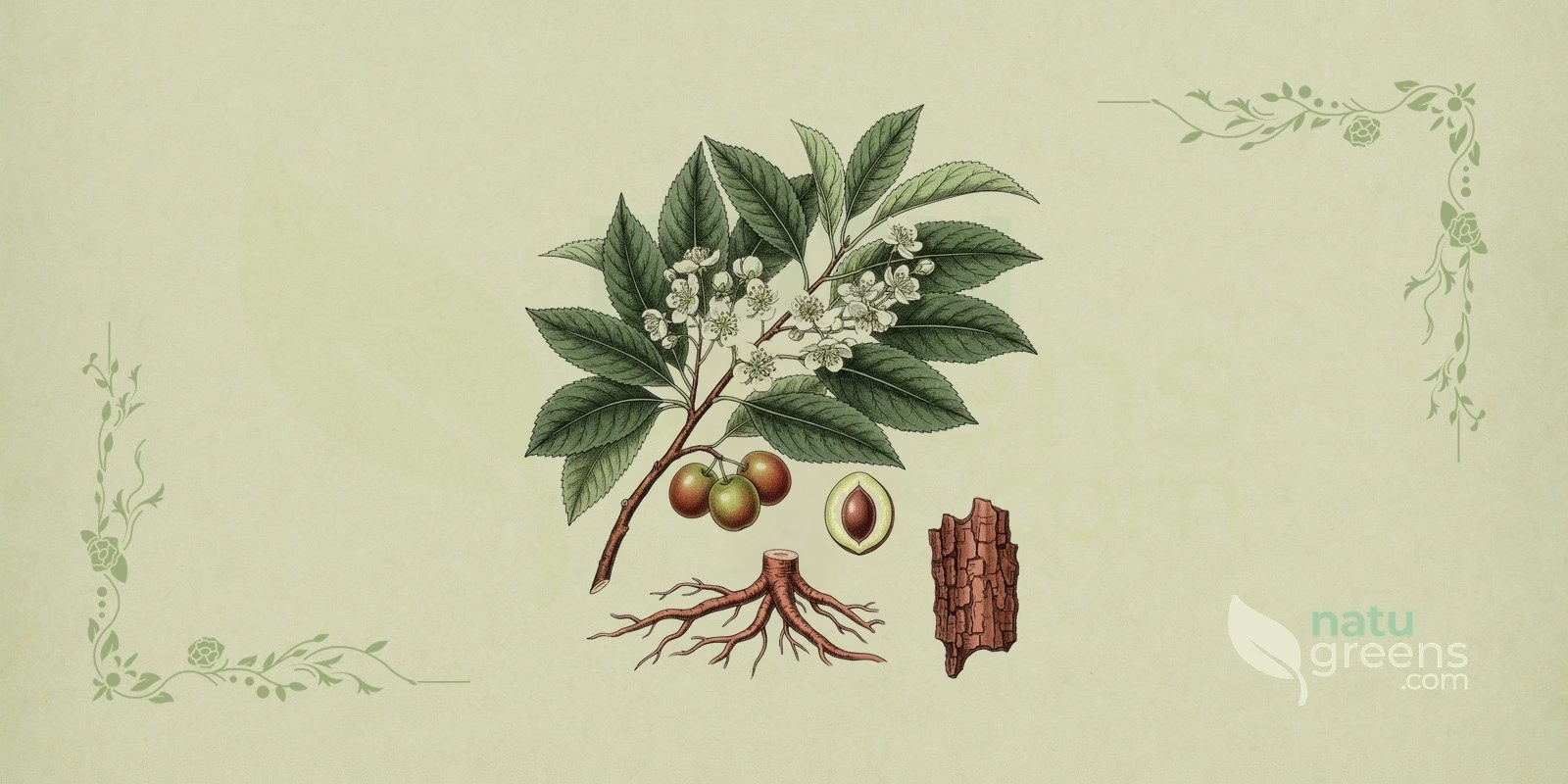
In traditional African medicine, the bark, leaves and roots of the tree appear in records of use for a wide range of complaints, and its phytochemical makeup, rich in phytosterols, triterpenes and fatty acids, explains researchers’ interest in the anti-inflammatory, antimicrobial and antiandrogenic activities observed mainly in experimental studies. International demand for bark extracts aimed at the urinary symptoms of benign prostatic hyperplasia (BPH) led to intensive harvesting of wild populations, which now worries conservationists. At the same time, scientific research is evaluating some of these traditional uses, with more consistent results for mild to moderate urinary symptoms of BPH than for the other folk indications.
Popular and International Names of African Cherry
African cherry goes by different names depending on the region and language, and several of them recall the former genus Pygeum, the resemblance to other fruits of the genus Prunus, or the tree’s reddish, strong-smelling wood.
- English: African almond, African cherry, African plum, African prune, bitter almond, iron wood, pygeum, red stinkwood.
- French: prunier d’Afrique, pygeum.
- German: Afrikanischer Kirschbaum, Pygeum, Rotstinkholz.
- Italian: pigmeo, pruno africano.
- Portuguese: ameixa-africana, cereja-africana, madeira-de-ferro, prunheiro-africano, pygeum.
- Spanish: ciruelo africano, manzano africano, pigeum.
Botanical Synonyms of Prunus africana
The accepted scientific name of African cherry is Prunus africana (Hook.f.) Kalkman, but the plant was previously classified in the genus Pygeum, and Pygeum africanum Hook.f. remains the best-known synonym in the historical literature and on commercial product labels. The transfer to the genus Prunus reflects a deeper understanding of phylogenetic relationships within the Rosaceae family, and the main synonyms recorded for the species are as follows:
- Laurocerasus africana (Hook.f.) Browicz
- Pygeum africanum Hook.f.
- Pygeum crassifolium Hauman
Botanical Family: Rosaceae
Prunus africana belongs to the Rosaceae family, one of the largest and most diverse families of flowering plants, with about 4,828 species distributed across 91 genera and a presence on virtually every continent. The group includes many economically important plants, such as fruit-bearing species (apples, cherries, peaches, pears and strawberries) and ornamentals like roses, and is characterized by flowers that are usually pentamerous, with five sepals, five petals and numerous stamens, as well as a variety of fruit types, such as drupes, pomes and achenes.
The family is also known for producing bioactive compounds such as flavonoids, tannins and phenolic acids, which help explain the medicinal interest in several of its species, African cherry among them. The genetic and chemical diversity of the Rosaceae is the subject of intensive research, both to understand the traditional applications of these plants and to search for new plant-derived drugs.
Parts of African Cherry Used
- Fruits
- Leaves
- Roots
- Stem bark
The stem bark accounts for almost all of the commercial and scientific interest in the species, and its large-scale removal, which often ends up killing the tree, lies at the root of the conservation problems African cherry faces in several regions of Africa.
Ethnobotanical and Traditional Uses
The uses below bring together ethnobotanical records from different African communities compiled in scientific reviews and are not equivalent to proven indications. Diseases such as malaria, typhoid fever, gonorrhea, diabetes, hypertension, cancer and HIV infection require medical diagnosis and treatment, and the plant does not replace that care under any circumstances.
- AIDS-related symptoms (traditional record, no clinical evidence)
- Benign prostatic hyperplasia (BPH)
- Chest and intercostal pain relief
- Diabetes mellitus
- Erectile dysfunction
- Fever
- Gastrointestinal conditions (diarrhea, ulcers)
- Gonorrhea
- Hypertension
- Kidney disease
- Malaria
- Mental illness
- Prostate cancer (traditional record, no clinical evidence)
- Purgative
- Respiratory problems
- Skin infections
- Typhoid fever
- Urinary disorders
- Wound healing
Therapeutic Properties of African Cherry
- Analgesic (traditional record of pain relief)
- Antiandrogenic (interference with androgen action observed in experimental studies)
- Antiangiogenic (inhibition of new blood vessel formation in laboratory models)
- Antibacterial (activity against bacteria observed in laboratory assays)
- Anti-inflammatory (reduction of inflammatory mediators in preclinical studies)
- Antimicrobial (activity against microorganisms in laboratory assays)
- Antioxidant (neutralization of free radicals in in vitro assays)
- Antiproliferative (activity observed in laboratory studies, without clinical evidence)
- Astringent (tightens tissues, an effect associated with tannins)
- DPP-4 inhibitory (inhibition of the DPP-4 enzyme observed in the laboratory, investigated in glucose metabolism)
Most of these activities were described in cells, tissues or laboratory animals, and only the effect on BPH urinary symptoms has been tested in human clinical trials, which are themselves small and short, so none of the items on this list can be considered a proven indication.
Detailed Phytochemical Profile of African Cherry
- Alkaloids
- Beta-sitostenone
- Beta-sitosterol
- Campesterol
- Cyanogenic glycosides
- Fatty acids
- Flavonoids (quercetin)
- Oleanolic acid
- Saponins
- Tannins
- Triterpenes
- Ursolic acid
The most studied groups in the bark are the phytosterols, such as beta-sitosterol and campesterol, the pentacyclic triterpenes, including oleanolic and ursolic acids, and the fatty acids, to which most of the anti-inflammatory and antiproliferative activities described in the laboratory are attributed. The concentration of these compounds varies between tree populations in different regions of Africa, and the presence of cyanogenic glycosides, common in the genus Prunus, is one more reason not to improvise homemade preparations of the leaves and fruits.
Preparation and Administration Forms of African Cherry
- Decoction (bark, roots, leaves, fruits)
- Extracts (bark)
- Infusion (leaves, fruits)
- Powder (bark for topical use)
Most studies on urinary symptoms evaluated standardized bark extracts rather than homemade decoctions or infusions, whose composition varies considerably depending on the source of the material and the method of preparation. Bark powder appears in traditional records only for topical use on the skin, and any form of internal use should be guided by a health professional familiar with the patient’s history.
Synergy with Other Medicinal Plants
Prostate Health
In commercial formulas aimed at the urinary symptoms of BPH, African cherry often appears alongside saw palmetto (Serenoa repens), in a pairing that rests more on traditional use and pharmacological reasoning than on trials comparing the mix with each plant on its own. The proposed rationale combines the phytosterols and triterpenes of Prunus africana bark, studied for anti-inflammatory and antiproliferative effects on prostate cells, with the fatty acids of saw palmetto, investigated for inhibition of the 5-alpha reductase enzyme. Because robust studies of the combination are lacking, any expectation of additional relief from urinary symptoms should be discussed with the urologist, who also needs to know about every product in use.
Anti-Inflammatory Support
In folk herbal medicine, African cherry is also paired with turmeric (Curcuma longa) or Indian frankincense (Boswellia serrata), plants whose main compounds, curcumin and boswellic acids, are widely studied for their anti-inflammatory activity. The idea behind this synergy is to add mechanisms that differ from those of the phytosterols and triterpenes of Prunus africana in chronic inflammatory conditions such as arthritis or prostatitis, although the combination has not been evaluated in clinical trials and remains in the realm of traditional record. Turmeric is also cited for a possible interaction with anticoagulants, which reinforces the need for professional guidance for anyone taking medications that affect blood clotting.
Recipes and Usage Protocols of African Cherry
Traditional Bark Decoction
According to traditional records from communities in Central and Southern Africa, the dried bark is boiled in water and the resulting liquid is used for male urinary complaints, especially those associated with benign enlargement of the prostate. Because there are no safety data for homemade decoctions, whose concentration varies widely depending on the source of the bark, this text does not give amounts or frequency of intake.
The preparation described in the sources consists of boiling the chopped bark in water for about 15 to 20 minutes, removing it from the heat, covering it and letting it stand for another 10 minutes before straining. The amount of bark, the number of daily doses and the duration of use must be set individually, and only after a urological evaluation has clarified the cause of the symptoms, so consult a health professional before any use.
Traditional Leaf Infusion
According to African ethnobotanical records, dried African cherry leaves are traditionally used in infusion for mild gastrointestinal discomfort, such as diarrhea or stomachache. Diarrhea that is persistent, bloody or accompanied by fever requires medical evaluation, and the infusion should not delay that care.
In the traditional method, boiling water is poured over the leaves, which steep for 5 to 7 minutes before the drink is strained and taken warm. Since the species’ phytochemical list includes cyanogenic glycosides, typical of the genus Prunus, the amount of leaves and the frequency of intake should not be improvised, and the advice is to consult a health professional before use.
The preparations above follow traditional records and do not replace professional guidance. Before any internal use, check the contraindications and interactions described in this article.
Associated Therapies
Herbal Medicine
In herbal medicine, Prunus africana holds a prominent place among the plants studied for male urological conditions, above all benign prostatic hyperplasia, and its standardized bark extracts are included in formulas aimed at symptoms such as nocturia, dysuria and urinary urgency. Research is investigating the modulation of inflammation and of prostate cell growth, and reviews of clinical trials, generally small and short, suggest a moderate improvement in urinary symptoms with these extracts, without consistent evidence of a reduction in prostate volume. For this reason, herbal use should be understood as a possible complement discussed with the urologist, and never as a substitute for diagnosis and conventional treatment.
Nutraceuticals
Thanks to its phytochemical profile rich in phytosterols and triterpenes, African cherry bark is included in a range of supplements aimed at prostate and urinary tract health, often combined with selenium, zinc and saw palmetto extract. The composition of these products varies with the source of the bark and the extraction process, since field studies show relevant differences in the content of bioactive compounds between tree populations in different regions of Africa. Any nutraceutical containing Prunus africana should be used under the supervision of a health professional, who can assess its safety and suitability for the individual, and choosing suppliers that can prove sustainably managed sourcing helps reduce pressure on wild populations.
Contraindications and Side Effects of African Cherry
Contraindications
African cherry is usually well tolerated in studies with standardized extracts, but its use is contraindicated in people with known hypersensitivity to any component of the plant and calls for caution in those who have had an allergic reaction to other plants of the Rosaceae family. The plant is not indicated for women or for pediatric use, which excludes pregnant and breastfeeding women and children, groups for whom no safety studies exist either. Men with prostate cancer or other hormone-dependent conditions should only consider its use under strict medical supervision, because the plant may interfere with the action of androgenic hormones.
Urinary Symptoms Require Medical Diagnosis
Urinary symptoms such as difficulty urinating, a weak stream, urgency or blood in the urine require medical diagnosis before any self-medication, because they may have causes that need specific treatment, including the need to rule out prostate cancer. African cherry should not be used as a substitute for urological medical follow-up, and anyone already being treated for BPH needs to tell their urologist before adding any product based on the plant.
Common Side Effects
African cherry can cause mild gastrointestinal discomfort, with nausea, abdominal pain or diarrhea, effects that tend to be transient and infrequent at the doses evaluated in clinical studies. Allergic skin reactions are rare, and toxicity studies in rats given concentrated bark extracts recorded organ lesions, which underlines the importance of not improvising doses or extending use on your own, and of reporting any unusual symptom to a doctor or pharmacist.
Drug Interactions
Prunus africana may interact with medications that act on hormones, such as hormone replacement therapy, prostate cancer drugs and other medicines used for BPH, and may potentially add to the effect of anti-inflammatory drugs. Caution is advised for people taking anticoagulants or antiplatelet agents, because of the possible additive effect, and also for those taking blood glucose-lowering drugs, since laboratory studies are investigating the plant’s action on the DPP-4 enzyme, which is linked to glucose control. In all these cases, a medical consultation should come before starting use, to avoid adverse interactions and keep ongoing treatment safe.
Historical Notes and Interesting Facts
Discovery and Traditional Use
Prunus africana has a long history in traditional African medicine, handed down through generations in communities of Central and Southern Africa that turned to the tree’s bark for fever, urinary problems and inflammation. Its use for male urinary complaints was already part of this local knowledge long before Western science began investigating the species, which makes African cherry a notable example of how ethnobotany guides pharmacological research.
The Bark Trade and Conservation
The international bark trade, documented since the early 1970s, grew on the back of extract production for BPH urinary symptoms and led to Prunus africana being classified as vulnerable by the International Union for Conservation of Nature (IUCN) and listed in CITES Appendix II in 1995, which places bark exports under international control. Unsustainable harvesting, which often strips so much bark that the tree dies, threatens the survival of wild populations, and for this reason cultivation programs, sustainable management schemes and even laboratory micropropagation protocols have been developed to protect the species.
A Tree of the African Mountains
African cherry grows in mountain forests isolated from one another, and genetic studies suggest that populations in the mountains of East and West Africa were once linked by an ancient migration corridor. This evolutionary history helps explain the species’ genetic diversity and the regional variation in bioactive compound content in the bark, a detail that matters both for conservation and for extract standardization.
Frequently Asked Questions about African Cherry
What Does Science Say about African Cherry and BPH?
Reviews of clinical trials with standardized Prunus africana bark extracts suggest moderate relief of mild to moderate urinary symptoms of benign prostatic hyperplasia, such as the need to urinate at night, but the studies are generally small and short. These results do not automatically apply to homemade tea, whose composition is far less predictable, and the diagnosis and choice of treatment for BPH always rest with the urologist.
What Is African Cherry Used for in Traditional Medicine?
Besides male urinary complaints, African ethnobotanical records cite the bark, leaves and roots for fever, malaria, gastrointestinal problems, chest pain and wounds, among other uses. These records describe tradition and do not prove efficacy, and several of these conditions, such as malaria and persistent fever, require immediate medical diagnosis and treatment.
Does African Cherry Cause Side Effects?
The most frequently reported effects are mild and involve gastrointestinal discomfort, such as nausea, abdominal pain or diarrhea, while allergic reactions are rare but possible, especially in people sensitive to plants of the Rosaceae family. Anyone with pre-existing conditions or taking other medications should talk to a health professional before using the plant and seek care if any adverse reaction occurs.
Do I Need a Medical Diagnosis before Using African Cherry?
Yes, because urinary symptoms such as difficulty urinating, a weak stream, urgency or blood in the urine require medical diagnosis before any self-medication, as they may have causes that call for specific treatment, including the need to rule out prostate cancer. African cherry does not replace urological follow-up, and any use should be agreed with the doctor in charge.
Can People on Anticoagulants Take African Cherry?
People taking anticoagulants or antiplatelet agents should be cautious, because of the plant’s possible additive effect, and should only consider using it after talking to the doctor who oversees their treatment. The same conversation applies to anyone taking blood glucose-lowering drugs, hormonal medications or prostate medicines.
Can Women and Children Use African Cherry?
No, because the use of African cherry is not indicated for women or children, and there are no safety studies for pregnant or breastfeeding women or for pediatric use. The indications studied involve only male urinary symptoms related to the prostate, always with medical follow-up.
Notice: this content is for informational purposes and does not replace professional medical advice. Consult a physician or herbal practitioner before using medicinal plants, especially during pregnancy, breastfeeding, or alongside medication.
References and Scientific Studies
View All 13 Cited References
- PMC2014 Bodeker G, et al. Prunus africana (Hook.f.) Kalkman: the overexploitation of a medicinal plant species and its legal context. J Altern Complement Med. 2014.
- PMC1972 Cunningham A, et al. Power, policy and the Prunus africana bark trade, 1972-2015. J Ethnopharmacol. 2016.
- PMC2007 Edgar AD, et al. A critical review of the pharmacology of the plant extract of Pygeum africanum in the treatment of LUTS. Neurourol Urodyn. 2007.
- PMC2002 Gathumbi PK, et al. Toxicity of chloroform extract of prunus africana stem bark in rats: gross and histological lesions. Phytother Res. 2002.
- PMC2011 Kadu CA, et al. Phylogeography of the Afromontane Prunus africana reveals a former migration corridor between East and West African highlands. Mol Ecol. 2011.
- PMC2012 Kadu CA, et al. Bioactive constituents in Prunus africana: geographical variation throughout Africa and associations with environmental and genetic parameters. Phytochemistry. 2012.
- PMC2017 Komakech R, Kang Y. A Review of the Potential of Phytochemicals from Prunus africana (Hook f.) Kalkman Stem Bark for Chemoprevention and Chemotherapy of Prostate Cancer. Evid Based Complement Alternat Med. 2017.
- PMC2013 Mwitari PG, et al. Antimicrobial activity and probable mechanisms of action of medicinal plants of Kenya: Withania somnifera, Warbugia ugandensis, Prunus africana and Plectrunthus barbatus. PLoS One. 2013.
- PMC2024 Ndung’u JK, et al. A Comprehensive Review of Ethnomedicinal Uses, Phytochemistry, Pharmacology, and Toxicity of Prunus africana (Hook. F.) Kalkman from Africa. Scientifica (Cairo). 2024.
- PMC2010 Quiles MT, et al. Antiproliferative and apoptotic effects of the herbal agent Pygeum africanum on cultured prostate stromal cells from patients with benign prostatic hyperplasia (BPH). Prostate. 2010.
- PMC2023 Rubegeta E, et al. The African cherry: A review of the botany, traditional uses, phytochemistry, and biological activities of Prunus africana (Hook.f.) Kalkman. J Ethnopharmacol. 2023.
- PMC2003 Stewart KM. The African cherry (Prunus africana): can lessons be learned from an over-exploited medicinal tree? J Ethnopharmacol. 2003.
- PMC2024 Villar A, et al. Anti-Inflammatory Potential of Pygeum africanum Bark Extract: An In Vitro Study of Cytokine Release by Lipopolysaccharide-Stimulated Human Peripheral Blood Mononuclear Cells. Int J Mol Sci. 2024.