



Quick summary
Dioscorea polystachya Turcz. / Chinese Yam, also known as cinnamon vine, is a perennial climbing plant of the Dioscoreaceae family, native to East Asia and cultivated for thousands of years for its long edible tubers with white, mucilaginous flesh. In China it is called shan yao, and in Japan, where it is widely eaten…
Main caution: Warning: diosgenin is not converted into progesterone, estrogen or DHEA by the human body. Chinese yam does not replace hormone therapy or treatment for menopause or infertility, and anyone with a hormone-sensitive…
Dioscorea polystachya Turcz. / Chinese Yam, also known as cinnamon vine, is a perennial climbing plant of the Dioscoreaceae family, native to East Asia and cultivated for thousands of years for its long edible tubers with white, mucilaginous flesh. In China it is called shan yao, and in Japan, where it is widely eaten grated and raw, it goes by nagaimo.
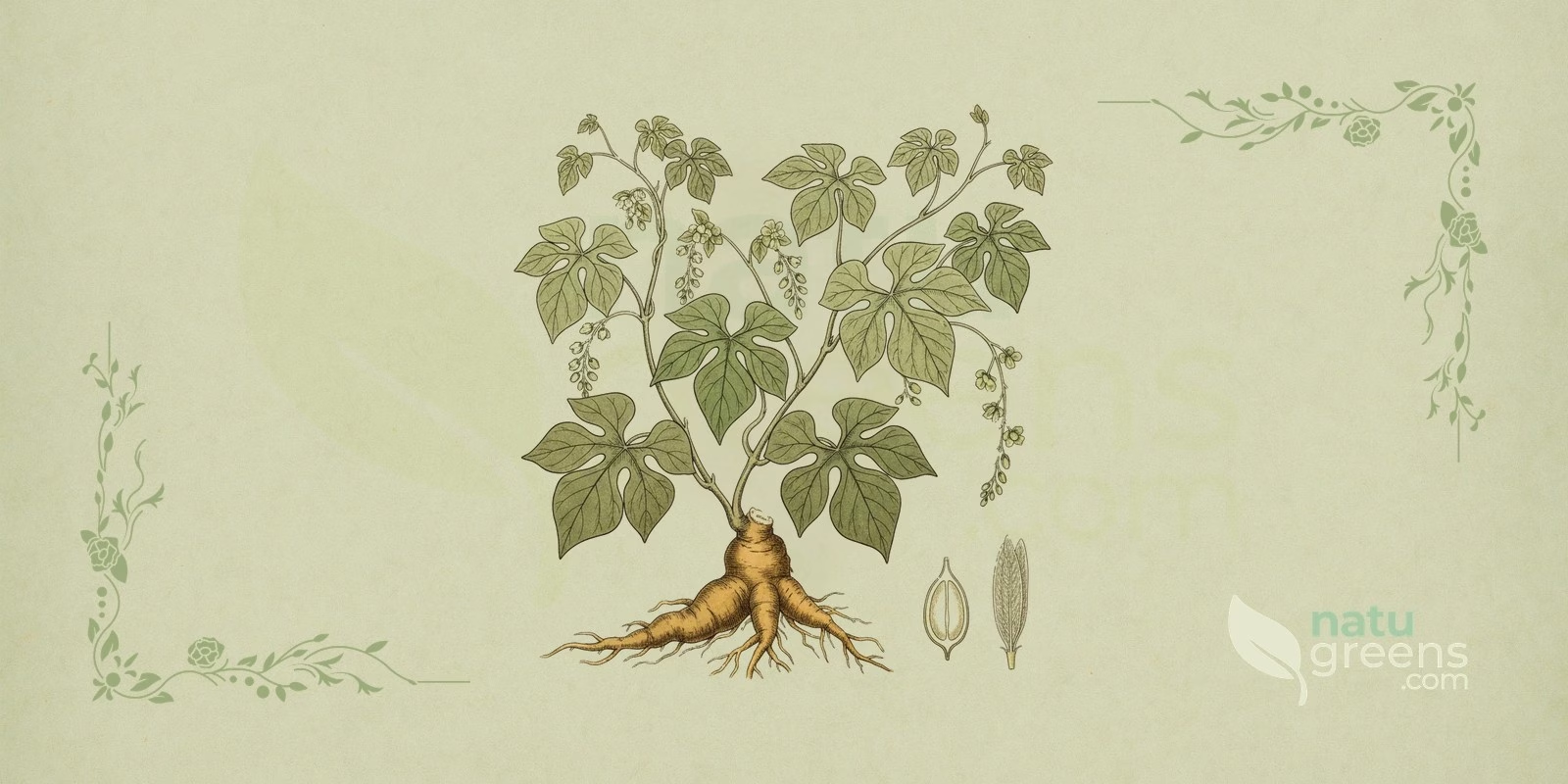
Chinese yam is first and foremost a food, and one of the few yams that can be eaten raw. Traditional Chinese Medicine has used it for centuries as a digestive tonic, and researchers are studying its polysaccharides and its diosgenin, but its effects on blood sugar and digestion are still under study. Diosgenin in particular fuels a persistent myth: it is not converted into hormones in the human body, and Chinese yam is not a source of "natural hormones".
Popular and International Names of Chinese Yam
- Chinese: shan yao.
- English: Chinese yam, cinnamon vine.
- French: igname de Chine.
- German: Chinesische Yamswurzel, Lichtwurzel.
- Italian: igname cinese.
- Japanese: nagaimo.
- Portuguese: inhame-chinês, inhame-da-china.
- Spanish: ñame chino.
In Japan, the name yamanoimo usually refers to a different species, Dioscorea japonica, and should not be taken as a synonym of nagaimo. In Brazil, the words "inhame" and "cará" change meaning from region to region: the "inhame" sold in the Southeast is usually taro (Colocasia esculenta), which belongs to another family, while "carás" are Dioscorea species.
Three Different Dioscoreas
Chinese yam should not be confused with two other species of the same genus that have their own articles on this site. Wild yam (Dioscorea villosa) is a North American plant used in supplements and creams. The intoxicating yam (Dioscorea hispida), from Southeast Asia, has tubers that are poisonous when raw. These are three different species, with different uses and different risks.
Botanical Synonyms of Chinese Yam
The nomenclature of Dioscorea polystachya has been the subject of much confusion. The name Dioscorea batatas Decne. is a synonym of the species. "Dioscorea opposita", on the other hand, is a misapplied name: it was used for decades for Chinese yam, but the original D. opposita corresponds to Dioscorea oppositifolia, a different plant native to southern Asia. In practice, many scientific papers and products that mention "Dioscorea opposita" are in fact referring to Chinese yam.
- Dioscorea batatas Decne.
Botanical Family: Dioscoreaceae
The Dioscoreaceae family brings together herbaceous or woody climbers, usually with heart-shaped leaves, and comprises some 600 to 650 species, nearly all in the genus Dioscorea, found mainly in tropical and subtropical regions. Many species form underground tubers that store starch and are important food sources, the yams.
Several Dioscorea species contain diosgenin, a raw material used by the pharmaceutical industry to synthesize steroid hormones, and some of them are toxic when raw and require careful preparation.
Parts of Chinese Yam Used
- Bulbils, small aerial tubers (culinary use)
- Underground tubers (culinary and medicinal use)
Ethnobotanical and Traditional Uses of Chinese Yam
- Chronic cough (traditional Chinese use)
- Chronic diarrhea (used in Traditional Chinese Medicine)
- Diabetes (traditional Chinese use; no substitute for treatment)
- Fatigue and convalescence (traditional use as a tonic)
- Frequent urination (traditional Chinese use)
- Poor appetite and weak digestion (traditional use)
- Staple food (tuber eaten raw, cooked or in soups)
These uses belong to the system of Traditional Chinese Medicine and do not amount to efficacy proven by clinical studies.
Therapeutic Properties of Chinese Yam
- Antioxidant (observed in laboratory assays)
- Blood sugar (under study; laboratory and animal data)
- Digestion and gut microbiota (under study; data mostly from animals)
- Immunity (polysaccharides under laboratory study)
Most research on Chinese yam has been carried out on cells and animals, often with concentrated extracts that bear little relation to eating the tuber as a food. The results are preliminary and do not justify using the plant to treat disease.
The Natural Hormone Myth
The diosgenin in yams can be turned into progesterone and other steroid hormones, but only in the laboratory, through industrial chemical synthesis. The human body does not carry out this conversion: eating yam, taking an extract or applying a diosgenin cream does not raise progesterone, estrogen or DHEA. For this reason Chinese yam has no indication for menopause, PMS, fertility or hormone replacement, and products sold with that promise have no scientific basis.
Detailed Phytochemical Profile of Chinese Yam
Among the most studied compounds in Chinese yam are its polysaccharides, whose activities have been described in the laboratory. The steroidal saponins, diosgenin above all, interest industry as a raw material for the chemical synthesis of hormones, a process that takes place only in the laboratory and never in the body of the person who eats the plant.
The tuber also contains allantoin, mucilage, phenolic compounds and calcium oxalate raphides, needle-shaped crystals concentrated mainly in the skin and in the raw mucilage, which irritate the skin and mouth of sensitive people.
- Allantoin
- Calcium oxalate (raphides)
- Diosgenin and steroidal saponins
- Mucilage
- Phenolic compounds
- Polysaccharides
Preparation and Administration Forms of Chinese Yam
- Boiled, steamed, roasted or fried
- Dried slices in soups and traditional decoctions
- Flour
- Raw and grated, as in Japanese tororo
When peeling and grating the raw tuber, wear gloves or wet your hands with water and vinegar, because the skin and the mucilage can make the skin itch.
Synergy with Other Medicinal Plants
Ginger and Licorice in Traditional Cooking
In Chinese tradition, Chinese yam appears in soups and dishes with ginger (Zingiber officinale) and licorice (Glycyrrhiza glabra) that are associated with digestion. Culinary ginger is safe for most people, but licorice, when used frequently, can raise blood pressure and lower potassium, and it should be avoided by people with high blood pressure or heart disease and by pregnant women.
Cinnamon and Fenugreek
Popular combinations with cinnamon (Cinnamomum verum) and fenugreek (Trigonella foenum-graecum) are mentioned for blood sugar. The effects of these plants are still under study and may add to those of diabetes medications, with a risk of hypoglycemia. Anyone being treated for diabetes should not use these blends as a substitute for treatment or change their medication on their own.
Astragalus and Reishi
In Traditional Chinese Medicine, Chinese yam is also paired with astragalus (Astragalus mongholicus) and the reishi mushroom (Ganoderma lucidum) in tonic formulas. These are traditional combinations with no proven effect on immunity, and reishi may interact with anticoagulants.
Recipes and Usage Protocols of Chinese Yam
Chinese Yam Congee
Ingredients: 50 g of fresh Chinese yam, peeled and chopped, 50 g of rice, 750 ml of water and salt to taste.
Preparation: cook the rice and the yam in the water until soft and creamy, then season with a pinch of salt. It is a light traditional dish, common in Chinese home cooking.
Chinese Yam and Chicken Soup
Ingredients: 100 g of diced Chinese yam, 150 g of diced chicken breast, 1 liter of stock, carrot, mushrooms, salt and pepper.
Preparation: cook the chicken in the stock, add the yam and the vegetables and simmer until tender. Season to taste.
Tororo, Japanese-Style Grated Yam
Ingredients: a piece of nagaimo, soy sauce or dashi stock and rice or soba noodles.
Preparation: peel the tuber wearing gloves, grate it finely into a sticky paste and season with a little soy sauce or dashi. Serve over rice or soba. People whose mouths are sensitive to raw yam should eat it cooked instead.
The recipes above are culinary. Concentrated Chinese yam extracts and powders have no established safe dose for self-medication.
The preparations above follow traditional records and do not replace professional guidance. Before any internal use, check the contraindications and interactions described in this article.
Associated Therapies of Chinese Yam
Traditional Chinese Medicine
In Traditional Chinese Medicine, shan yao is classified as a tonic with a neutral nature and a sweet flavor, associated with the Spleen, Stomach, Lung and Kidney, and it is included in traditional formulas for fatigue, diarrhea and chronic cough. These concepts belong to the traditional system and are not equivalent to proven diagnoses or treatments.
Diet
As a food, Chinese yam provides starch, fiber and mucilage and can be part of a varied diet. Because it is rich in carbohydrates, people with diabetes should count it in their meal plan as they would any other tuber.
Contraindications and Side Effects of Chinese Yam
Do Not Use It as a Hormone
Warning: diosgenin is not converted into progesterone, estrogen or DHEA by the human body. Chinese yam does not replace hormone therapy or treatment for menopause or infertility, and anyone with a hormone-sensitive condition should follow medical advice, not promises of "natural hormones".
Species Identity
Do not confuse Chinese yam with the intoxicating yam (Dioscorea hispida), which is poisonous when raw, or with wild yam (Dioscorea villosa). Only properly identified Chinese yam, bought as a food, should be eaten raw.
Skin, Mouth and Allergy
The skin of the tuber and the raw mucilage contain calcium oxalate raphides that can cause itching and irritation of the skin, lips and mouth. Cases of yam allergy have also been described. Anyone who reacts should eat the tuber cooked or avoid it altogether.
Blood Sugar and Medications
The effects of Chinese yam on glucose are still under study. People taking diabetes medications should not use concentrated extracts without medical supervision, because the effects may add up and cause hypoglycemia.
Pregnancy and Breastfeeding
Eaten cooked as a food, Chinese yam has no specific restriction. Concentrated extracts have no safety data for pregnancy and breastfeeding and should be avoided.
Invasive Plant
The aerial bulbils drop and sprout easily, and the species has become invasive in some regions, including parts of the United States. Do not plant it without control or discard bulbils in the wild.
Historical Notes and Interesting Facts about Chinese Yam
A Food Thousands of Years Old
Chinese yam has been cultivated in China for thousands of years and appears in the Shennong Ben Cao Jing, the classic of Chinese materia medica compiled around the beginning of the Common Era.
Tororo, Japan's Grated Yam
In Japan, raw grated nagaimo becomes tororo, a sticky paste served over rice, soba noodles or raw fish, one of the rare ways a yam is eaten raw.
Cinnamon Vine
The plant's other English name, cinnamon vine, comes from the sweet fragrance of its small flowers.
Frequently Asked Questions about Chinese Yam
Can Chinese Yam Be Eaten Raw?
Yes, it is one of the few yams eaten raw, usually grated. The skin and the mucilage can irritate the skin and mouth of sensitive people, so it is best to peel it with gloves and, if it causes discomfort, to eat it cooked.
Does Chinese Yam Contain Natural Hormones?
No. Diosgenin becomes a hormone only through chemical synthesis in the laboratory. The human body does not convert diosgenin into progesterone, estrogen or DHEA, and Chinese yam has no proven hormonal effect.
Does Chinese Yam Help with Diabetes?
Its effects on glucose are still under study, mostly in animals. As a food, it is rich in carbohydrates and should be counted in the meal plan. Extracts may add to the effect of diabetes medications and should only be used under medical supervision.
What Is the Difference between Chinese Yam and Wild Yam?
They are different species. Chinese yam (Dioscorea polystachya) is an Asian food, whereas wild yam (Dioscorea villosa) is a North American plant sold in supplements. There is also the intoxicating yam (Dioscorea hispida), which is poisonous raw.
Is the Yam Sold at the Market Chinese Yam?
Usually not. In southeastern Brazil, the common "inhame" is taro (Colocasia esculenta), from another family, and "carás" are other Dioscorea species. Chinese yam is found mainly in Asian markets, sometimes sold as nagaimo.
How Should Chinese Yam Be Stored?
Keep whole tubers in a cool, dry, dark and well-ventilated place. Once cut, wrap the tuber and refrigerate it, using it within a few days.
Notice: this content is for informational purposes and does not replace professional medical advice. Consult a physician or herbal practitioner before using medicinal plants, especially during pregnancy, breastfeeding, or alongside medication.
How to cite this article
NATUGREENS. Chinese Yam (Dioscorea polystachya): Uses and Myths. Natugreens, 20 Nov. 2026. Disponível em: https://natugreens.com/dioscorea-polystachya-chinese-yam/. Accessed: Nov. 20, 2026.
Natugreens. (2026). Chinese Yam (Dioscorea polystachya): Uses and Myths. Natugreens. https://natugreens.com/dioscorea-polystachya-chinese-yam/
References and Scientific Studies
- DOI2020 Epping J, Laibach N. (2020). An underutilized orphan tuber crop, Chinese yam: a review. Planta, 252(4), 58. A review of the botany, cultivation, composition and uses of Chinese yam. ↗
- PMC2023 Wang C, et al. Meta-analysis of Huangqi (Astragalus membranaceus) and Chinese Yam (Rhizoma Dioscoreae) for Diabetic Nephropathy. Alternative therapies in health and medicine. 2023.
- PMC2020 Epping J, et al. An underutilized orphan tuber crop-Chinese yam : a review. Planta. 2020.
You May Also Like
Take your time and tell us everything you think, details included. Every response is read by someone on our editorial team and goes into the article's revision. An honest critique helps us more than a polite compliment.
Take your time and tell us everything you think, details included. Every response is read by someone on our editorial team and goes into the article's revision. An honest critique helps us more than a polite compliment.