



Quick summary
Angelica dahurica (Hoffm.) Benth. & Hook.f. ex Franch. & Sav. / Dahurian Angelica, a robust perennial herb of the Apiaceae family, is native to northeastern China, the Korean Peninsula, Japan and the Russian Far East, including the historical region of Dauria, east of Lake Baikal, which gave the species its…
Main caution: Dahurian angelica root contains furanocoumarins such as imperatorin, isoimperatorin and bergapten, substances capable of causing skin photosensitization, that is, a reaction of the skin to sunlight that may show up as…
Angelica dahurica (Hoffm.) Benth. & Hook.f. ex Franch. & Sav. / Dahurian Angelica, a robust perennial herb of the Apiaceae family, is native to northeastern China, the Korean Peninsula, Japan and the Russian Far East, including the historical region of Dauria, east of Lake Baikal, which gave the species its scientific epithet. Its dried root, known in traditional Chinese medicine as bai zhi (白芷), is one of the oldest herbal drugs in the Chinese repertoire and is still officially described in the Pharmacopoeia of the People's Republic of China, with large-scale cultivation in the provinces of Sichuan, Zhejiang, Henan and Hebei. Most of the effects attributed to the plant, however, come from traditional use and from laboratory or animal studies rather than from robust clinical trials in humans, so any advertised benefit should be read with caution.
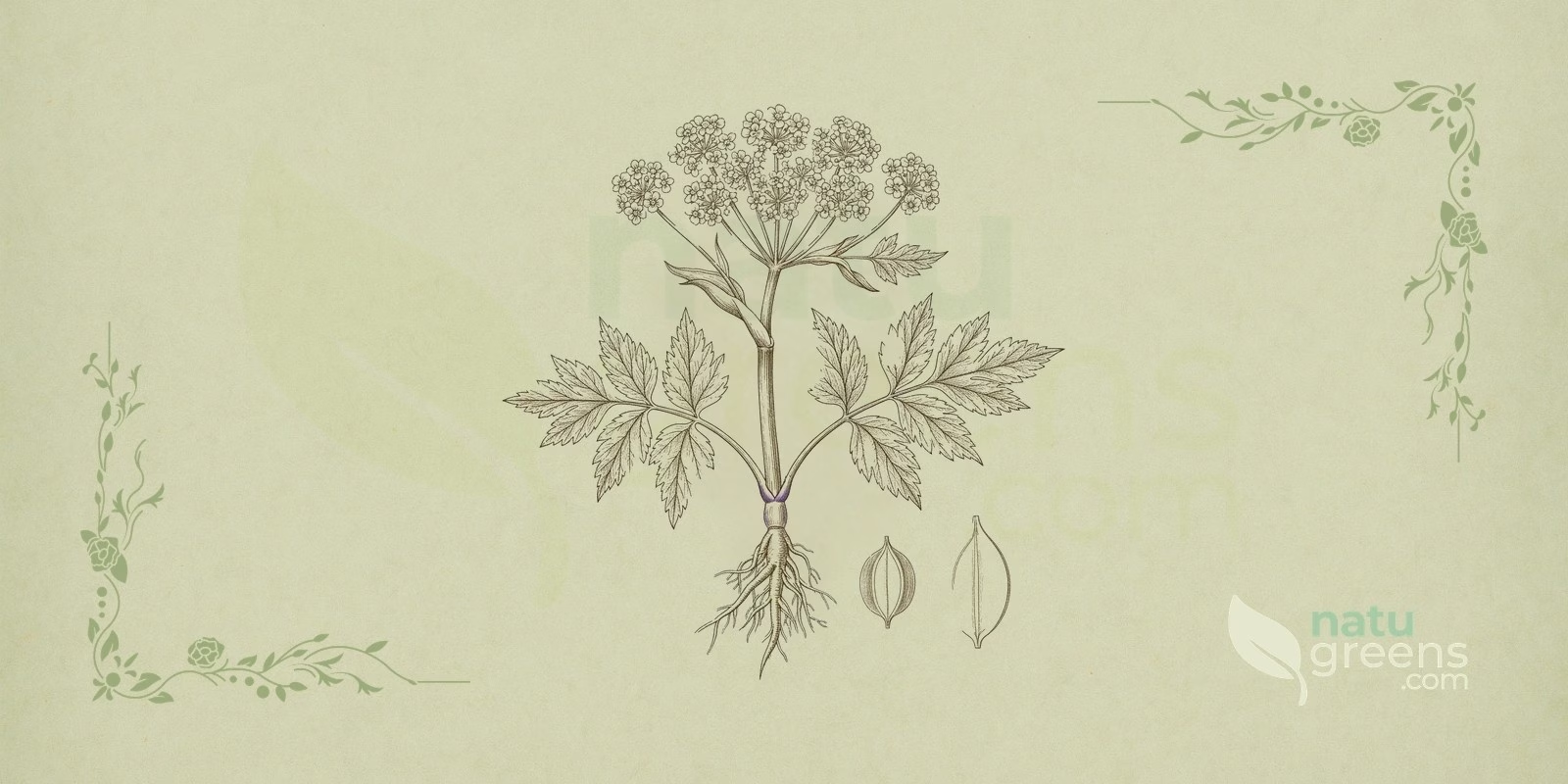
Common and International Names of Dahurian Angelica
- Chinese: bai zhi (白芷), xiang bai zhi (香白芷).
- English: Dahurian Angelica, Bai Zhi.
- German: Dahurische Engelwurz.
- Japanese: yoroigusa (ヨロイグサ) for the plant, and byakushi (ビャクシ, 白芷) for the herbal drug described in the Japanese Pharmacopoeia.
- Korean: guritdae (구릿대) for the plant, and baekji (백지) for the medicinal root.
- Pharmaceutical Latin: Angelicae dahuricae radix.
- Portuguese: angélica-chinesa, angélica-da-dáuria, bai zhi.
- Russian: dudnik daurskiy (дудник даурский).
Not to Be Confused with Dang Gui or European Angelica
In popular writing and on supplement labels, the name "Chinese angelica" is very often applied to Angelica sinensis, or dang gui, a different species with its own chemistry and use profile, traditionally associated with women's health. Likewise, Angelica archangelica, the European angelica, belongs to the same genus but has a history, chemistry and set of traditional indications all of its own. This article deals only with Angelica dahurica, or bai zhi, and data from one species should not be carried over to the others, particularly where doses, effects and precautions are concerned. When buying any product, checking the full scientific name on the label is the safest way to confirm which plant it actually contains.
Botanical Synonyms of Dahurian Angelica
The accepted name is Angelica dahurica (Hoffm.) Benth. & Hook.f. ex Franch. & Sav., and the basionym, that is, the original name under which Georg Franz Hoffmann described the species in the early nineteenth century, is Callisace dahurica Hoffm. In Chinese pharmaceutical practice, the official drug may come either from the typical form or from the variety Angelica dahurica var. formosana, grown mainly in Zhejiang and Sichuan, where it yields the commercial grades known as hang bai zhi and chuan bai zhi. Differences between these sources show up in the coumarin content of the root, which explains why quality control studies pay such close attention to the geographic origin of the material.
Botanical Family: Apiaceae
The Apiaceae family, formerly called Umbelliferae, comprises around 3,700 species found mostly in the temperate regions of the Northern Hemisphere, among them food and aromatic plants as familiar as carrot, celery, parsley, coriander and fennel. The feature behind the family's older name is the compound umbel, an inflorescence of small flowers borne on rays that spread from a single point, much like the ribs of an umbrella. Many members of the family store essential oils in secretory canals and produce furanocoumarins, compounds that protect the plant against herbivores and fungi and that, in humans, can make the skin more sensitive to sunlight, a trait that applies directly to Dahurian angelica.
Parts of Dahurian Angelica Used
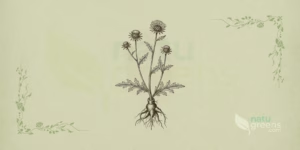
The medicinal part is the root, harvested between late summer and autumn of the year after planting, when the leaves begin to yellow, and then cleaned, sliced and dried in the sun or at low temperature. The root is thick and conical, with a yellowish brown bark marked by small transverse ridges, while the inside is whitish, starchy and dotted with oily specks that correspond to the essential oil canals responsible for the drug's strong, distinctive aroma. Leaves, stems and fruits are not part of official use, even though they contain some of the same compounds.
Ethnobotanical and Traditional Uses of Dahurian Angelica
Bai zhi already appears in the Shennong Bencao Jing, the oldest known Chinese materia medica, compiled around the beginning of the Common Era, and it has featured in hundreds of formulas ever since. In the framework of traditional Chinese medicine, the root is classified as pungent and warm, linked to the Lung, Stomach and Large Intestine meridians, and it was traditionally used to dispel so-called "wind-cold" in colds accompanied by headache, especially pain centered on the forehead, as well as for nasal congestion, sinusitis, toothache and pus-forming swellings of the skin. In Japan, the same drug, called byakushi, found its way into kampo formulas for skin complaints, and some traditional Japanese records also describe it as calming and tonic, a use that does not appear in the Chinese classics. Finally, the powdered root was an ingredient in old Chinese cosmetic preparations intended to brighten and even out the complexion, a tradition that still inspires beauty products in Asia. All of these applications represent traditional knowledge and are not equivalent to proven efficacy.
Medicinal Properties of Dahurian Angelica
The properties below come from cell studies, animal studies or traditional records, and none of them has been conclusively demonstrated in controlled clinical trials in humans.
- Analgesic (root extracts reduced pain sensitivity in mice with induced inflammatory pain, with involvement of the TRPV1 channel, a finding limited to animal models)
- Anti-inflammatory (root coumarins lowered inflammatory mediators and NF-κB pathway activation in laboratory studies)
- Antimicrobial (activity observed in vitro and in Staphylococcus aureus-infected wounds in animals, when combined with rhubarb)
- Antioxidant (free radical scavenging by root extracts in laboratory assays)
- Photosensitizing (a property attributed to the furanocoumarins, explored in early Chinese studies of psoriasis photochemotherapy, which also represents a risk of skin reactions to sunlight)
- Wound-healing (traditional use on skin swellings and sores, supported only by experimental animal studies)
Detailed Phytochemical Profile of Dahurian Angelica
According to the most comprehensive review published on the species, the chemistry of the root is dominated by coumarins, with more than 150 of them identified so far, alongside a complex essential oil and a number of minor constituents.
- Bergapten (5-methoxypsoralen, a furanocoumarin known for its photosensitizing potential)
- Byakangelicin (a furanocoumarin that, in cultured human hepatocytes, increased expression of the CYP3A4 enzyme through the PXR receptor)
- Dimeric furanocoumarins (compounds with anti-inflammatory activity in the laboratory and potent CYP3A inhibition in vitro)
- Essential oil (a mixture of terpenes, aromatic compounds, alcohols, aldehydes, ketones, acids, esters and alkanes, responsible for the aroma of the root)
- Imperatorin (the main chemical marker of the root, used in quality control of the herbal drug)
- Isoimperatorin (a furanocoumarin abundant in the root, often measured together with imperatorin)
- Oxypeucedanin (a furanocoumarin of note among the quality markers used to compare different sources)
- Polysaccharides (a fraction that remains little studied, with activities described only in experimental models)
Preparation and Administration of Dahurian Angelica
In traditional Chinese medicine, the sliced root is almost always taken as a decoction, simmered together with the other herbs in a formula, and the 2020 Chinese Pharmacopoeia lists an oral range of 3 to 10 grams per day for the drug, a figure that serves as a Chinese regulatory reference and not as a recommendation for self-medication. The powdered root is also common, either in capsules or blended into traditional pills, as are dry extracts standardized for coumarins and sold by compounding pharmacies in Asia. For external use, the powder was traditionally mixed with honey, water or creams in face masks and poultices, a practice that calls for extra care, because applying furanocoumarins to the skin and then going out in the sun raises the risk of dark patches and burns.
Synergy with Other Medicinal Plants
Pairing with Ligusticum and Saposhnikovia for Headaches
The classical formula Chuanxiong Cha Tiao San combines bai zhi with the rhizome of Ligusticum chuanxiong and the root of Saposhnikovia divaricata, among other herbs, and Chinese medicine has traditionally indicated it for headaches that accompany colds. The traditional reasoning holds that each plant acts on a different area of the head, with bai zhi assigned to frontal pain, but this division is theoretical and has not been tested in good-quality clinical studies.
Pairing with Corydalis for Pain
In the Yuanhu Zhitong formula, bai zhi is combined with the tuber of Corydalis yanhusuo, and a study in rats observed that the root extract enhanced the analgesic effect of the corydalis alkaloids and raised the blood concentration of one of them, tetrahydropalmatine. The result points to a pharmacokinetic interaction rather than a simple addition of effects, which underlines the need for caution when combining the plant with other active substances.
Pairing with Magnolia for Nasal Congestion
In traditional preparations for a blocked nose and sinusitis, bai zhi often appears alongside the flower buds of Magnolia biondii, known as xin yi, a combination recorded for centuries in Chinese manuals and still found in manufactured products across Asia, although without robust clinical confirmation.
Recipes and Usage Protocols for Dahurian Angelica
Traditional Root Decoction
According to Chinese records, 3 to 10 grams of sliced root are simmered for about 20 to 30 minutes, nearly always together with other herbs prescribed by a practitioner of traditional Chinese medicine, and the strained liquid is drunk warm, divided over the course of the day. Within this tradition the plant is rarely used on its own, which makes it difficult to credit any reported result to bai zhi alone.
Powder in Traditional Face Masks
Old Chinese cosmetic recipes mixed a small amount of the powdered root with honey or water to form a paste, which was applied to the face and removed after a few minutes, always at night and away from the sun. Because of the furanocoumarins, this practice is now discouraged for anyone who will be exposed to sunlight in the following hours, and a patch test on a small area of skin is the bare minimum before any use. These uses follow traditional records and do not replace professional advice, and anyone considering the plant should first talk to a doctor or pharmacist, especially if they take other medications.
The preparations above follow traditional records and do not replace professional guidance. Before any internal use, check the contraindications and interactions described in this article.
Therapies Associated with Dahurian Angelica
Clinical Herbal Medicine
Outside Asia, Dahurian angelica has no monograph from the European Medicines Agency and is not included in the list of simplified-registration herbal medicines of Anvisa, the Brazilian health regulator, so its use in Brazil is confined to traditional Chinese medicine settings and imported products, whose quality and botanical identity are not always assured. In China, the root is part of the official pharmacopoeia and of numerous manufactured preparations, but the available clinical trials usually test multi-herb formulas rather than bai zhi on its own.
Traditional Chinese Medicine and Kampo
There is no relevant documented homeopathic use for the species, and its prominent place lies in traditional Chinese medicine, which uses it in formulas for colds with headache, nasal congestion and skin conditions, and in Japanese kampo, which adopted it under the name byakushi. In both systems, prescriptions are written by trained practitioners who assess the patient's overall pattern of signs and adjust the formula accordingly, something quite different from using the root alone and without guidance.
Contraindications and Side Effects of Dahurian Angelica
Dahurian angelica root contains furanocoumarins such as imperatorin, isoimperatorin and bergapten, substances capable of causing skin photosensitization, that is, a reaction of the skin to sunlight that may show up as intense redness, itching, burn-like blisters and long-lasting dark patches. For this reason, anyone using the plant, whether taken by mouth or applied to the skin, should avoid intense sun exposure and tanning bed sessions in the hours and days that follow, and people with very fair skin, a history of photosensitivity, lupus or other sun-aggravated conditions should avoid it altogether. Use during pregnancy should be avoided because safety data are lacking, and the same caution applies to breastfeeding and to children, groups for which adequate studies are also missing. As with other members of the Apiaceae family, people allergic to plants such as celery, carrot or fennel may also react to Dahurian angelica.
Drug Interactions
Root extracts and furanocoumarins inhibited the liver enzyme CYP3A4 in laboratory studies, in some cases with a potency comparable to that of ketoconazole, and this enzyme is involved in metabolizing a large share of the medicines in current use, including certain statins, immunosuppressants such as cyclosporine and tacrolimus, benzodiazepines such as midazolam, some calcium channel blockers and various antiretrovirals. This inhibition can raise blood levels of these drugs and increase the risk of adverse effects. At the same time, another furanocoumarin from the root, byakangelicin, increased CYP3A4 expression in human liver cells, which means the net effect on any given medicine is unpredictable. A study in healthy volunteers concluded that the root deserves further evaluation for clinically relevant interactions. Anyone taking a medicine on an ongoing basis should consult a doctor or pharmacist before adding Dahurian angelica. Nor should it be combined with treatments that already increase sensitivity to light, such as psoralen photochemotherapy, or with other photosensitizing medicines, given the possible additive effect on the skin.
Curiosities and Historical Facts
The epithet dahurica refers to Dauria, the historical name of the mountainous region east of Lake Baikal, on the borders of Siberia, Mongolia and China, where the first specimens described by European botanists were collected. The Chinese name bai zhi, for its part, can be read as "white fragrant herb", a reference to the pale, scented interior of the root. Chinese medicine once even put the plant's photosensitizing power to use: in 1983, a study published in a Chinese medical journal compared photosensitizing capsules made from bai zhi with 8-methoxypsoralen in the ultraviolet light treatment of psoriasis, the same principle that today calls for caution with the sun among people who use the plant. In China, commercial grades of the root are traditionally named after their growing region, such as qi bai zhi from Hebei, yu bai zhi from Henan, hang bai zhi from Zhejiang and chuan bai zhi from Sichuan, and each has a slightly different chemical profile.
Frequently Asked Questions About Dahurian Angelica
Are Dahurian Angelica and Dang Gui the Same Plant?
No. The Dahurian angelica covered here is Angelica dahurica, or bai zhi, whereas dang gui is Angelica sinensis, a different species of the same genus with other compounds and a different traditional use profile. Since both are sometimes sold under the name "Chinese angelica", checking the scientific name on the label is essential.
Can Dahurian Angelica Cause Skin Discoloration?
Yes, it can. The furanocoumarins in the root increase the skin's sensitivity to sunlight, and combining the plant, whether swallowed or applied to the skin, with sun exposure can lead to redness, blisters and dark patches that take a long time to fade. Avoiding strong sun during and after use is the main protective measure.
Can People on Long-Term Medication Use Dahurian Angelica?
Only under the guidance of a doctor or pharmacist. In laboratory studies, compounds from the root interfere with the CYP3A4 enzyme, which is responsible for metabolizing many medicines, and this can change the amount of a drug in the bloodstream, up or down, in ways that are hard to predict.
Can Pregnant Women Use Dahurian Angelica?
Use during pregnancy should be avoided, because there are not enough safety data for this stage. The same caution extends to breastfeeding and to children, since studies in these groups are also lacking.
Is There Proof That Dahurian Angelica Relieves Headaches?
Not conclusively. Its use for headache is traditional in Chinese medicine, and animal studies suggest an analgesic action of root extracts, but controlled clinical trials of the plant on its own in humans are still missing, and frequent or severe headaches deserve medical evaluation.
Notice: this content is for informational purposes and does not replace professional medical advice. Consult a physician or herbal practitioner before using medicinal plants, especially during pregnancy, breastfeeding, or alongside medication.
How to cite this article
NATUGREENS. Dahurian Angelica (Angelica dahurica): Properties and Uses. Natugreens, 22 Nov. 2026. Disponível em: https://natugreens.com/angelica-dahurica-dahurian-angelica/. Accessed: Nov. 22, 2026.
Natugreens. (2026). Dahurian Angelica (Angelica dahurica): Properties and Uses. Natugreens. https://natugreens.com/angelica-dahurica-dahurian-angelica/
References and Scientific Studies
View All 14 Cited References
Peer-Reviewed Scientific Studies (12)
- DOI2022 Zhao, H., Feng, Y. L., Wang, M., Wang, J. J., Liu, T., Yu, J. (2022). The Angelica dahurica: A Review of Traditional Uses, Phytochemistry and Pharmacology. Frontiers in Pharmacology, 13, 896637. ↗
- DOI2001 Guo, L. Q., Taniguchi, M., Chen, Q. Y., Baba, K., Yamazoe, Y. (2001). Inhibitory Potential of Herbal Medicines on Human Cytochrome P450-Mediated Oxidation: Properties of Umbelliferous or Citrus Crude Drugs and Their Relative Prescriptions. The Japanese Journal of Pharmacology, 85(4), 399-408. ↗
- DOI2009 Yi, S., Cho, J. Y., Lim, K. S., Kim, K. P., Kim, J., Kim, B. H., Hong, J. H., Jang, I. J., Shin, S. G., Yu, K. S. (2009). Effects of Angelicae tenuissima radix, Angelicae dahuricae radix and Scutellariae radix extracts on cytochrome P450 activities in healthy volunteers. Basic & Clinical Pharmacology & Toxicology, 105, 249-256. ↗
- DOI2011 Yang, J., Luan, X., Gui, H., Yan, P., Yang, D., Song, X., Liu, W., Hu, G., Yan, B. (2011). Byakangelicin induces cytochrome P450 3A4 expression via transactivation of pregnane X receptors in human hepatocytes. British Journal of Pharmacology, 162, 441-451. ↗
- DOI2022 Zhu, C., Wang, M., Guo, J., Su, S. L., Yu, G., Yang, Y., Zhou, Y., Tang, Z. (2022). Angelica dahurica Extracts Attenuate CFA-Induced Inflammatory Pain via TRPV1 in Mice. Evidence-Based Complementary and Alternative Medicine, 2022, 4684830. ↗
- DOI2024 Shi, H., Wang, Q., Chang, Y., Zheng, Y., Zhang, D., Zhao, Y., Guo, L. (2024). Screening of anti-inflammatory activities components of Angelica dahurica root based on spectrum-effect relationship analysis and NF-κB pathway. Frontiers in Pharmacology, 15, 1396001. ↗
- DOI2015 Yang, W. Q., Song, Y. L., Zhu, Z. X., Su, C., Zhang, X., Wang, J., Shi, S. P., Tu, P. F. (2015). Anti-inflammatory dimeric furanocoumarins from the roots of Angelica dahurica. Fitoterapia, 105, 187-193. ↗
- DOI2020 Yang, W. T., Ke, C. Y., Wu, W. T., Tseng, Y. H., Lee, R. P. (2020). Antimicrobial and anti-inflammatory potential of Angelica dahurica and Rheum officinale extract accelerates wound healing in Staphylococcus aureus-infected wounds. Scientific Reports, 10, 5596. ↗
- DOI2014 Pervin, M., Hasnat, M. A., Debnath, T., Park, S. R., Kim, D. H., Lim, B. O. (2014). Antioxidant, Anti-Inflammatory and Antiproliferative Activity of Angelica Dahurica Root Extracts. Journal of Food Biochemistry, 38, 281-292. ↗
- DOI2010 Liao, Z. G., Liang, X. L., Zhu, J. Y., Zhao, G. W., Yang, M., Wang, G. F., Jiang, Q. Y., Chen, X. L. (2010). Correlation between synergistic action of Radix Angelica dahurica extracts on analgesic effects of Corydalis alkaloid and plasma concentration of dl-THP. Journal of Ethnopharmacology, 129, 115-120. ↗
- DOI2020 Deng, M., Xie, L., Zhong, L., Liao, Y., Liu, L., Li, X. (2020). Imperatorin: A review of its pharmacology, toxicity and pharmacokinetics. European Journal of Pharmacology, 879, 173124. ↗
- DOI2016 Kozioł, E., Skalicka-Woźniak, K. (2016). Imperatorin: pharmacological meaning and analytical clues: profound investigation. Phytochemistry Reviews, 15, 627-649. ↗
Supplementary Readings (2)
- 1983 Zhang, G. W. (1983). Treatment of psoriasis by photochemotherapy: a comparison between the photosensitizing capsule of Angelica dahurica and 8-MOP. Zhonghua Yi Xue Za Zhi, 63, 16-19. ↗
- 2007 European Medicines Agency, Committee on Herbal Medicinal Products (2007). Reflection paper on the risks associated with furocoumarins contained in preparations of Angelica archangelica L. ↗
You May Also Like
Take your time and tell us everything you think, details included. Every response is read by someone on our editorial team and goes into the article's revision. An honest critique helps us more than a polite compliment.
Take your time and tell us everything you think, details included. Every response is read by someone on our editorial team and goes into the article's revision. An honest critique helps us more than a polite compliment.