



Quick summary
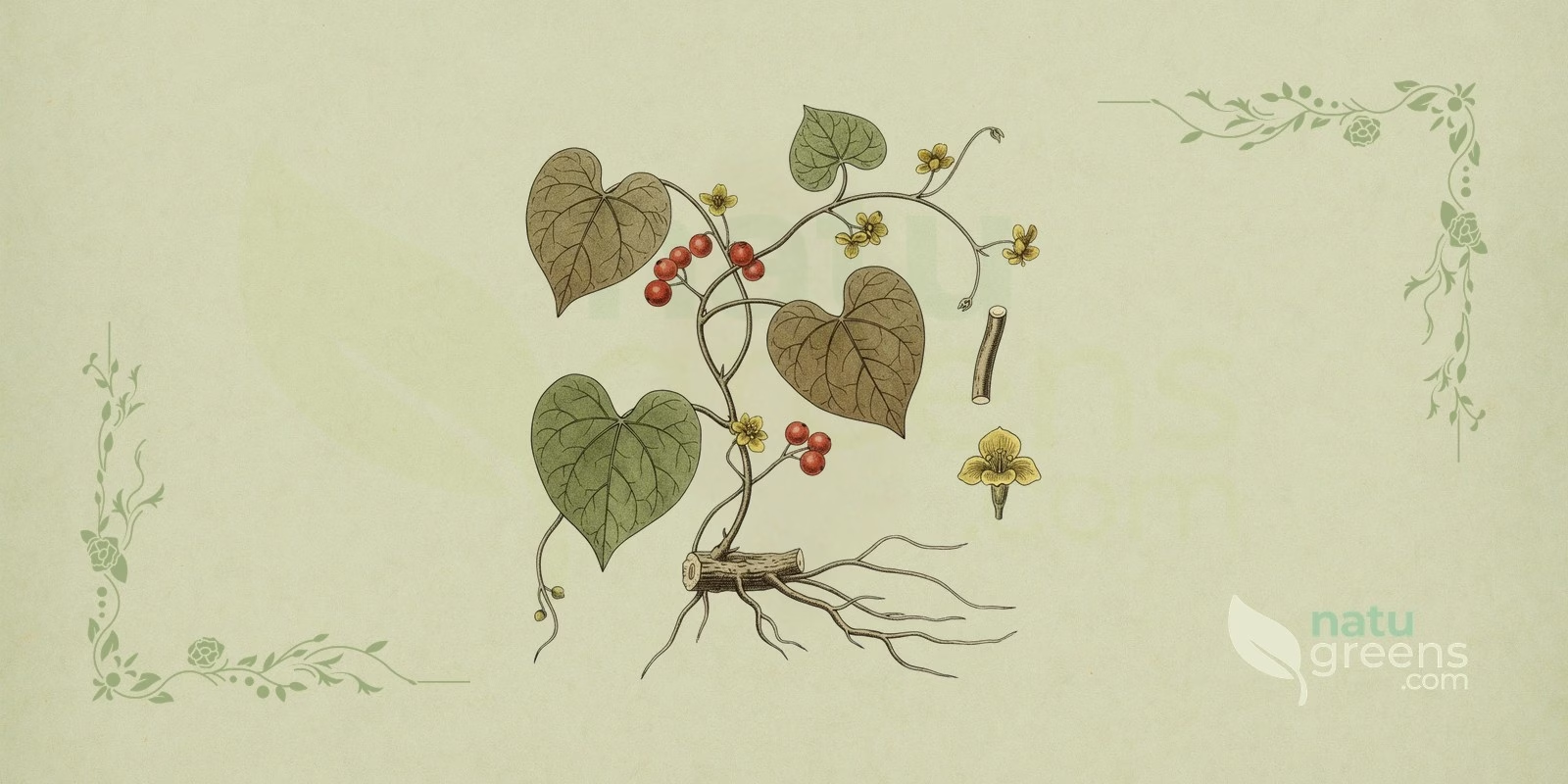
Abuta (Cissampelos pareira L.) is a slender climbing vine of the Menispermaceae family, with velvety heart-shaped leaves and a bitter root, and it grows across almost the entire tropical belt of the planet, from the Americas, where it occurs in every region of Brazil, to Africa and southern Asia. In India its root is…
Main caution: Abuta is contraindicated in pregnancy, at any stage and in any form of internal use. The plant has a documented traditional use as an antifertility agent and as an emmenagogue, that is, to bring on menstruation, and its…
Abuta (Cissampelos pareira L.) is a slender climbing vine of the Menispermaceae family, with velvety heart-shaped leaves and a bitter root, and it grows across almost the entire tropical belt of the planet, from the Americas, where it occurs in every region of Brazil, to Africa and southern Asia. In India its root is the Ayurvedic drug known as patha, while in South American folk medicine it goes by names such as parreira-brava, orelha-de-onça and erva-de-nossa-senhora. Nearly all the available research on the plant has been carried out in the laboratory and in animals, so none of the effects described below has been confirmed in clinical trials with people, and its traditional record as an antifertility agent makes safety the central theme of this profile.
Common and International Names of Abuta
In Brazil, the most frequently recorded names are abútua, butua, erva-de-nossa-senhora, orelha-de-onça, parreira-brava and uva-do-rio-apa. In other languages and traditions, the plant appears as:
- Chinese: xi sheng teng
- English: false pareira root, ice vine, midwife's herb, velvetleaf
- French: liane amère, liane cordée
- German: Falsche Pareira-Wurzel
- Hindi: akanadi, pardhi
- Japanese: pareira
- Malay: gasing-gasing, mempanang
- Sanskrit: ambashtha, laghu patha, patha
- Spanish: abuta, bejuco de terciopelo, oreja de ratón, pareira brava
- Swahili: mlagalaga
Not to Be Confused with Chondrodendron tomentosum
The names abutua, parreira-brava and pareira are also applied to Chondrodendron tomentosum, another climbing vine of the same family, whose root was the true "pareira brava" of the old pharmacopoeias and which became historically linked to the preparation of curare and to tubocurarine. These are different species, and the history of curare does not belong to Cissampelos pareira, which English-language pharmaceutical literature came to call, precisely for this reason, "false pareira". India has a commercial mix-up of its own, since the drug patha is also sold from Cyclea peltata and Stephania japonica, plants of the same family with a different chemical makeup.
Botanical Synonyms of Abuta
The accepted name is Cissampelos pareira L., published by Linnaeus in 1753. Synonyms recognized by taxonomic databases include Cissampelos convolvulacea Willd. and Cissampelos subreniformis Triana & Planch., and the genus was once described under the name Caapeba Mill. The species is highly variable, which has led to the description of several varieties; in the Ayurvedic literature, the plant used as patha is usually identified as Cissampelos pareira var. hirsuta (Buch.-Ham. ex DC.) Forman, and some authors now treat part of the African populations as a separate species, Cissampelos hirta Klotzsch.
Botanical Family: Menispermaceae
The Menispermaceae family is made up mainly of woody and herbaceous climbers from tropical regions, many of them dioecious, with small flowers and drupe fruits whose stone is curved, sometimes resembling a horseshoe. The family is known for its wealth of isoquinoline alkaloids, especially the bisbenzylisoquinolines, which explains both the pharmacological interest and the toxicity of several of its members. Besides Cissampelos, it includes genera such as Chondrodendron, Cocculus, Stephania and Tinospora.
Parts of Abuta Used
The root is the part with the longest tradition, described in Indian standards as cylindrical, light brown to yellowish in color and markedly bitter in taste, and it is the root that makes up the Ayurvedic drug patha. The leaves and aerial parts also appear in ethnobotanical records, mostly for external use on the skin and in recent laboratory studies, and the stem goes into some folk preparations together with the root.
Ethnobotanical and Traditional Uses of Abuta
Abuta has a long history of use spread across several continents, and the review by Kumari and colleagues gathers records of folk use for a very wide range of complaints. These uses are traditional and do not amount to proven efficacy:
- Abdominal cramps and pain (a classic indication for patha in Ayurveda)
- Diarrhea and dysentery (frequently recorded in India and Latin America)
- Fertility control and bringing on menstruation (folk use documented in Assam, India, and the reason it is contraindicated in pregnancy)
- Fever (the root is part of antipyretic Ayurvedic formulas)
- Malaria (folk use in India, Africa and South America)
- Rheumatism and joint pain (folk use of the root)
- Snakebites (recorded in several traditions, with no clinical validation)
- Urinary complaints (folk use of the root as a diuretic)
- Wounds, itching and skin problems (leaves and root used externally)
Medicinal Properties of Abuta
The properties below come from cell and animal studies, almost always with root or leaf extracts, and none of them has been proven in humans. They help explain the scientific interest in the plant and should not be read as recommendations for use:
- Analgesic (root extract reduced pain responses in mice)
- Antidiarrheal (extract reduced castor oil-induced diarrhea in rodents)
- Anti-inflammatory (root extract in acute and chronic inflammation models in rats, with no gastric damage at the doses tested)
- Antimalarial (activity against Plasmodium falciparum in culture, attributed to root alkaloids)
- Antioxidant (alkaloid fraction of the root in in vitro tests)
- Antipyretic (observed in rodents, including in the dengue study)
- Antiviral (extract active against all four dengue virus serotypes in cell culture and in mice, with no published clinical trial)
- Anxiolytic and muscle relaxant (leaf extract in behavioral tests with mice)
- Immunomodulatory (alkaloid fraction with an immunosuppressive effect in mice)
Detailed Phytochemical Profile of Abuta
Around 54 compounds have been isolated from abuta, most of them isoquinoline alkaloids, with the bisbenzylisoquinolines standing out, alongside a few flavonoids and fatty acids. The alkaloid content of the root is one of the traits used to tell the genuine species apart from the plants that replace it in the patha trade:
- Bebeerine (bisbenzylisoquinoline alkaloid used as an identity marker for the root)
- Berberine (yellow alkaloid found in small amounts in the alkaloid fraction of the root)
- Cissamine (alkaloid with antiplasmodial activity in the laboratory)
- Cissampeloflavone (chalcone-flavone dimer isolated from the aerial parts, active against trypanosomes in vitro)
- Fatty acids (detected by chromatography in the extracts)
- Glycosylated flavonoids (identified in chromatographic profiles)
- Hayatine and hayatidine (bisbenzylisoquinoline alkaloids from the root, described in the 1960s)
- Magnocurarine (quaternary alkaloid isolated from the root)
- Magnoflorine (aporphine alkaloid common in the family)
- Pareirarine (isoquinoline alkaloid first described in 2020)
- Salutaridine (alkaloid isolated from the root in the same antiplasmodial study)
Preparation and Administration of Abuta
In South American folk medicine, the most commonly cited form is a root decoction, made by boiling the dried, chopped root in water, while the leaves appear in compresses and poultices applied to the skin. In Ayurveda, the dried and ground root goes into powders, decoctions and compound formulas with other plants, always prescribed by a practitioner. No standardized, safe dose has been established by human studies, the available toxicity tests were done in animals and lasted 28 days at most, and some commercial products are mixed with other species, so taking the plant internally on your own is not advisable.
Synergy with Other Medicinal Plants
Jwarahara, an Antipyretic Ayurvedic Formula
In Ayurveda, abuta root is part of the classic formula Jwarahara mahakashaya, traditionally used for feverish conditions, alongside the roots of Hemidesmus indicus and Rubia cordifolia and the fruits of Terminalia chebula, Phyllanthus emblica (amla), Terminalia bellirica and Vitis vinifera, among other ingredients. Animal studies with an extract of the complete formula observed antipyretic and analgesic effects with little harm to the stomach, but no clinical trial has confirmed this combination in people.
Pairing with Black Pepper in Records from Assam
The survey by Tiwari and colleagues, carried out in Assam, India, recorded the use of abuta together with black pepper (Piper nigrum) as a temporary folk method of birth control. This record is cited here for its documentary value and as a warning, because it shows that the combination was used precisely to interfere with fertility, and nobody should reproduce it at home, least of all anyone who is pregnant or planning a pregnancy.
Recipes and Usage Protocols for Abuta
Traditional Root Decoction
In folk records, the decoction is made with pieces of dried root boiled in water for a few minutes and strained once it has cooled a little, then taken in small portions for fever, cramps or diarrhea. These records give no standardized measurements, and the lack of safety data for prolonged use is reason enough not to prepare the root on your own. Pregnant and breastfeeding women, children and anyone trying to conceive should not use this preparation under any circumstances.
Leaf Poultice for External Use
In ethnobotanical accounts, the fresh leaves, crushed or gently warmed, are applied to wounds, itchy skin and insect bites, always on intact skin around the lesion and for a short time only. These uses follow traditional records and do not replace professional advice, and any wound that gets worse, becomes inflamed or fails to heal needs medical attention.
The preparations above follow traditional records and do not replace professional guidance. Before any internal use, check the contraindications and interactions described in this article.
Therapies Associated with Abuta
Clinical Herbal Medicine
Abuta has no monograph from the European Medicines Agency's Committee on Herbal Medicinal Products and very little clinical data, which keeps it out of the evidence-based herbal medicine practiced in clinics. In research, it drew attention in India as a source of standardized extracts against dengue, but the same research group found that batches sold as abuta were mixed with Cocculus hirsutus, which underlines how important correct botanical identification is before any use.
Ayurveda
In Ayurveda the root is patha, also called laghu patha or ambashtha, a bitter-tasting drug recognized by the Ayurvedic Pharmacopoeia of India and indicated in the classical texts for abdominal pain, diarrhea, skin diseases, itching and fever. In 2024, the Indian standards body published a specific standard for patha root, with macroscopic and microscopic criteria that help distinguish it from Cyclea peltata and Stephania japonica. Anyone looking into homeopathy should know that the homeopathic remedy called Pareira brava is prepared from Chondrodendron tomentosum, not from the abuta described here.
Contraindications and Side Effects of Abuta
Abuta is contraindicated in pregnancy, at any stage and in any form of internal use. The plant has a documented traditional use as an antifertility agent and as an emmenagogue, that is, to bring on menstruation, and its English name midwife's herb hints at this old link with women's reproductive life. In female mice, the leaf extract disrupted the estrous cycle, altered the release of LH, FSH, prolactin and estradiol and reduced litter size, which gives the warning an experimental basis. For the same reason, the plant should not be used by anyone trying to conceive or undergoing fertility treatment.
There are no safety data on its use during breastfeeding or in children, so it should be avoided in these groups. The root and leaves are rich in bisbenzylisoquinoline alkaloids, a chemical group with strong pharmacological activity, and the published toxicity tests, which showed no harm in rodents at high doses, covered only acute exposures and exposures of up to 28 days, with no chronic-use studies and no human data. The risk of adulteration also weighs in, since products sold under the plant's name may contain Cocculus hirsutus, Cyclea peltata, Stephania japonica or even other species called parreira-brava, whose toxicity is different. People with liver, kidney or neuromuscular disease should avoid the plant given the complete lack of data in these cases.
Drug Interactions
There are no human interaction studies, and the precautions below are theoretical, based on effects observed in animals. Because of its impact on reproductive hormones, abuta may interfere with hormonal contraceptives, hormone replacement therapy and drugs used in assisted reproduction. The immunosuppressive action of the alkaloid fraction in mice calls for caution with immunosuppressants and with treatments that depend on the immune response. The anxiolytic and muscle relaxant effects described in mice, together with the curare-like activity observed in the laboratory with a methylated derivative of hayatinine, are reason to avoid combining it with sedatives, muscle relaxants and anesthetics, and to stop the plant before surgery. People taking diabetes medication should also be careful, since extracts of the plant have shown effects on blood glucose in preclinical studies.
Curiosities and Historical Facts
The name pareira comes from the Portuguese parreira, the grapevine, a nod to the plant's climbing habit, and it passed into apothecary Latin as radix pareirae bravae, the root of the wild vine. The identity of this South American drug caused confusion for a long time until it was attributed to Chondrodendron tomentosum, while the root of Cissampelos pareira, which circulated in the same trade, became known in English as false pareira root; in 1960 the chemist S. Morris Kupchan devoted a study to the alkaloids of abuta precisely to clarify the origin of the drug. The review by Semwal and colleagues on the genus Cissampelos chose for its title the phrase "from arrow poison to herbal medicine", a reminder that some species of the genus appear in records of hunting poisons, although the classic Amazonian curare is associated with other plants. More recently, abuta drew attention in India when a standardized extract showed activity against all four dengue virus serotypes in the laboratory, research that eventually shifted to another member of the Menispermaceae, Cocculus hirsutus.
Frequently Asked Questions About Abuta
Is Abuta the Same Plant Used in Curare?
No. The name abutua is shared with Chondrodendron tomentosum, the species historically associated with curare and tubocurarine, but Cissampelos pareira is a different plant, from a different genus, with its own chemical makeup. Because of this naming confusion, buying "abutua" or "parreira-brava" without botanical identification can mean ending up with the wrong species.
Can Pregnant Women Use Abuta?
No. The plant is contraindicated in pregnancy because it has a traditional use as an antifertility agent and emmenagogue, and the leaf extract altered reproductive hormones and reduced fertility in mice. Women trying to conceive should also avoid any preparation of the plant.
Does Abuta Work Against Dengue?
So far, activity against the dengue virus has been seen only in cell cultures and in mice, with no published clinical trial in people. Dengue requires medical follow-up, adequate hydration and attention to warning signs, and no tea or extract of the plant can take the place of that care.
Can Breastfeeding Women and Children Drink Abuta Tea?
There are no safety data on the use of abuta during breastfeeding or in children, and the presence of alkaloids with strong pharmacological activity makes it advisable to avoid the plant in both groups.
How Can I Tell If the Abuta I Bought Is the Right Species?
Only botanical identification by a professional, or buying material with a certificate stating the scientific name Cissampelos pareira, offers any assurance. Indian studies found batches mixed with Cocculus hirsutus and patha roots sourced from Cyclea peltata or Stephania japonica, and in Brazil the common name is also used for Chondrodendron tomentosum.
Notice: this content is for informational purposes and does not replace professional medical advice. Consult a physician or herbal practitioner before using medicinal plants, especially during pregnancy, breastfeeding, or alongside medication.
How to cite this article
NATUGREENS. Abuta (Cissampelos pareira): Uses, Alkaloids and Safety. Natugreens, 26 Nov. 2026. Disponível em: https://natugreens.com/cissampelos-pareira-abuta/. Accessed: Nov. 26, 2026.
Natugreens. (2026). Abuta (Cissampelos pareira): Uses, Alkaloids and Safety. Natugreens. https://natugreens.com/cissampelos-pareira-abuta/
References and Scientific Studies
View All 18 Cited References
- PMC2004 Amresh, Reddy, G. D., Rao, C. V., & Shirwaikar, A. (2004). Ethnomedical value of Cissampelos pareira extract in experimentally induced diarrhoea. Acta Pharmaceutica, 54(1), 27-35. ↗
- DOI2007 Amresh, G., Reddy, G. D., Rao, C. V., & Singh, P. N. (2007). Evaluation of anti-inflammatory activity of Cissampelos pareira root in rats. Journal of Ethnopharmacology, 110(3), 526-531. ↗
- DOI2007 Amresh, G., Singh, P. N., & Rao, C. V. (2007). Antinociceptive and antiarthritic activity of Cissampelos pareira roots. Journal of Ethnopharmacology, 111(3), 531-536. ↗
- DOI2008 Amresh, G., Singh, P. N., & Rao, C. V. (2008). Toxicological screening of traditional medicine Laghupatha (Cissampelos pareira) in experimental animals. Journal of Ethnopharmacology, 116(3), 454-460. ↗
- DOI2021 Asif, M., Dwivedi, J., & Yadav, S. (2021). Anti-depressant, anxiolytic, and the muscle relaxant activity of hydroalcoholic extract of Cissampelos pareira Linn. leaves. Central Nervous System Agents in Medicinal Chemistry, 21(2), 114-124. ↗
- DOI2010 Bafna, A., & Mishra, S. (2010). Antioxidant and immunomodulatory activity of the alkaloidal fraction of Cissampelos pareira Linn. Scientia Pharmaceutica, 78(1), 21-31. ↗
- DOI1970 Basu, D. K. (1970). Studies on curariform activity of hayatinin methochloride, an alkaloid of Cissampelos pareira. Japanese Journal of Pharmacology, 20(2), 246-252. ↗
- DOI2020 Bhatt, V., Kumari, S., Upadhyay, P., Agrawal, P., Anmol, Sahal, D., & Sharma, U. (2020). Chemical profiling and quantification of potential active constituents responsible for the antiplasmodial activity of Cissampelos pareira. Journal of Ethnopharmacology, 262, 113185. ↗
- DOI2007 Ganguly, M., Kr Borthakur, M., Devi, N., & Mahanta, R. (2007). Antifertility activity of the methanolic leaf extract of Cissampelos pareira in female albino mice. Journal of Ethnopharmacology, 111(3), 688-691. ↗
- DOI2010 Gupta, M., Shaw, B. P., & Mukherjee, A. (2010). A new glycosidic flavonoid from Jwarhar mahakashay (antipyretic) Ayurvedic preparation. International Journal of Ayurveda Research, 1(2), 106-111. ↗
- DOI2010 Hullatti, K. K., & Sharada, M. S. (2010). Comparative phytochemical investigation of the sources of ayurvedic drug patha: a chromatographic fingerprinting analysis. Indian Journal of Pharmaceutical Sciences, 72(1), 39-45. ↗
- DOI2021 Kumari, S., Anmol, Bhatt, V., Suresh, P. S., & Sharma, U. (2021). Cissampelos pareira L.: a review of its traditional uses, phytochemistry, and pharmacology. Journal of Ethnopharmacology, 274, 113850. ↗
- PMC1960 Kupchan, S. M., Yokoyama, N., & Beal, J. L. (1960). Menispermaceae alkaloids. I. The alkaloids of Cissampelos pareira Linn. and the origin of radix pareirae bravae. Journal of the American Pharmaceutical Association, 49, 727-731. ↗
- DOI2014 Semwal, D. K., Semwal, R. B., Vermaak, I., & Viljoen, A. (2014). From arrow poison to herbal medicine: the ethnobotanical, phytochemical and pharmacological significance of Cissampelos (Menispermaceae). Journal of Ethnopharmacology, 155(2), 1011-1028. ↗
- DOI2021 Shukla, R., Rajpoot, R. K., Poddar, A., et al. (2021). Cocculus hirsutus-derived phytopharmaceutical drug has potent anti-dengue activity. Frontiers in Microbiology, 12, 746110. ↗
- DOI2015 Sood, R., Raut, R., Tyagi, P., et al. (2015). Cissampelos pareira Linn: natural source of potent antiviral activity against all four dengue virus serotypes. PLoS Neglected Tropical Diseases, 9(12), e0004255. ↗
- DOI1982 Tiwari, K. C., Majumder, R., & Bhattacharjee, S. (1982). Folklore information from Assam for family planning and birth control. International Journal of Crude Drug Research, 20(3), 133-137. ↗
- DOI2014 Vijayan, D., Cheethaparambil, A., Pillai, G. S., & Balachandran, I. (2014). Molecular authentication of Cissampelos pareira L. var. hirsuta (Buch.-Ham. ex DC.) Forman, the genuine source plant of ayurvedic raw drug 'Patha', and its other source plants by ISSR markers. 3 Biotech, 4(5), 559-562. ↗
You May Also Like
 GuduchiTinospora cordifolia
- Brazilian Joyweed (Alternanthera brasiliana): Uses and SafetyAlternanthera brasiliana
- Pellitory of Spain (Anacyclus pyrethrum): Uses and SafetyAnacyclus pyrethrum
- Clubmoss (Lycopodium clavatum): Uses, Spores and SafetyLycopodium clavatum
- Vasaka (Justicia adhatoda): Traditional Uses and SafetyJusticia adhatoda
Take your time and tell us everything you think, details included. Every response is read by someone on our editorial team and goes into the article's revision. An honest critique helps us more than a polite compliment.
Take your time and tell us everything you think, details included. Every response is read by someone on our editorial team and goes into the article's revision. An honest critique helps us more than a polite compliment.