Helianthus annuus L. / Sunflower, popularly known as sunflower or common sunflower, is an annual herbaceous plant of the Asteraceae family, described by Carl Linnaeus and native to North America, from where it spread to every continent as an oilseed, food and ornamental crop. Used for millennia as food and in traditional medicine, the sunflower is valued above all for its seeds, a prized source of oil and nourishment that is also appreciated for its nutritional profile, while its large, vibrant flowers are gathered at the height of bloom.
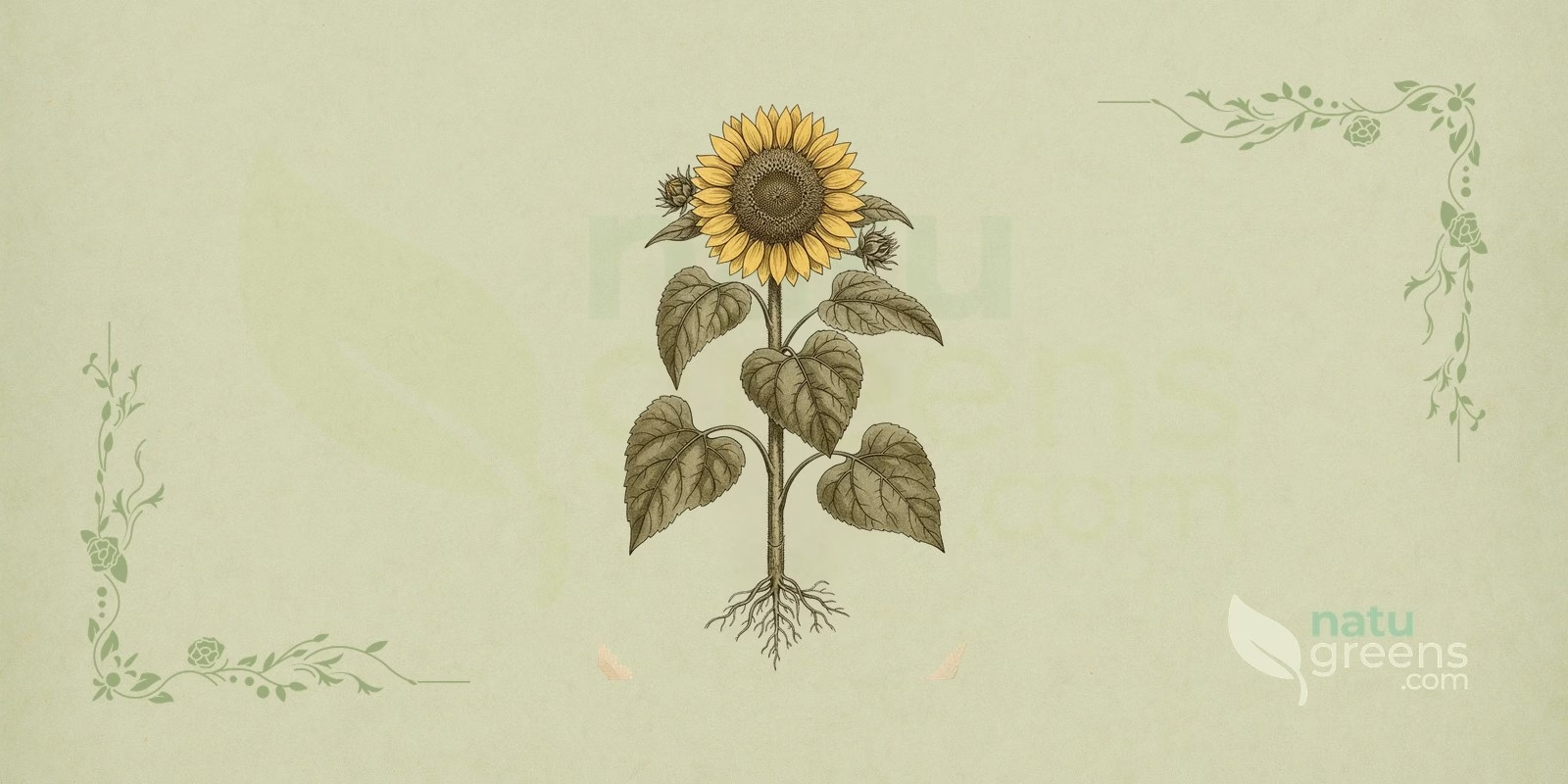
In herbal tradition, the sunflower holds a prominent place as a versatile plant, with records of use ranging from digestive complaints to anxious states and inflammation. Its composition is rich in fatty acids, vitamins and flavonoids, compounds associated with the antioxidant and anti-inflammatory activity observed in experimental studies. Modern research focuses mainly on the seeds and the oil, and most traditional medicinal uses have not yet been confirmed in clinical studies, which calls for caution when reading the sections that follow.
Popular and International Names of Sunflower
- English: common sunflower, sunflower.
- Spanish: girasol, mirasol.
- Portuguese: flor-do-sol, girassol.
- French: tournesol.
- Italian: girasole.
- German: Sonnenblume.
The Portuguese, Spanish, Italian and French names all allude to the plant’s movement toward the sun, a trait of young sunflowers described later in the section on historical notes and interesting facts. The genus name itself comes from the Greek helios, sun, and anthos, flower, while the epithet annuus, from Latin, refers to the annual life cycle of the species.
Botanical Synonyms of Helianthus annuus
Helianthus annuus L. is the accepted name for the species, and the variants found in historical or regional sources largely stem from wild and cultivated forms that were once described as separate species before being brought together under the same binomial. The synonyms recorded in taxonomic databases include:
- Helianthus aridus Rydb.
- Helianthus lenticularis Douglas ex Lindl.
- Helianthus macrocarpus DC.
The genus Helianthus comprises dozens of species, but H. annuus is by far the best known and most widely cultivated, and it should not be confused with the Jerusalem artichoke (Helianthus tuberosus), a close relative grown for its tubers.
Botanical Family: Asteraceae
The Asteraceae family, also known as Compositae, is one of the largest families of flowering plants, with about 1,900 genera and more than 32,000 species distributed worldwide. Its most distinctive feature is the capitulum, or flower head, an inflorescence in which numerous small flowers cluster into a structure that mimics a single bloom, and the family includes plants of great economic, food and medicinal importance, such as lettuce, chamomile and artichoke.
The sunflower shares the typical morphology of the family, with tubular disc florets in the center and ray florets around the edge of the head. The Asteraceae are known for producing bioactive compounds, especially flavonoids, phenolic acids and essential oils, and this chemical diversity has been the subject of intensive pharmacological research, with an impact on the development of herbal medicinal products and dietary supplements. The kinship also has a practical consequence, since people allergic to one plant in the family may react to others, a topic covered in the contraindications.
Parts of Sunflower Used
- Flowers (petals and buds)
- Leaves
- Roots
- Seeds
The seeds, eaten as food and used as the raw material for oil, account for most of the scientific research available. Leaves, flowers and roots appear mainly in folk medicine records, in teas, poultices and tinctures, with far less data on their safety and efficacy.
Ethnobotanical and Traditional Uses
The uses below reflect records from folk medicine and homeopathy and are not equivalent to proven indications, since most of them have never been tested in clinical studies.
- Anxiety and low mood, in folk use without clinical evidence (seeds).
- Blood pressure and blood sugar control, as dietary support that does not replace medical treatment (seeds).
- Cardiovascular and immune health, as part of the diet (seeds).
- Chest and respiratory complaints, in traditional records (flowers, seeds).
- Diuretic and expectorant action, in traditional use (leaves, seeds).
- High cholesterol, as dietary support owing to the unsaturated fat content (seeds).
- Intermittent fevers, in historical records (seed tincture).
- Kidney and urinary complaints, in traditional records (leaf infusion).
- Rheumatic pain, as a classical homeopathic indication (homeopathic preparations).
- Superficial wounds and insect bites, as a traditional poultice (leaves).
Therapeutic Properties of Sunflower
The properties listed bring together traditional records and activities observed in laboratory or animal studies, and none of them justifies using sunflower as a substitute for medical treatment.
- Anti-hypertensive (effect on blood pressure investigated in preliminary studies)
- Anti-inflammatory (activity observed in experimental studies)
- Antimicrobial (activity observed in the laboratory against some microorganisms)
- Antioxidant (attributed to the vitamin E and phenolic compounds in the seeds)
- Cardioprotective (associated with the unsaturated fat profile, in preliminary studies)
- Diuretic (traditional record for the leaves and seeds)
- Expectorant (traditional record in respiratory complaints)
- Hypocholesterolemic (effect of phytosterols and unsaturated fats investigated in studies)
- Hypoglycemic (effect investigated in preliminary studies, without clinical evidence)
- Immunomodulatory (activity observed in preliminary studies)
- Laxative (traditional record, attributed to the fiber in the seeds)
- Neuroprotective (activity observed in laboratory studies)
- Stimulant (traditional record as a general tonic)
- Wound-healing (traditional record for the leaves on superficial wounds)
Detailed Phytochemical Profile of Sunflower
- Alkaloids
- Coumarins
- Dietary fiber
- Fatty acids (linoleic, oleic)
- Flavonoids (apigenin, heliannones, kaempferol, luteolin, quercetin)
- Minerals (magnesium, potassium, selenium)
- Phenolic acids (caffeic, chlorogenic, ferulic and sinapic acids)
- Proteins
- Saponins
- Steroids (phytosterols)
- Tannins
- Triterpenes
- Vitamins (B complex: B1, B2, B3, B5, B6; vitamin E)
Composition varies with the part of the plant: the seeds are dominated by linoleic and oleic fatty acids, proteins, fiber, phytosterols and vitamin E, while phenolic acids, chlorogenic acid in particular, occur in the seeds and sprouts, whose chemical profile shifts during germination. Heliannones, flavonoids described in the species, have been identified mainly in the leaves, and the presence of alkaloids, saponins, tannins and triterpenes is reported chiefly in phytochemical screenings of extracts.
Preparation and Administration Forms of Sunflower
- Liquid extracts (whole plant)
- Oil (seeds)
- Pesto (leaves)
- Plant-based milk (seeds)
- Poultices (leaves)
- Roasted seeds
- Teas and infusions (leaves, petals)
- Tinctures (flowers, seeds)
Roasted seeds, plant-based milk, pesto and oil are culinary forms eaten as food, whereas teas, tinctures and liquid extracts correspond to traditional medicinal use, with no standardized dose and no clinical evidence. Leaf poultices are applied externally, in traditional practice, to superficial wounds and insect bites, and the seed oil serves as a base for massage and skin care.
Synergy with Other Medicinal Plants
The combinations below follow traditional records and the herbal reasoning of pairing plants with similar uses, without studies assessing each pairing with sunflower, and anyone intending to combine plants, especially while taking medication, should first consult a health professional.
Anxiety and Nervousness
In herbal tradition, the folk use of sunflower seeds in anxious states is often paired with calming plants such as chamomile (Matricaria chamomilla), passionflower (Passiflora incarnata) and valerian (Valeriana officinalis), traditionally used to encourage relaxation and sleep during periods of agitation. Chamomile belongs to the same family as sunflower and should be avoided by anyone allergic to Asteraceae, while valerian and passionflower may add their sedative effect to that of medicines with a similar action.
Digestive Complaints
The fiber in sunflower seeds is often paired with carminative and digestive plants such as lemon balm (Melissa officinalis) and peppermint (Mentha × piperita), which tradition uses for bloating, gas and intestinal cramps. In this combination, the seeds are eaten as part of the diet and the two herbs are taken as a tea, in a traditional approach to digestive care that is not the same as medical treatment for intestinal diseases.
Inflammation and Pain
The vitamin E and flavonoids in sunflower, linked to the anti-inflammatory activity observed in experimental studies, appear in traditional pairings with turmeric (Curcuma longa), ginger (Zingiber officinale) and white willow (Salix alba), plants used for centuries for muscle and joint pain. Turmeric, ginger and white willow call for caution in people taking anticoagulants, and white willow, which contains salicin, should be avoided by anyone allergic to acetylsalicylic acid (aspirin).
Cardiovascular Health
The content of unsaturated fatty acids, such as linoleic and oleic acid, and of phytosterols in sunflower seeds is studied for its relationship with the cholesterol profile, and tradition pairs the seeds with garlic (Allium sativum) and hawthorn (Crataegus monogyna), plants traditionally used in caring for the heart. Garlic and hawthorn may interact with anticoagulants, antihypertensives and heart medications, so this combination should only be used under professional supervision.
Immune Support
The vitamin E, selenium and other antioxidants in the seeds are part of a varied diet, and tradition combines sunflower with plants such as echinacea (Echinacea purpurea) and elder (Sambucus nigra), traditionally used during bouts of the common cold. Echinacea also belongs to the Asteraceae, so anyone allergic to plants in this family should avoid it, and elderberries should only be eaten ripe and cooked.
Recipes and Usage Protocols of Sunflower
Sunflower Leaf and Petal Tea
Ingredients: 1 tablespoon of dried sunflower leaves or petals (or 2 tablespoons of fresh ones) and 250 ml of boiling water.
Preparation: Add the leaves or petals to the boiling water, cover and let steep for 5 to 10 minutes; then strain and drink, sweetening with honey if desired. This tea is traditionally used as a diuretic and expectorant and during fevers, but no studies have established a safe dose for prolonged use, so regular use should be agreed with a health professional, and honey should not be given to children under 1 year of age.
Sunflower Seed Milk
Ingredients: 1 cup of raw sunflower seeds, soaked for 4 to 8 hours, 3 to 4 cups of water and a natural sweetener (optional).
Preparation: Drain and rinse the soaked seeds and blend them with the water for 2 to 3 minutes, until the mixture is smooth. Strain through a fine cloth or a nut milk bag and add sweetener if desired. The drink is a nutritious alternative to cow’s milk, providing vitamins and minerals from the seeds, but it does not replace breast milk or infant formula and should be avoided by anyone allergic to sunflower seeds.
Sunflower Leaf Pesto
Ingredients: about 25 young sunflower leaves, 2 garlic cloves, 1/4 cup of grated Parmesan cheese (optional), 1/2 cup of extra virgin olive oil, 1/4 cup of sunflower seeds (or walnuts), salt and pepper to taste.
Preparation: Blanch the leaves in boiling water for 1 minute and drain well. In a food processor, combine the blanched leaves, garlic, cheese, seeds and half of the olive oil, pulsing until the mixture is smooth, then gradually add the remaining oil with the machine running until you reach the desired consistency. Season with salt and pepper and serve with pasta, on toast or as a side dish.
Roasted Sunflower Seeds
Ingredients: raw in-shell sunflower seeds and salt (optional).
Preparation: Preheat the oven to 200 °C (400 °F) and spread the seeds in a single layer on a baking sheet, sprinkling them with salt if desired. Roast for 15 to 20 minutes, or until the shells begin to split and the seeds turn lightly golden, then let them cool completely before eating or storing them. The result is a nutritious and tasty snack that calls for moderation because of its calorie and salt content.
Sunflower Tincture
Ingredients: 200 g of dried sunflower flowers or seeds and 1 liter of 70% grain alcohol.
Preparation: Place the plant material in a clean glass jar, cover it with the alcohol and seal it tightly, leaving it to macerate for 2 to 4 weeks in a cool, dark place and shaking it daily. Then strain through a fine cloth or a paper filter and store the tincture in a dark glass bottle. This preparation is traditionally used for intermittent fevers and as a general tonic, but it has no established dose and no clinical evidence, so it should only be used under the guidance of a health professional and avoided during pregnancy and breastfeeding, in children and by anyone who cannot consume alcohol.
The preparations above follow traditional records and do not replace professional guidance. Before any internal use, check the contraindications and interactions described in this article.
Associated Therapies
Aromatherapy
Sunflower oil, extracted from the seeds, is widely used as a carrier oil in aromatherapy, serving to dilute essential oils for massage and topical applications while contributing its emollient and moisturizing qualities to the skin. Although it is not an essential oil, it frequently appears as the base of formulations designed for skin care, and the use of the seed oil in dermatological applications is the subject of recent scientific reviews. Sunflower-derived ingredients have also undergone safety assessment for use in cosmetics, but anyone allergic to plants of the Asteraceae family should also avoid sunflower-based topical products, as set out in the contraindications.
Herbal Medicine
In modern herbal medicine, extracts of Helianthus annuus are being investigated for antioxidant, anti-inflammatory, antimicrobial and cardiovascular activities, and experimental studies have explored effects related to blood pressure, blood sugar and inflammatory processes. These results still come mostly from laboratory or animal research, and the concentrated medicinal use of sunflower extracts is not clinically proven, so it does not replace medical follow-up for hypertension, diabetes or inflammatory diseases. Herbal medicine values the sunflower above all as a food resource and as the basis of traditional preparations, pending research that will confirm or rule out its other applications.
Homeopathy
In homeopathy, Helianthus annuus appears in the classical materia medica associated with intermittent fevers, coryza, catarrh and nosebleeds, as well as rheumatic pain, with specific mention of the left knee, and lung complaints. The preparations are made from the flowers or seeds, following the principles of dilution and potentization specific to this practice, whose indications have no clinical evidence. Persistent fever, frequent nosebleeds and respiratory complaints that do not clear up require medical evaluation, regardless of the use of any preparation.
Contraindications and Side Effects of Sunflower
As food, sunflower seeds and oil are consumed without problems by most people, but medicinal use calls for attention to certain contraindications and side effects. Anyone allergic to plants of the Asteraceae family (daisy, chamomile, arnica) should avoid sunflower because of the risk of cross-reaction, and the same caution applies to people allergic to ragweed pollen. People allergic to sunflower seeds should avoid the seeds and their derivatives, as the medical literature records cases of anaphylaxis after consumption.
The concentrated medicinal use of sunflower extracts is not clinically proven, and for that reason extracts, tinctures and supplements should not replace medical treatment. Excessive consumption of the seeds can lead to weight gain, owing to their high calorie and fat content, and in rare cases causes gastrointestinal discomfort such as diarrhea or bloating; in young children, whole seeds also pose a choking hazard.
Pregnancy, Breastfeeding and Children
There are no safety data on the medicinal use of sunflower teas, tinctures and extracts during pregnancy and breastfeeding, so pregnant and breastfeeding women should consult a health professional before using them, even though ordinary dietary consumption of the seeds and oil is not in question. Because it contains alcohol, the tincture is not suitable for children, pregnant or breastfeeding women, or people who need to avoid alcoholic beverages.
Drug Interactions
Caution is needed with anticoagulants because of the presence of vitamin E in high doses: anyone taking this type of medication should talk to their doctor before turning to sunflower extracts, concentrated oils or supplements, and extra care is needed with the combinations involving garlic, turmeric, ginger or white willow mentioned in the synergy section. Since preliminary studies are investigating effects on blood sugar and blood pressure, people taking glucose-lowering or antihypertensive drugs should also consult a health professional and monitor their levels. The combinations with calming plants such as valerian and passionflower require professional guidance for anyone already taking sedatives, anxiolytics or antidepressants, and people with kidney disease should talk to their doctor before using the leaf infusion as a diuretic.
Historical Notes and Interesting Facts
Origin and Domestication
The sunflower was domesticated in North America thousands of years ago, with archaeological records of cultivation in Mexico around 2600 BC and in what is now the United States around 2300 BC, although the exact site of domestication is still debated among researchers. The plant was part of the so-called Eastern Agricultural Complex, a group of crops native to the peoples of eastern North America that also included squash, long before maize and beans reached the region from Mexico.
A Solar Symbol
For Indigenous peoples of Mesoamerica, such as the Aztecs and the Otomi, the sunflower was a symbol of the solar deity, representing the sun and life itself, a cultural association that shows how much weight the plant carried in their beliefs and rituals.
Heliotropism
Young sunflowers display heliotropism, meaning that the top of the plant follows the movement of the sun over the course of the day, turning east at dawn and tracking it all the way to the west. Once mature, sunflowers stop following the sun and remain fixed, usually facing east, a position that warms the flower head faster in the morning and attracts more pollinators.
Arrival in Europe
Sunflower seeds were brought to Europe by Spanish explorers in the 16th century, and the plant spent a long time in gardens as an ornamental before gaining ground as a food and a source of oil, a production that expanded in the 19th century, above all in Russia. Today, Russia and Ukraine are the world’s largest producers of sunflower seeds.
Frequently Asked Questions about Sunflower
Is Sunflower Tea Safe for Everyone?
Not everyone can use it, because anyone allergic to plants of the Asteraceae family, such as daisy, chamomile and arnica, should avoid the tea due to the risk of cross-reaction, and the same applies to anyone allergic to sunflower seeds. Pregnant and breastfeeding women and people with pre-existing medical conditions or who take medication should consult a health professional before using it, since there are no safety data for medicinal use in these situations.
What Are the Traditional Uses of Sunflower Tea?
Tradition uses the leaf and petal tea as a diuretic and expectorant and during fevers, with records also for mild respiratory complaints. The plant contains antioxidant and anti-inflammatory compounds studied in the laboratory, but these uses have not been confirmed in clinical studies and do not replace medical evaluation of persistent fever or respiratory problems.
How Do You Prepare Sunflower Tea?
Use 1 tablespoon of dried leaves or petals, or 2 tablespoons of fresh ones, for every 250 ml of boiling water, letting it steep for 5 to 10 minutes before straining. The tea can be drunk hot or cold, but as there is no defined dose for prolonged use, regular consumption should be guided by a health professional.
Which Other Parts of the Sunflower Are Used?
Besides the leaves and petals used in tea, the seeds are rich in nutrients and can be eaten roasted or as plant-based milk, and the oil extracted from them serves as a base for skin care products. The leaves appear in poultices applied in traditional practice to superficial wounds and insect bites, and for any other use it is best to seek reliable sources or the guidance of health professionals.
Can People Allergic to Asteraceae Plants Use Sunflower?
It is not recommended, because the sunflower belongs to the Asteraceae family, the same family as daisy, chamomile and arnica, and anyone allergic to plants in this family should avoid it due to the risk of cross-reaction. People allergic to sunflower seeds themselves should also avoid them, as there are reports of anaphylaxis in the medical literature, and an assessment by an allergist is the safest course when in doubt.
Do Sunflower Extracts Have Proven Efficacy?
No, the concentrated medicinal use of sunflower extracts is not clinically proven, and the effects on blood pressure, blood sugar and inflammation are still being investigated in preliminary studies. Caution is also needed with anticoagulants because of the presence of vitamin E in high doses, so anyone taking these medications should talk to their doctor before turning to extracts or supplements.
Notice: this content is for informational purposes and does not replace professional medical advice. Consult a physician or herbal practitioner before using medicinal plants, especially during pregnancy, breastfeeding, or alongside medication.
References and Scientific Studies
- PMC2020 Adeleke BS, Babalola OO. Oilseed crop sunflower (Helianthus annuus) as a source of food: Nutritional and health benefits. Food Sci Nutr. 2020.
- PMC2021 An J. Anaphylaxis to Sunflower Seed with Tolerance to Sunflower Oil: A Case Report. Medicina (Kaunas). 2021.
- PMC2023 Becker LC, et al. Safety Assessment of Helianthus annuus (Sunflower)-Derived Ingredients as Used in Cosmetics. Int J Toxicol. 2023.
- PMC2021 González-Bravo L, et al. Anaphylaxis to Sunflower Seed With Tolerance to Other Nuts: The Role of Lipophilic Allergens. J Investig Allergol Clin Immunol. 2021.
- PMC2017 Guo S, et al. A review of phytochemistry, metabolite changes, and medicinal uses of the common sunflower seed and sprouts (Helianthus annuus L.). Chem Cent J. 2017.
- PMC2025 Lim HC, et al. Mechanistic insights and clinical evidence of Helianthus annuus Linn. (Sunflower) seed oil for dermatological applications: A narrative review. Drug Deliv Transl Res. 2025.