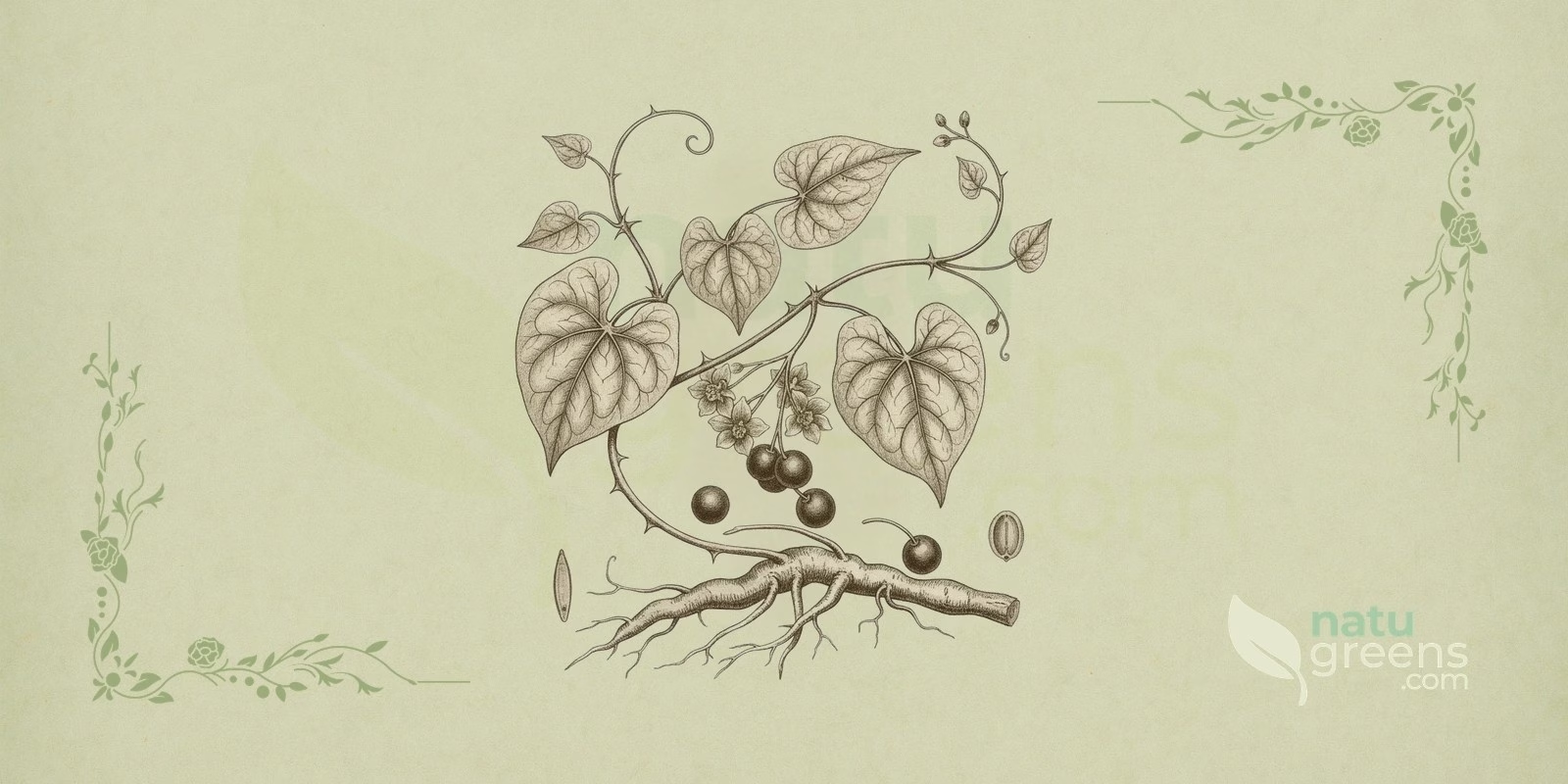
Sarsaparilla (Smilax ornata Lem.) is a perennial climbing plant with thorny stems, native to Mexico and Central America, that has been used in traditional medicine for centuries. Its roots are the most prized part of the plant and form the basis of infusions, decoctions and extracts, which herbal tradition has long regarded as a natural tonic and blood purifier. Modern research has begun to investigate some of these uses in laboratory and animal studies, but clinical data in humans remain scarce, which keeps the plant within the realm of traditional record and preliminary research.
Popular and International Names of Sarsaparilla
In several languages, the names of sarsaparilla are related to the Spanish zarzaparrilla, a word whose origin is explained further on, in the section on historical notes and interesting facts.
- English: Honduran sarsaparilla, Jamaican sarsaparilla, sarsaparilla.
- Spanish: salsaparrilla, zarzaparrilla.
- Portuguese: salsaparrilha, salsaparrilha-do-reino, salsaparrilha-espanhola, salsaparrilha-vermelha.
- French: salsepareille.
- Italian: salsapariglia.
- German: Sarsaparilla.
Botanical Synonyms of Smilax ornata
Smilax ornata Lem. has accumulated several botanical synonyms over time, a reflection of how complex its classification has been, and this kind of taxonomic variation is common in plants with a wide geographic distribution and a long history of traditional use. The synonyms most often cited in the botanical literature are the following:
- Smilax grandifolia Regel (1856)
- Smilax ornata Hook. (1889), a name that does not correspond to the species described by Lemaire in 1865
- Smilax regelii Killip & C.V.Morton
- Smilax utilis Hemsl. (1899)
Botanical Family: Smilacaceae
Smilax ornata belongs to the Smilacaceae family, made up mainly of woody climbers, and the species of the genus Smilax are widely distributed across tropical and subtropical regions. These plants are characterized by stems that are often thorny and by leaves with prominent veins, and the family is known for its steroidal saponins, compounds to which much of the medicinal reputation of its species is attributed. Sarsaparilla is one of the best-known examples of this group and owes its fame to roots rich in phytochemicals.
Parts of Sarsaparilla Used
- Roots
The root is the part of sarsaparilla used in tradition, dried and chopped for homemade decoctions and tinctures, and processed by industry into extracts and capsules.
Ethnobotanical and Traditional Uses
The uses listed below belong to the traditional and folk record of sarsaparilla and lack clinical evidence, serving as historical and ethnobotanical documentation rather than as treatment recommendations.
- Blood purifier
- Chronic fatigue
- Diuretic
- Fever and cough
- General tonic
- Gout and high uric acid
- Relief of arthritic and rheumatic pain
- Skin problems (dermatophytosis, psoriasis)
- Syphilis and leprosy (historical use, now superseded by modern medicine)
Therapeutic Properties of Sarsaparilla
The properties attributed to sarsaparilla come mainly from tradition and from preclinical studies with root extracts, and none of them has been confirmed in clinical trials in humans.
- Anti-inflammatory (activity observed in preclinical studies with extracts of the plant, not clinically proven)
- Antimicrobial (action against bacteria and fungi mentioned in the traditional record and in preliminary studies)
- Antioxidant (free radical scavenging investigated in laboratory studies)
- Hepatoprotective (liver protection suggested by the traditional record, not clinically proven)
- Immunomodulatory (possible modulation of the immune system, still at a preliminary stage of research)
- Synergistic (traditionally recorded in herbal formulas, where it would supposedly increase the absorption of other ingredients, not clinically proven)
Detailed Phytochemical Profile of Sarsaparilla
Sarsaparilla roots contain several classes of compounds, most notably steroidal saponins, the chemical group that characterizes the Smilacaceae family and the most studied in the roots of the genus Smilax.
- Flavonoids
- Parillin
- Phenolic acids
- Plant sterols
- Saponins (sarsaparilla R1, sarsaparilla R2, sarsaparilloside, sarsaponin)
- Triterpenes
Preparation and Administration Forms of Sarsaparilla
- Capsules
- Decoction
- Dry extract
- Fluid extract
- Infusion
- Tincture
Since the part used is the root, the most traditional homemade preparation is the decoction, while capsules, tinctures and standardized extracts are the most common forms in present-day herbal medicine. Whatever the form, the amount and duration of use should be guided by a health professional, as clinical data on safe doses are limited.
Synergy with Other Medicinal Plants
For Skin Health
Sarsaparilla traditionally appears alongside burdock (Arctium lappa) and dandelion (Taraxacum officinale) in folk formulas with a depurative profile, in which the three plants are thought to combine the cleansing and anti-inflammatory actions that tradition ascribes to them. This use has been recorded for psoriasis and other skin conditions, but there is no clinical evidence for the combination, and persistent skin problems call for a dermatological assessment.
For Immune Support
In traditional formulas aimed at immune support, sarsaparilla is paired with echinacea (Echinacea purpurea), especially during periods of low immunity. In this combination, tradition assigns sarsaparilla the role of a general tonic and echinacea that of stimulating the body’s natural defenses, although the blend has not been evaluated in clinical studies and does not replace medical care in the case of infections.
For Men’s Health
Sarsaparilla is also traditionally used together with saw palmetto (Serenoa repens) in preparations linked to male well-being, where folk tradition describes it as a tonic for the reproductive organs and as possible support in hormonal matters. None of these effects has been confirmed in clinical studies, and men’s health complaints should be assessed by a doctor before any use of herbs.
Recipes and Usage Protocols of Sarsaparilla
Traditional Sarsaparilla Root Decoction
In folk tradition, the root decoction is the most common way of preparing sarsaparilla and is usually taken as a blood purifier, a use that rests on the traditional record rather than on clinical studies.
Ingredients: 1 tablespoon of dried, chopped sarsaparilla root and 500 ml of water.
Preparation: Place the root and the water in a saucepan, bring to a boil, then lower the heat and let it simmer gently for 15 to 20 minutes. Strain and drink warm. The daily amount and the duration of use should be decided with a health professional, because the saponins in the root can irritate the digestive tract at high doses, and the preparation should not be used during pregnancy or breastfeeding, nor given to young children.
Homemade Sarsaparilla Root Tincture
The tincture is a concentrated form of the root that tradition associates with the relief of inflammation, although this use has not been confirmed in studies with people.
Ingredients: 50 g of dried sarsaparilla root and 250 ml of 70% grain alcohol.
Preparation: Place the root in a dark glass jar, cover it with the alcohol and leave it to macerate for 2 to 4 weeks, shaking the jar every day. After this period, strain the liquid and store the tincture in a dark bottle. Because it contains alcohol and is more concentrated than the tea, the dose and frequency of use should be guided by a health professional, and the tincture should not be used during pregnancy or breastfeeding, nor given to children.
The preparations above follow traditional records and do not replace professional guidance. Before any internal use, check the contraindications and interactions described in this article.
Associated Therapies
Phytotherapy
In phytotherapy, sarsaparilla is valued as a tonic and depurative and is traditionally associated with chronic conditions such as skin problems and rheumatism. Standardized extracts are common, and capsules and tinctures are among the most widely used forms of administration, with the plant’s action attributed mainly to the saponins and flavonoids in the root. The available studies, however, are still largely preclinical, so sarsaparilla is regarded at most as a complement and does not replace medical treatment for any of these conditions.
Contraindications and Side Effects of Sarsaparilla
General Contraindications
Sarsaparilla contains saponins and has a traditional use as a flavoring and depurative, but clinical data on its safety and efficacy are scarce. For this reason, the restrictions below must be respected, and any use should be preceded by professional advice:
- Allergy: people who are allergic to plants of the Smilacaceae family should avoid sarsaparilla, even though this type of allergy is rare.
- Children: do not use in young children.
- Kidney disease: people with kidney disease should be cautious, as large doses may aggravate the condition.
- Pregnancy and breastfeeding: sarsaparilla is contraindicated during pregnancy and breastfeeding.
Side Effects
Saponins can irritate the digestive tract at high doses, which is why the amount and duration of use should never be decided on your own. Without proof of efficacy, sarsaparilla does not replace medical treatment for any of the conditions that tradition associates it with.
Drug Interactions
Sarsaparilla may interact with certain medications and enhance the effect of anticoagulants, so people taking warfarin or other anticoagulants should be especially careful. The plant may also alter the metabolism of other drugs, and anyone who takes medication on a regular basis should consult a doctor or pharmacist before combining it with sarsaparilla, to avoid unwanted interactions.
Historical Notes and Interesting Facts
Origin of the Name
The name sarsaparilla comes from the Spanish zarzaparrilla, a word formed from zarza, meaning “bramble” or “thorny shrub”, and parrilla, which refers to a “small vine”. The compound describes the plant’s thorny, climbing habit quite precisely and shows how it was perceived in the past, so that the name itself keeps a record of its striking appearance.
Historical Use in Venereal Diseases and Leprosy
Sarsaparilla held a prominent place in the history of pharmacology as a remedy against venereal diseases and leprosy. In the works of the physicians Johannes Franc (1649-1725) and Friedrich Hoffmann (1660-1742), it is discussed as an alternative to mercury in the treatment of venereal diseases, and as late as 1952 a study was still analyzing the saponins of two sarsaparillas used against leprosy, Smilax ornata among them. In 1959, another paper described its use in combination with dapsone in patients with lepromatous leprosy, but syphilis and leprosy now have their own medical treatment with antimicrobials, and this use of the plant belongs solely to history.
Use in Beverages
Sarsaparilla was a key ingredient in the making of soft drinks, the most famous of which is root beer, and it also found its way into old-fashioned licorice sweets. Over time its popularity as a flavoring declined, but the earthy, distinctive taste of the root is still enjoyed in some craft beverages, as a cultural legacy of the plant.
Frequently Asked Questions about Sarsaparilla
What Is Sarsaparilla?
Sarsaparilla (Smilax ornata) is a perennial climbing plant with thorny stems, native to Mexico and Central America, that belongs to the Smilacaceae family. Its roots are the part used in traditional medicine, where the plant has a reputation as a tonic and blood purifier, although clinical data on these uses are limited.
What Is Sarsaparilla Tea Used For?
In folk tradition, the tea made by decocting the root is used as a blood purifier and diuretic, for skin problems such as psoriasis and for pain associated with arthritis, rheumatism and gout. These uses come from the traditional record and from preliminary studies, without clinical evidence, and the tea does not replace medical treatment.
What Is the Traditional Use of Sarsaparilla for Skin Problems?
Sarsaparilla is traditionally used for psoriasis and dermatophytosis, often combined with burdock and dandelion in depurative formulas. Preclinical studies have observed anti-inflammatory activity in extracts of the plant, and an action against bacteria and fungi appears in the traditional record and in preliminary studies, but there is no evidence of efficacy in humans, and persistent skin problems require a dermatological assessment.
Does Sarsaparilla Have Contraindications?
Yes, sarsaparilla is contraindicated during pregnancy and breastfeeding, should not be used in young children and should be avoided by anyone allergic to plants of the Smilacaceae family. People with kidney disease need to be cautious, those taking anticoagulants such as warfarin should consult their doctor first, and the saponins in the root can irritate the digestive tract at high doses.
Can Pregnant Women, Breastfeeding Mothers and Children Use Sarsaparilla?
No, sarsaparilla is contraindicated during pregnancy and breastfeeding and should not be used in young children, since the safety data available on the plant are limited. The restriction applies to every form of preparation, including the tincture, which is not only more concentrated but also contains alcohol.
Does Sarsaparilla Replace Medical Treatment?
No, because sarsaparilla has no proven efficacy and therefore does not replace medical treatment for any of the conditions that tradition associates it with, such as arthritis, gout or psoriasis. Its former use against syphilis and leprosy, for example, has been superseded by modern medicine, and any use of the plant should first be discussed with a health professional.
Notice: this content is for informational purposes and does not replace professional medical advice. Consult a physician or herbal practitioner before using medicinal plants, especially during pregnancy, breastfeeding, or alongside medication.
References and Scientific Studies
- PMC2012 Challinor VL, et al. Steroidal saponins from the roots of Smilax sp.: structure and bioactivity. Steroids. 2012.
- PMC2020 Khan A, et al. Investigation of the preliminary mechanism of action for the acute anti-inflammatory activity of the methanol extract of Smilax ornata Lem.. J Ethnopharmacol. 2020.
- PMC2019 Khan AK, et al. Investigation of the anti-inflammatory and the analgesic effects of the extracts from Smilax ornata Lem. (Jamaican sarsaparilla) plant. J Ethnopharmacol. 2019.
- PMC1952 Paris R, et al. The saponosides of two sarsaparilla plants (Smilax ornata Lem. and Smilax japicanga Griseb.) used against leprosy. Ann Pharm Fr. 1952.
- PMC1959 Rollier R. Treatment of lepromatous leprosy by a combination of DDS and sarsaparilla (Smilax ornata). Int J Lepr. 1959.
- PMC2021 Schochow M, et al. Mercury or sarsaparilla. On the pharmacotherapy of venereal diseases by Johannes Franc (1649-1725) and Friedrich Hoffmann (1660-1742). Urologe A. 2021.