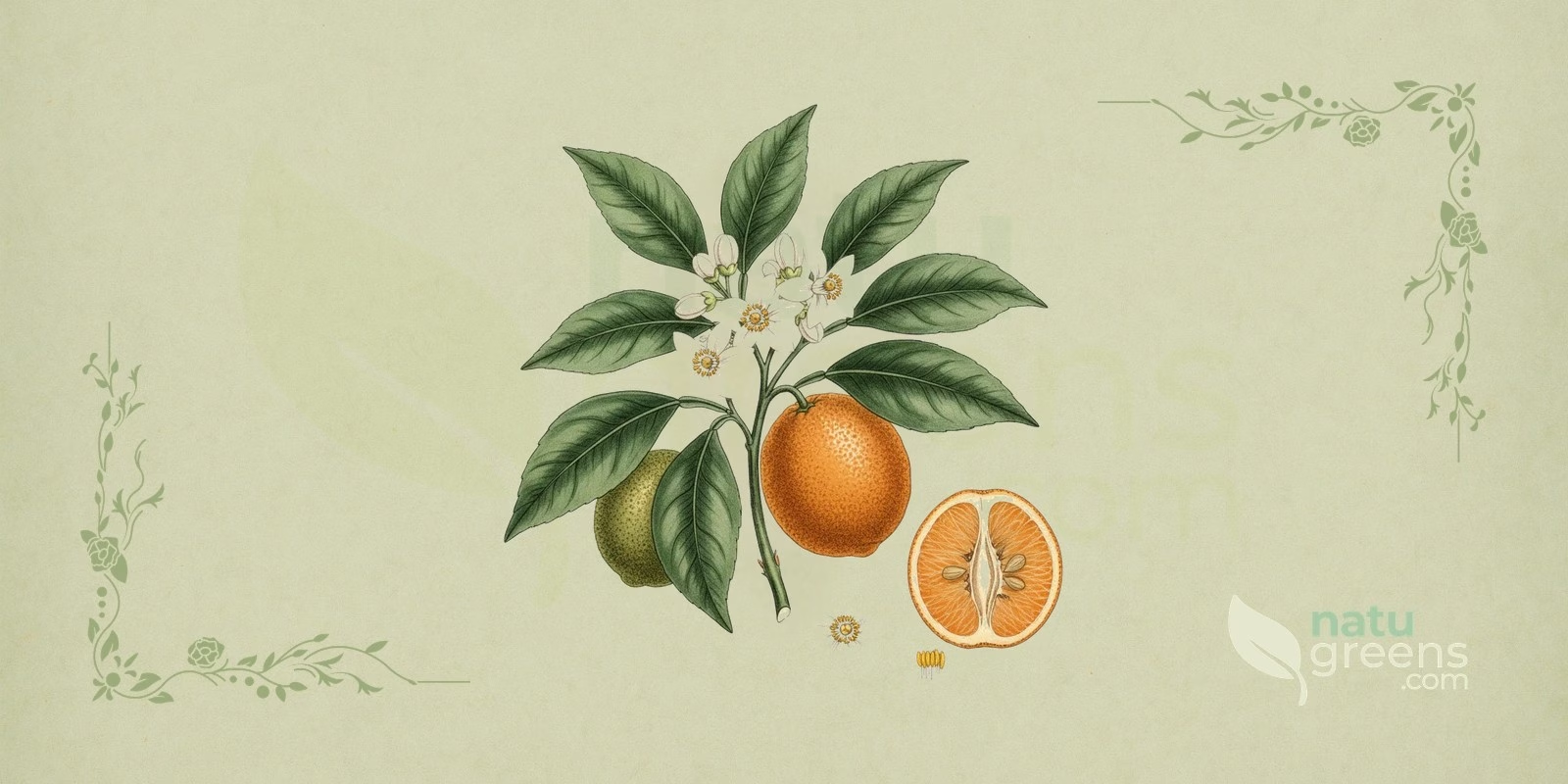
Citrus aurantium L. / Bitter Orange, also known as sour orange, Seville orange or marmalade orange, is a citrus tree of hybrid origin in the Rutaceae family, whose fruit has a distinctly bitter and sour taste. Native to Southeast Asia, the species spread to many parts of the world, valued both for the role traditional medicine assigns to it and for its culinary uses. Ancient texts from several traditions already mentioned it for its digestive and calming applications. Its fruits, seldom eaten raw because of their bitterness, are harvested to make essential oils, marmalades, liqueurs and herbal preparations, while the flowers yield the celebrated neroli oil, one of the most prized ingredients in perfumery.
In European and Asian herbal tradition, bitter orange holds a prominent place as a plant of many applications, ranging from gastrointestinal discomfort to states of anxiety and insomnia. Its phytochemical makeup, rich in flavonoids and alkaloids, has been linked in laboratory studies to anti-inflammatory, antioxidant and anxiolytic activity, although most of these findings have not yet been confirmed by robust clinical trials. In recent decades, scientific interest has focused on p-synephrine, a stimulant with cardiovascular effects found mainly in the immature fruit. For this reason, this article concentrates on the culinary and traditional use of the fruit, the peel and extracts in moderate doses, and does not cover weight-loss or fat-burning protocols.
Popular and International Names of Bitter Orange
The names of bitter orange vary by region and often allude to the sour taste of the fruit or to the place where it became famous. In Brazil the species is also called laranja-da-terra, a name common in recipes for the homemade sweet made from the peel, while Seville orange refers to its traditional cultivation in the Andalusian city, which still supplies much of the fruit used in British marmalade.
- English: bitter orange, marmalade orange, Seville orange, sour orange.
- French: bigarade, orange amère, orange de Séville.
- German: Bitterorange, Pomeranze, Saure Orange.
- Italian: arancio amaro, melangolo.
- Portuguese: bigarade, laranja amarga, laranja-azeda, laranja-da-terra, laranja-de-sevilha.
- Spanish: naranja agria, naranja amarga, naranja de Sevilla.
Botanical Synonyms of Citrus aurantium
Citrus × aurantium L. is the accepted botanical name for bitter orange, considered a natural hybrid between pomelo (Citrus maxima) and mandarin (Citrus reticulata). Because some recent classifications also place sweet orange under this same name, bitter orange is often qualified as the variety amara, and over the centuries it has received other scientific names now treated as synonyms, including:
- Aurantium corniculatum Mill.
- Aurantium distortum Mill.
- Aurantium vulgare M.Gómez
- Citrus aurantium var. amara L.
- Citrus aurantium var. bigaradia
Botanical Family: Rutaceae
The Rutaceae family comprises about 160 genera and more than 1,600 species of flowering plants, distributed mainly in tropical and subtropical regions. These plants are known for the oil glands that produce the aromatic essential oils characteristic of many family members, such as citrus fruits. The family includes plants of great economic, food and medicinal importance, notably grapefruits, lemons, mandarins and oranges.
Bitter orange shares the morphological traits typical of the genus Citrus, such as alternate leaves that look simple (they are actually unifoliolate), broadly winged petioles and thorns in the axils of the branches, along with translucent dots on the leaves that correspond to the oil glands. The family is also known for producing bioactive compounds, especially alkaloids, coumarins and flavonoids, and this chemical diversity has been the subject of intense pharmacological research, which has contributed to the development of herbal medicines and dietary supplements.
Parts of Bitter Orange Used
Practically the whole plant can be used, but the fruit peel accounts for most of its culinary and traditional uses. The flowers and the leaves yield distinct essential oils, and the dried immature fruit is the raw material for many synephrine-rich extracts.
- Dried immature fruit (zhi shi, in Chinese medicine)
- Essential oil (neroli from the flowers, petitgrain from the leaves and oil from the peel)
- Flowers
- Fruit peel (fresh and dried)
- Leaves
- Ripe fruit (juice and pulp)
Ethnobotanical and Traditional Uses
Ethnobotanical records from Asia, the Middle East and Europe describe the use of bitter orange in the situations listed below, which reflect folk tradition and are neither a clinical indication nor a substitute for follow-up by a health professional.
- Anxiety and nervousness
- Digestive disorders (constipation, diarrhea, dysentery, indigestion)
- Emotional shock
- Epilepsy (ethnobotanical record, without clinical support)
- Fatigue
- Fevers and colds
- Insomnia and sleep disorders
- Intestinal cramps and flatulence
- Liver and gallbladder problems
- Respiratory problems
- Rheumatism
- Skin inflammations and wounds
Therapeutic Properties of Bitter Orange
Most of the activities listed below come from traditional records and from laboratory or animal studies, so they describe ongoing lines of research rather than proven effects in people.
- Analgesic (traditional record for pain; effect investigated in preclinical studies)
- Antibacterial (activity observed in laboratory tests)
- Anti-inflammatory (activity observed in laboratory and animal studies)
- Antioxidant (attributed to flavonoids in laboratory studies)
- Antiproliferative (activity observed in laboratory studies, without clinical proof)
- Antispasmodic (traditional record for digestive cramps and spasms)
- Antiviral (activity investigated in laboratory studies)
- Anxiolytic (investigated in preliminary studies, mainly with the scent of the flowers)
- Demulcent (traditional record for soothing irritation)
- Digestive (traditional use of the peel as an aromatic bitter)
- Hypoglycemic (effect on blood glucose observed in animal studies, without clinical proof)
- Neuroprotective (effect investigated in preclinical studies)
- Pesticidal (activity against insects and agricultural pests described in studies)
- Sedative (traditional record, mainly for the flowers and neroli oil)
- Stimulant (action attributed to p-synephrine, with cardiovascular effects that call for caution)
- Tonic (traditional record as a bitter tonic)
Detailed Phytochemical Profile of Bitter Orange
The chemical composition varies considerably between the peel, the flowers, the leaves and the fruit, and also with the degree of ripeness. The immature fruit holds the highest concentrations of p-synephrine and of flavanones such as neohesperidin and naringin, which are partly responsible for the characteristic bitterness of the species.
- Alkaloids (N-methyltyramine, octopamine, p-synephrine)
- Coumarins and furanocoumarins
- Essential oils (limonene, linalool, linalyl acetate, β-myrcene, nootkatone, α-terpineol)
- Flavonoids (apigenin, hesperidin, kaempferol, luteolin, naringenin, naringin, neohesperidin, nobiletin, quercetin, tangeretin)
- Limonoids (limonin, nomilin, obacunone)
- Phenolic acids
- Polysaccharides
- Terpenes
- Vitamins and minerals
Preparation and Administration Forms of Bitter Orange
Traditional and culinary preparations, such as teas, sweets and preserves made with the peel, use amounts close to those of a food, while capsules, standardized dry extracts and fluid extracts concentrate p-synephrine and should only be used under medical guidance. The essential oil is intended for aromatherapy and diluted external use, never for ingestion without the supervision of a qualified professional.
- Candied peel, preserves and marmalade (culinary use)
- Capsules (only under medical guidance)
- Compresses
- Cream
- Decoction
- Dry extract (only under medical guidance)
- Essential oil (external use and aromatherapy)
- Fluid extract
- Infusion (tea)
- Poultice
- Tincture
Synergy with Other Medicinal Plants
Combination with Golden Root in Animal Studies
A study in rats with diet-induced obesity observed that combining Citrus aurantium with Rhodiola rosea (golden root) reduced visceral adipose tissue and raised norepinephrine levels in the hypothalamus. This effect is hypothetically attributed to the joint action of p-synephrine with the rosavins and salidroside of rhodiola. It is an experimental result, obtained in animals, that does not justify using this combination for weight loss in people, especially because p-synephrine is a stimulant with cardiovascular effects and combining it with other active substances can add up risks.
Gardenia and Magnolia in Traditional Chinese Medicine
In Traditional Chinese Medicine (TCM), the fruit of Citrus aurantium joins Gardenia jasminoides and Magnolia officinalis in the classic formula known as Zhi-Zi-Hou-Po, traditionally used for restlessness and low mood. In a study with rats subjected to chronic unpredictable mild stress, the water extract of this combination produced an antidepressant-like effect, with normalization of hypothalamic-pituitary-adrenal (HPA) axis hormones and increased neurogenesis in the hippocampus. These are preclinical findings that do not replace proper medical care for depression and should never lead anyone to stop taking antidepressants or to combine them with the plant on their own.
Peppermint and Lemon Balm in Digestive Infusions
Tradition pairs bitter orange with other carminative and digestive plants, such as peppermint (Mentha × piperita) and lemon balm (Melissa officinalis), in infusions traditionally used for discomforts such as dyspepsia, flatulence and intestinal cramps. The limonene-rich essential oils of the peel are thought to add their actions to those of the compounds in these plants, with an antispasmodic and anti-inflammatory effect on the gastrointestinal tract, but this interaction has been little studied and remains a hypothesis.
Recipes and Usage Protocols of Bitter Orange
Traditional Peel and Blossom Infusion
This infusion is traditionally taken after meals and in the evening, in amounts close to those of the culinary use of the peel.
Place a small amount of dried bitter orange peel, or dried flowers, in a cup of boiling water, cover and leave to infuse for 5 to 10 minutes. Strain and drink warm, in moderate portions, preferably after meals or before bedtime, and consult a health professional about how often and for how long to use it, especially if you have cardiovascular disease or take any medication. A little honey or a slice of lemon helps soften the flavor.
Neroli Oil in Aromatherapy
Traditionally used in aromatherapy as a calming scent, mainly in the evening and in quiet surroundings, always with the oil extracted from the flowers.
Add 3 to 5 drops of neroli essential oil to an aromatherapy diffuser and use it in calm surroundings or before going to sleep. For topical use, dilute 1 to 2 drops in 10 ml of a vegetable oil, such as sweet almond oil, and apply to the wrists or temples after testing on a small patch of skin. Cold-pressed peel oil contains photosensitizing furanocoumarins and must not be applied to the skin before sun exposure, and neither oil should be used in children or in pregnant or breastfeeding women.
Homemade Peel and Honey Syrup
A preparation from traditional records for bouts of coughs and colds, made only with the fruit peel and honey.
Make a decoction with 2 tablespoons of bitter orange peel in 500 ml of water, boiling for 15 minutes. Strain, add 250 ml of honey and warm gently until the honey has fully dissolved, then store the syrup in a sterilized jar. Take small portions throughout the day, for a few days only, and consult a health professional about the right amount for your case. Honey must not be given to children under 1 year of age, and the syrup is not intended for children of any age.
The preparations above follow traditional records and do not replace professional guidance. Before any internal use, check the contraindications and interactions described in this article.
Associated Therapies
Aromatherapy
Bitter orange essential oil, especially the neroli extracted from the flowers, is widely used in aromatherapy for a scent that tradition regards as calming. Small clinical trials have looked at inhaling this fragrance in anxious people, including patients in cardiac care units. In aromatherapy it is used to relieve stress and encourage relaxation and sleep, and it can be diffused into the air, inhaled directly or applied to the skin, always diluted in a carrier oil.
Herbal Medicine
Bitter orange holds an important place in the herbal medicine of many cultures, which traditionally use infusions, tinctures and extracts of the peel for digestive complaints, poor appetite, anxiety and insomnia. In European herbal medicine the peel is listed as an aromatic bitter of traditional use, and modern research is investigating its bioactive compounds, although most of the evidence still comes from laboratory and animal studies.
Traditional Chinese Medicine (TCM)
In TCM, bitter orange fruit is used in two main forms, the dried immature fruit (zhi shi) and the nearly ripe fruit (zhi ke). Both are used to regulate Qi (vital energy), relieve stagnation and support digestion in complaints such as indigestion, abdominal bloating and constipation. These materials also serve to harmonize the liver and calm the mind, almost always combined with other herbs in complex formulas, and since the immature fruit is rich in synephrine, preparations should be prescribed by a qualified practitioner.
Contraindications and Side Effects of Bitter Orange
Bitter orange contains synephrine, a stimulant with cardiovascular effects that is widely used (and has a history of regulatory restriction) in weight-loss supplements. For this reason, occasional culinary use of the fruit and peel, which is safe in food amounts, must be distinguished from the use of concentrated extracts and supplements, which requires medical guidance and is subject to the restrictions below.
Contraindications
- Caffeine, other stimulants and MAO inhibitors: do not combine with caffeine, other stimulants (such as ephedrine and thermogenic supplements) or MAO inhibitors, because of the risk of serious additive cardiovascular effects.
- Cardiovascular disease: contraindicated in uncontrolled hypertension, arrhythmias and other cardiovascular diseases, including in people with a history of stroke, because of the stimulant effect of synephrine.
- Children: do not use in children, either in medicinal preparations or as an essential oil, as safety data for this age group are lacking.
- Citrus allergy: people with a known sensitivity to other citrus fruits may have allergic reactions to bitter orange.
- Concentrated extracts and supplements: avoid concentrated doses (extracts/supplements) without medical guidance. This is different from the occasional culinary use of the fruit and peel, which is safe in food amounts.
- Pregnancy and breastfeeding: do not use during pregnancy and breastfeeding, whether in medicinal teas, extracts or essential oil, given the lack of conclusive studies on safety during these periods.
Drug Interactions
Beyond the prohibited combinations above, bitter orange can interact with several medicines, partly because its juice and peel contain furanocoumarins that, like those in grapefruit, inhibit the intestinal enzyme CYP3A4 and alter the absorption of some drugs.
- Anticoagulants: it may interact with anticoagulants such as warfarin, which is why anyone taking these medicines should consult their doctor before using any medicinal preparation.
- Antidepressants: besides MAO inhibitors, which are already contraindicated, other antidepressants call for a medical assessment before extracts are used, given the stimulant action of synephrine.
- Calcium channel blockers and statins: Seville orange juice increased blood levels of felodipine in a clinical study, and the same mechanism may affect nifedipine and some statins used to lower cholesterol.
- Hypoglycemic drugs: since animal studies suggest an effect on blood glucose, people taking diabetes medication should talk to their doctor before using extracts.
- Sedatives, anxiolytics and antihistamines: bitter orange may enhance or alter the effect of these medicines, and the calming action that tradition attributes to the flowers may add to that of sedatives.
Side Effects
- Allergic reactions: these may include contact dermatitis, hives, angioedema and, in rare cases, anaphylaxis.
- Anxiety and nervousness: excessive intake can lead to agitation, nervousness and insomnia.
- Gastrointestinal disorders: nausea, vomiting, diarrhea or abdominal discomfort may occur in some people.
- Increased blood pressure and heart rate: at high doses or in sensitive people, p-synephrine can raise blood pressure and heart rate, and fainting, heart attack and stroke have been reported in people who took bitter orange supplements, alone or combined with caffeine.
- Photosensitivity: the furanocoumarins in the peel and in cold-pressed peel oil can increase the skin’s sensitivity to sunlight and lead to dark spots and burns.
Historical Notes and Interesting Facts
Bitter orange was one of the first citrus fruits to reach Europe from Asia, carried along Arab trade routes around the 10th century, long before sweet orange. For centuries it was grown more for its medicinal and aromatic properties than for its fruit, which was considered inedible raw because of its bitterness.
The famous Curaçao liqueur is made with the dried peel of the laraha, a bitter-fruited citrus related to bitter orange, classified as Citrus × aurantium subsp. currassuviensis and grown on the Caribbean island of Curaçao. The peel is macerated in alcohol and then distilled to create the aromatic base of the drink, whose blue version owes its color solely to a dye added to the originally colorless liqueur.
In British cooking, Seville orange is highly prized for making marmalade, since its high natural pectin content and pronounced bitter flavor make it ideal for this preserve, traditionally prepared in winter, when the fruit reaches the markets. French cuisine, for its part, made bigarade sauce, prepared with the juice and zest of the fruit, the classic accompaniment to duck à l’orange.
In Brazil, where the species is also called laranja-da-terra, the thick peel is the basis of a sweet in syrup that is traditional in several regions, prepared after soaking the peel in water for a few days, changing the water often, to remove part of the bitterness. Sour orange also played an important role in citrus growing as a rootstock. The citrus tristeza virus epidemic in the first half of the 20th century exposed the susceptibility of sweet orange trees grafted onto it and led to its replacement by other varieties.
The essential oil extracted from bitter orange flowers is known as neroli oil, a precious ingredient in perfumery and aromatherapy. The same distillation yields orange blossom water, widely used in Mediterranean and Middle Eastern pastry. According to perfumery tradition, the name neroli honors the Princess of Nerola, Anne Marie Orsini, who popularized the essence in the 17th century by using it to scent her gloves and bath water.
Frequently Asked Questions about Bitter Orange
Does Bitter Orange Help with Weight Loss?
Extracts standardized for p-synephrine have been studied for a possible thermogenic and appetite-suppressing effect, but recent reviews still debate their efficacy and safety. The available results do not justify using the plant as a weight-loss aid. Because synephrine is a stimulant with cardiovascular effects and has a history of regulatory restriction in weight-loss supplements, this article does not recommend any weight-loss protocol with bitter orange. Anyone considering a synephrine supplement should talk to their doctor first, especially if they consume caffeine or other stimulants.
What Are the Main Traditional Uses of Bitter Orange?
Traditionally, bitter orange is used for digestive disorders such as indigestion, nausea, constipation and flatulence, and it also appears in folk records for anxiety, nervousness and insomnia and, applied topically, for skin inflammations and wounds. In Traditional Chinese Medicine, the fruit is valued for regulating Qi and harmonizing the digestive system, always within formulas prescribed by a qualified practitioner.
Is Bitter Orange Essential Oil Safe for Internal Use?
Bitter orange essential oil, such as neroli, is highly concentrated and is not recommended for internal use without the supervision of a qualified professional, since ingesting it can cause irritation and significant adverse effects. The most common and safest use is in aromatherapy, by inhalation, or on the skin, always diluted in a carrier oil, bearing in mind that cold-pressed peel oil is photosensitizing and must not be used before sun exposure.
Are There Important Drug Interactions with Bitter Orange?
Yes, bitter orange can interact with several medicines, including anticoagulants such as warfarin, cholesterol-lowering statins, calcium channel blockers for blood pressure, antidepressants, hypoglycemic drugs, anxiolytics, sedatives and antihistamines, enhancing or altering their effects. Combining it with caffeine, other stimulants or MAO inhibitors should be avoided because of the risk of serious additive cardiovascular effects, and anyone taking any medication needs to consult a doctor or pharmacist before using products made from the plant.
Can People with High Blood Pressure or Heart Problems Use Bitter Orange?
Medicinal preparations, extracts and supplements of bitter orange are contraindicated in uncontrolled hypertension, arrhythmias and other cardiovascular diseases, because of the stimulant effect of synephrine on blood pressure and heart rate. Even culinary consumption, safe in food amounts for most people, should be discussed with a cardiologist by anyone who has heart disease and takes medicines that may interact.
Can Bitter Orange Peel Be Used in Cooking?
Yes, the peel and juice of bitter orange have a long culinary tradition in marmalades, sweets in syrup, liqueurs and sauces such as bigarade, and occasional culinary use of the fruit and peel is considered safe in food amounts. Caution applies to concentrated extracts and supplements, which should not be used without medical guidance, and to people with a citrus allergy, who should avoid the fruit in any form.
Notice: this content is for informational purposes and does not replace professional medical advice. Consult a physician or herbal practitioner before using medicinal plants, especially during pregnancy, breastfeeding, or alongside medication.
References and Scientific Studies
View All 9 Cited References
Peer-Reviewed Scientific Studies (7)
- PMC2022 Koncz D, et al. The Safety and Efficacy of Citrus aurantium (Bitter Orange) Extracts and p-Synephrine: A Systematic Review and Meta-Analysis. Nutrients. 2022.
- PMC2024 Mahmoodabadipoor F, et al. Effect of Citrus aurantium and chamomile aromas on anxiety and vital signs in cardiac care unit patients: A randomized clinical trial. Health Sci Rep. 2024.
- PMC2001 Malhotra S, et al. Seville orange juice-felodipine interaction: comparison with dilute grapefruit juice and involvement of furocoumarins. Clin Pharmacol Ther. 2001.
- PMC2011 Stohs SJ, et al. The safety of Citrus aurantium (bitter orange) and its primary protoalkaloid p-synephrine. Phytother Res. 2011.
- PMC2018 Suntar I, et al. An Overview on Citrus aurantium L.: Its Functions as Food Ingredient and Therapeutic Agent. Oxid Med Cell Longev. 2018.
- PMC2013 Verpeut JL, et al. Citrus aurantium and Rhodiola rosea in combination reduce visceral white adipose tissue and increase hypothalamic norepinephrine in a rat model of diet-induced obesity. Nutr Res. 2013.
- PMC2015 Xing H, et al. Antidepressant-like effect of the water extract of the fixed combination of Gardenia jasminoides, Citrus aurantium and Magnolia officinalis in a rat model of chronic unpredictable mild stress. Phytomedicine. 2015.
Institutional Sources (1)
- GOV National Center for Complementary and Integrative Health. Bitter Orange: Usefulness and Safety. NCCIH, National Institutes of Health.
Supplementary Readings (1)
- 2024 Eslami-Farouji A. Exploring the miracles toward the Ethnobotany of Citrus aurantium L. in Iran. Ethnobotany Research and Applications. 2024.