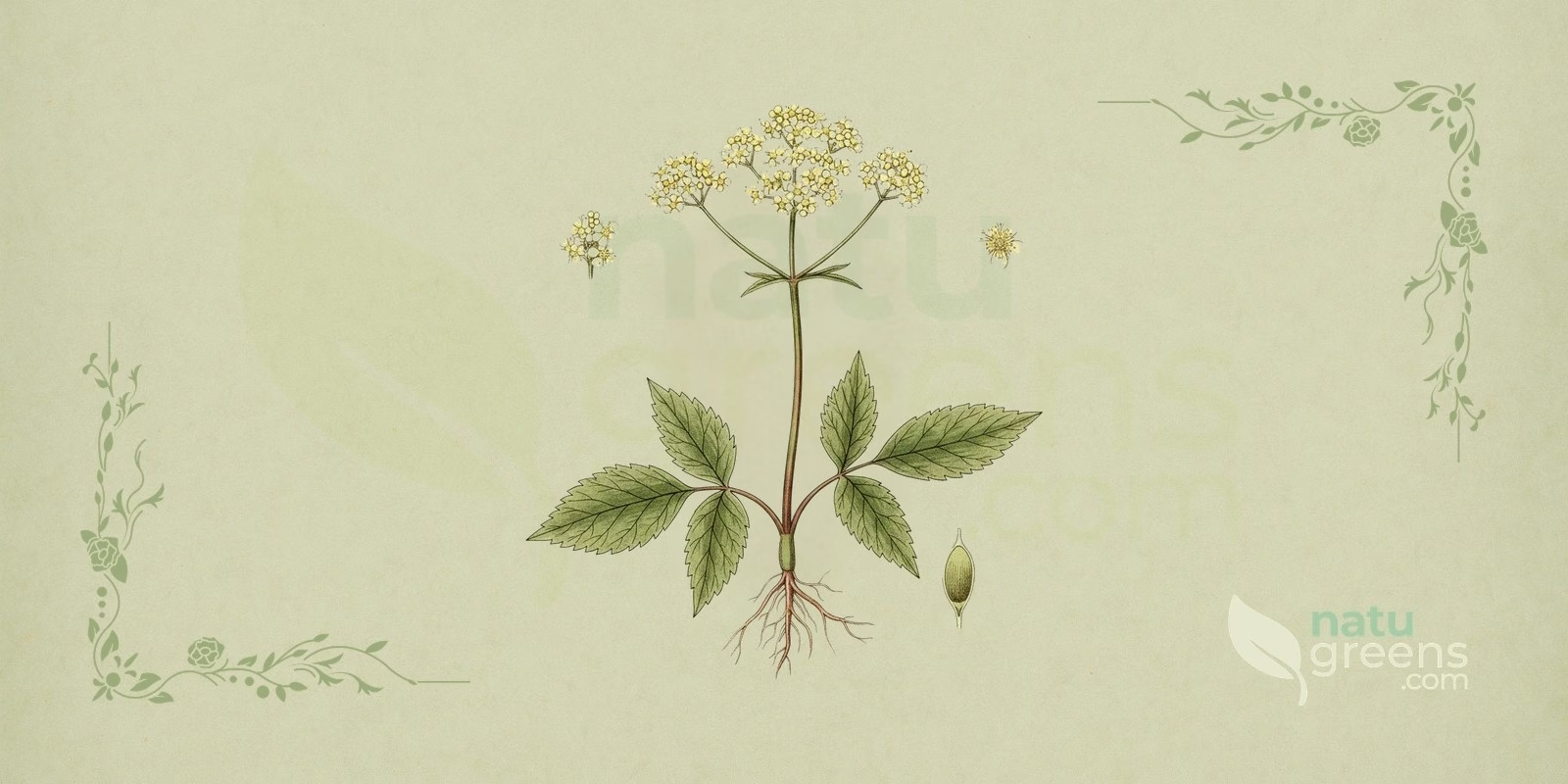
Filipendula ulmaria (L.) Maxim. / Meadowsweet, also commonly known as queen of the meadow or bridewort, is a perennial herbaceous plant in the Rosaceae family. It was originally described by Linnaeus as Spiraea ulmaria and transferred to the genus Filipendula by the Russian botanist Carl Maximowicz in 1879. Native to Europe and Western Asia, the species has spread to other continents, partly because of the interest aroused by its medicinal and culinary uses. Meadowsweet has featured for centuries in traditional European medicine and is mentioned in old herbal texts. Its fragrant, creamy-white flowers, gathered in dense cymes, are harvested at peak bloom to prepare infusions, extracts and other herbal products.
In the European herbal tradition, including that of Portugal, meadowsweet holds a prominent place among the plants used for inflammatory and painful complaints, with records of use ranging from rheumatic disorders and joint pain to feverish states. This reputation is usually linked to the plant’s phytochemical makeup, rich in natural salicylates, flavonoids and essential oils. Modern research, mostly carried out in the laboratory and in animals, is investigating several of these traditional uses and has turned meadowsweet into a European medicinal plant of growing scientific interest. Clinical trials in humans, however, remain scarce.
Popular and International Names of Meadowsweet
The plant’s popular names often allude to the meadows where it blooms and to the old practice of using its flowers to flavor drinks such as mead, a pattern repeated across several European languages:
- English: bridewort, dollof, European meadowsweet, lady of the meadow, mead wort, meadow queen, meadow-wort, meadowsweet, pride of the meadow, queen of the meadow.
- French: reine-des-prés, spirée ulmaire, ulmaire.
- German: Echtes Mädesüß, Mädesüß, Spierstaude, Wiesenkönigin.
- Italian: olmaria, regina dei prati, spirea ulmaria.
- Portuguese: erva-das-abelhas, erva-ulmeira, filipêndula, olmeira, rainha-dos-prados, ulmária.
- Spanish: filipéndula, hierba de las abejas, reina de los prados, ulmaria.
Botanical Synonyms of Filipendula ulmaria
Filipendula ulmaria (L.) Maxim. is the currently accepted name, but the plant has a long taxonomic history, with several synonyms that reflect earlier classifications and regional variations described over time. The best known are Spiraea ulmaria L., the basionym published by Linnaeus, and Ulmaria pentapetala Gilib. The other names recorded as synonyms or infraspecific variants appear in the list below, in alphabetical order:
- Filipendula megalocarpa Juz.
- Filipendula subdenudata Fritsch
- Filipendula ulmaria subsp. quinqueloba (Baumg.) Podp.
- Filipendula ulmaria var. nivea (Wallr.) Schinz & R.Keller
- Filipendula ulmaria var. subdenudata (Fritsch) Schanzer
- Filipendula ulmaria var. tomentosa (Cambess.) Maxim.
- Spiraea ulmaria L.
- Ulmaria pentapetala Gilib.
Knowing these names makes it easier to find the species in floras, herbaria and older studies, where it often appears under the genus name Spiraea, and helps in understanding the plant’s diversity and taxonomic evolution over time.
Botanical Family: Rosaceae
The Rosaceae family, to which meadowsweet belongs, is one of the largest and most diverse among flowering plants, with more than 4,800 species distributed across about 90 genera. It includes plants of great economic, food and ornamental importance, such as the almond, apple, cherry, rose and strawberry. These plants share generally hermaphroditic flowers with five sepals, five petals and numerous stamens, arranged in varied inflorescences. Meadowsweet has these typical morphological traits, visible in its white flowers and in the structure of its compound leaves. It also reflects the family’s remarkable chemical diversity, marked by tannins and flavonoids, and adds to them the salicylates linked to many of its medicinal properties.
Parts of Meadowsweet Used
Tradition relies mainly on the flowers, harvested at peak bloom, but other parts of the plant also appear in records of folk use:
- Aerial parts (flowers, leaves and stems)
- Flowers (inflorescences)
- Root (root tubers)
- Young leaves
Ethnobotanical and Traditional Uses
European ethnobotanical records describe meadowsweet in a range of household and medicinal uses, listed below as information about folk tradition and not as treatment recommendations:
- Anxiety and nervousness
- Diarrhea
- Digestive complaints (acidity, gastritis, heartburn)
- Fever and infections
- Flavoring for drinks (beer, mead, vinegar, wine)
- Insomnia and sleep disturbances
- Potpourri (dried flowers)
- Relief of intestinal cramps and flatulence
- Relief of rheumatic and joint pain
- Skin inflammation and wounds
Therapeutic Properties of Meadowsweet
The properties below come from herbal tradition and from preliminary studies, mostly carried out in the laboratory and in animals, and are no substitute for evaluation by a healthcare professional:
- Alterative (a term from traditional herbalism for plants believed to support the body’s cleansing)
- Analgesic (action traditionally linked to the natural salicylates, with support from animal studies)
- Anti-inflammatory (activity observed in laboratory and animal studies)
- Antibacterial (extracts inhibited bacterial growth in laboratory tests)
- Antioxidant (ability to neutralize free radicals in in vitro assays)
- Antiseptic (traditional use in cleansing minor wounds)
- Astringent (effect attributed to the tannins, which tighten tissues and small blood vessels)
- Diaphoretic (promotes sweating, according to traditional use in feverish states)
- Diuretic (increase in urine volume described by herbal tradition)
- Stomachic (traditionally used to support digestion and appetite)
- Tonic (traditionally recorded as a general restorative)
Detailed Phytochemical Profile of Meadowsweet
Meadowsweet has a complex phytochemical profile, to which many of the properties described by tradition are attributed. The most studied components are the salicylates, a group that includes salicylic acid, salicylaldehyde and salicin, compounds historically tied to the origin of aspirin and associated with the plant’s analgesic and anti-inflammatory actions. Traditional herbalism holds that, unlike synthetic aspirin, these salicylates come accompanied by other constituents capable of protecting the gastric mucosa. This hypothesis finds some support in animal studies but has not yet been confirmed in humans.
Besides salicylates, the plant is rich in flavonoids such as kaempferol, quercetin, rutin and spiraeoside, which account for much of the antioxidant and anti-inflammatory activity observed in the laboratory. The essential oils, especially methyl salicylate, give the plant its characteristic scent. The tannins, for their part, explain its astringent action, and the coumarins, present in smaller amounts, round out a chemical profile that remains a subject of research.
Preparation and Administration Forms of Meadowsweet
Meadowsweet can be prepared in different ways, depending on the part used and the traditional purpose, and the flower infusion is among the most widespread forms of home use:
- Compresses
- Decoction (for external use)
- Dry extract
- Fluid extract
- Infusion (tea)
- Poultice
- Tincture
Extracts and tinctures vary widely in concentration from one manufacturer to another, so the amount used should follow the product label and the advice of a healthcare professional.
Synergy with Other Medicinal Plants
In the herbal tradition, meadowsweet appears in combinations with other plants, described here as a record of folk use and not as a promise of results.
Joint and Rheumatic Pain
Meadowsweet is traditionally combined with white willow (Salix alba) in preparations used for joint and rheumatic pain. Herbalists link this pairing to the combined salicylates of the two plants and to the supposed digestive protection offered by meadowsweet’s other compounds. Because both contain salicylates, the blend also adds to the overall exposure to these compounds and calls for the same precautions described under Contraindications, with extra care for anyone taking anticoagulants or allergic to aspirin (ASA).
Digestive Discomfort
For digestive discomfort, tradition pairs meadowsweet with peppermint (Mentha × piperita) and lemon balm (Melissa officinalis), in a combination traditionally used for cramping, flatulence and indigestion. In the herbal view, the essential oils of peppermint and lemon balm, regarded as carminative and antispasmodic, would complement meadowsweet’s stomachic action and support gastrointestinal well-being.
Recipes and Usage Protocols of Meadowsweet
Tea for Pain and Inflammation Relief
This flower tea is traditionally used by adults for mild headaches, muscle aches and flu-like symptoms. To prepare it, add 1 to 2 teaspoons of dried meadowsweet flowers to 250 ml of boiling water, let it steep for 10 to 15 minutes, strain and drink 2 to 3 times a day, sweetened with honey if desired.
This recipe should not be given to children and adolescents with flu or other viral infections, because of the risk of Reye’s syndrome, nor to people with a salicylate/ASA allergy, salicylate-sensitive asthma or an active gastric ulcer.
Infusion for Digestive Discomfort
This infusion is traditionally taken after meals for heartburn, acidity and poor digestion. Prepare it with 1 tablespoon of dried meadowsweet leaves and flowers in 200 ml of hot water, let it steep, strain and drink it after eating.
Herbal tradition attributes this use to the plant’s stomachic and anti-inflammatory properties, and animal studies suggest a protective action on the gastric mucosa, an effect not yet confirmed in humans. People with an active gastric ulcer should avoid the infusion without medical guidance.
The preparations above follow traditional records and do not replace professional guidance. Before any internal use, check the contraindications and interactions described in this article.
Associated Therapies
Herbal Medicine
In modern herbal medicine, meadowsweet is part of various traditional formulations for inflammatory, rheumatic and digestive complaints, often in complexes with other medicinal plants because of the combined action attributed to these blends. Scientific studies are investigating its active compounds, such as salicylates and flavonoids, in these contexts. Most of the evidence, however, still comes from laboratory and animal experiments, which calls for caution when interpreting the results.
Homeopathy
In homeopathy, Filipendula ulmaria is used in preparations aimed at complaints such as rheumatic pain, digestive problems and fever, generally for people who show sensitivity to pain and inflammation. According to its own principles, the homeopathic approach seeks to stimulate the body’s self-healing capacities with highly diluted doses of the plant. The results of this practice, however, have not been confirmed by controlled clinical studies.
Contraindications and Side Effects of Meadowsweet
Meadowsweet (Filipendula ulmaria) contains salicylates (historical precursors of aspirin), with a risk profile similar to that of willow bark. Although it is usually well tolerated by adults in traditional amounts, the plant requires prior consultation with a healthcare professional, especially in the situations below:
- Allergy to salicylates/ASA: the plant is contraindicated in salicylate/ASA allergy, including in people who have previously reacted to acetylsalicylic acid (aspirin) or to other salicylates.
- Anticoagulants and antiplatelet drugs: caution in people taking anticoagulants or antiplatelet drugs, given the possible additive effect, which may increase the risk of bleeding; the same care applies to combining it with other sources of salicylates, such as willow bark.
- Asthma: caution in salicylate-sensitive asthma, as these compounds can trigger attacks in susceptible people.
- Children and adolescents: do not use in children and adolescents with viral infections (risk of Reye’s syndrome), a serious condition associated with salicylate use during infections such as flu and chickenpox; the plant is also not recommended for children under 12.
- Gastric ulcer: caution in active gastric ulcer, because salicylates may worsen irritation of the stomach lining.
- Pregnancy and breastfeeding: do not use during pregnancy and breastfeeding without medical guidance, since there are no conclusive studies on the plant’s safety during these periods.
- Sedatives: avoid simultaneous use with sedative medications, given the possibility of increased drowsiness.
At very high doses, side effects such as nausea, vomiting and stomach discomfort may occur. Use should be stopped at the first unusual reaction, such as signs of allergy or bleeding. Anyone taking long-term medication should inform their doctor or pharmacist before adding the plant to their routine.
Historical Notes and Interesting Facts
Origin of the Name and Symbolism
The genus name, Filipendula, comes from the Latin filum (thread) and pendulus (hanging), a reference to the tubers that hang from the plant’s fibrous roots. The epithet ulmaria means “elm-like,” possibly because its leaves resemble those of trees in the genus Ulmus. According to a popular tradition often repeated in herbal books, meadowsweet was one of the three most sacred herbs of the Druids, as a symbol of peace and harmony. Its beauty and fragrance also made it a common presence at ancient festivals and rituals.
The Forerunner of Aspirin
One of the most curious facts about meadowsweet is its role in the history of aspirin. In the 1830s, the German chemist Karl Jacob Löwig obtained from the plant’s flowers an acid he called Spirsäure, later recognized as identical to the salicylic acid that the Italian Raffaele Piria prepared in 1838 from willow salicin. Decades later, in 1897, Bayer chemists arrived at acetylsalicylic acid starting from salicylic acid that was already being produced synthetically. The drug was launched in 1899 under the name Aspirin, formed from the “a” of acetyl, from “spir,” taken from Spiraea ulmaria, the former botanical name of meadowsweet, and from the ending “in,” common in drug names of the time.
Culinary and Traditional Uses
Beyond its medicinal interest, meadowsweet has a long culinary history. Its flowers were traditionally used to flavor mead, wine and beer, which earned it one of its old English names, mead wort. The flowers were also added to stewed fruit and jams, giving them a subtle almond flavor. Some foragers still use them to scent desserts such as panna cotta, a sign of the cultural value the plant has kept over the centuries.
Frequently Asked Questions about Meadowsweet
Can Meadowsweet Tea Be Used for Headaches?
European folk medicine turns to meadowsweet tea for mild headaches, linking this use to the plant’s natural salicylates. There are, however, no clinical studies confirming the effect in humans. In tradition, adults without contraindications drink 2 to 3 cups a day for a few days, and frequent or severe headaches call for medical evaluation.
Is It Safe to Drink Meadowsweet Tea Every Day?
Daily use should be moderate and, ideally, supervised by a healthcare professional. Although the plant is usually well tolerated by healthy adults, continuous use may not be suitable for people with pre-existing conditions or who are taking other medications. People with a salicylate allergy, asthma sensitive to these compounds or an active gastric ulcer need extra caution.
What Is the Traditional Use of Meadowsweet Tea for Digestion?
In European herbalism, meadowsweet tea is traditionally taken after meals for acidity, heartburn, cramps and gastritis-type complaints. Animal studies have observed a protective activity of the plant’s extracts on the stomach, but this result has not yet been confirmed in clinical trials in humans, and anyone with an active gastric ulcer should talk to a doctor before using it.
Does Meadowsweet Interact with Medications?
Yes. Because it contains salicylates, the plant calls for caution in people taking anticoagulants or antiplatelet drugs, given the possible additive effect on blood clotting, and it may also increase drowsiness when used together with sedatives. Tell your doctor or pharmacist that you drink the tea, especially if you take other long-term medications.
Can Children and Adolescents Use Meadowsweet?
Meadowsweet is not recommended for children under 12 and should not be used by children and adolescents with viral infections, because of the risk of Reye’s syndrome. This serious condition is associated with salicylate use during infections such as flu and chickenpox. In adults, traditional use is usually well tolerated when it is moderate and respects the contraindications described in this article.
Can People with an Aspirin Allergy Use Meadowsweet?
No, because the plant is contraindicated in salicylate/ASA allergy: its natural salicylates belong to the same chemical group as acetylsalicylic acid and can trigger similar reactions. The same caution applies to people with salicylate-sensitive asthma, who should only consider the plant under medical guidance.
Notice: this content is for informational purposes and does not replace professional medical advice. Consult a physician or herbal practitioner before using medicinal plants, especially during pregnancy, breastfeeding, or alongside medication.
References and Scientific Studies
View All 8 Cited References
- PMC2024 Andonova T, et al. DNA-Protective, Antioxidant and Anti-Carcinogenic Potential of Meadowsweet (Filipendula ulmaria) Dry Tincture. Antioxidants (Basel). 2024.
- PMC2016 Bijttebier S, et al. A First Step in the Quest for the Active Constituents in Filipendula ulmaria (Meadowsweet): Comprehensive Phytochemical Identification by Liquid Chromatography Coupled to Quadrupole-Orbitrap Mass Spectrometry. Planta Med. 2016.
- PMC2016 Katanić J, et al. In vitro and in vivo assessment of meadowsweet (Filipendula ulmaria) as anti-inflammatory agent. J Ethnopharmacol. 2016.
- PMC1993 Liapina LA, et al. A comparative study of the action on the hemostatic system of extracts from the flowers and seeds of the meadowsweet (Filipendula ulmaria (L.) Maxim.). Izv Akad Nauk Ser Biol. 1993.
- PMC2023 Ložienė K, et al. Variations in Yield, Essential Oil, and Salicylates of Filipendula ulmaria Inflorescences at Different Blooming Stages. Plants (Basel). 2023.
- PMC2016 Samardžić S, et al. Antihyperalgesic activity of Filipendula ulmaria (L.) Maxim. and Filipendula vulgaris Moench in a rat model of inflammation. J Ethnopharmacol. 2016.
- PMC2018 Samardžić S, et al. Antioxidant, anti-inflammatory and gastroprotective activity of Filipendula ulmaria (L.) Maxim. and Filipendula vulgaris Moench. J Ethnopharmacol. 2018.
- PMC2023 Savina T, et al. Variation in Phenolic Compounds, Antioxidant and Antibacterial Activities of Extracts from Different Plant Organs of Meadowsweet (Filipendula ulmaria (L.) Maxim.). Molecules. 2023.