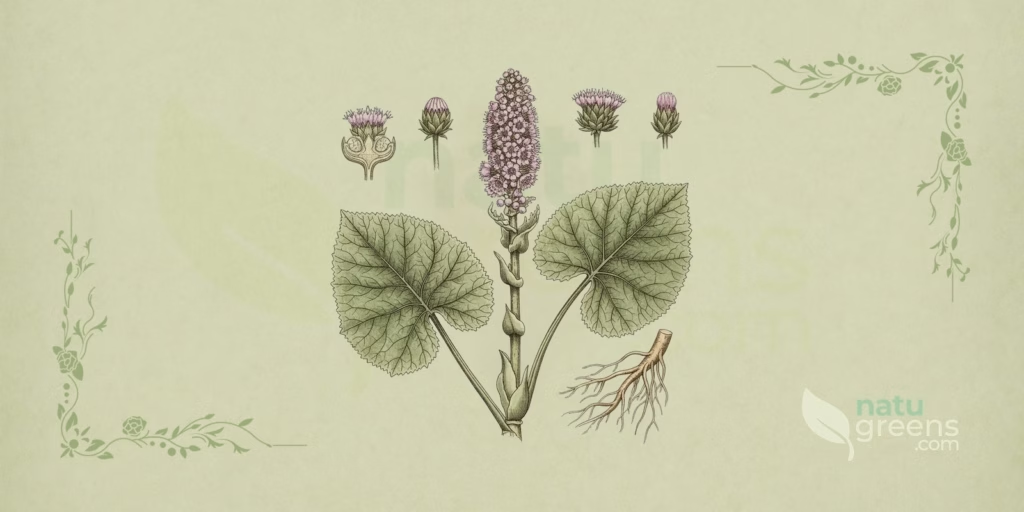
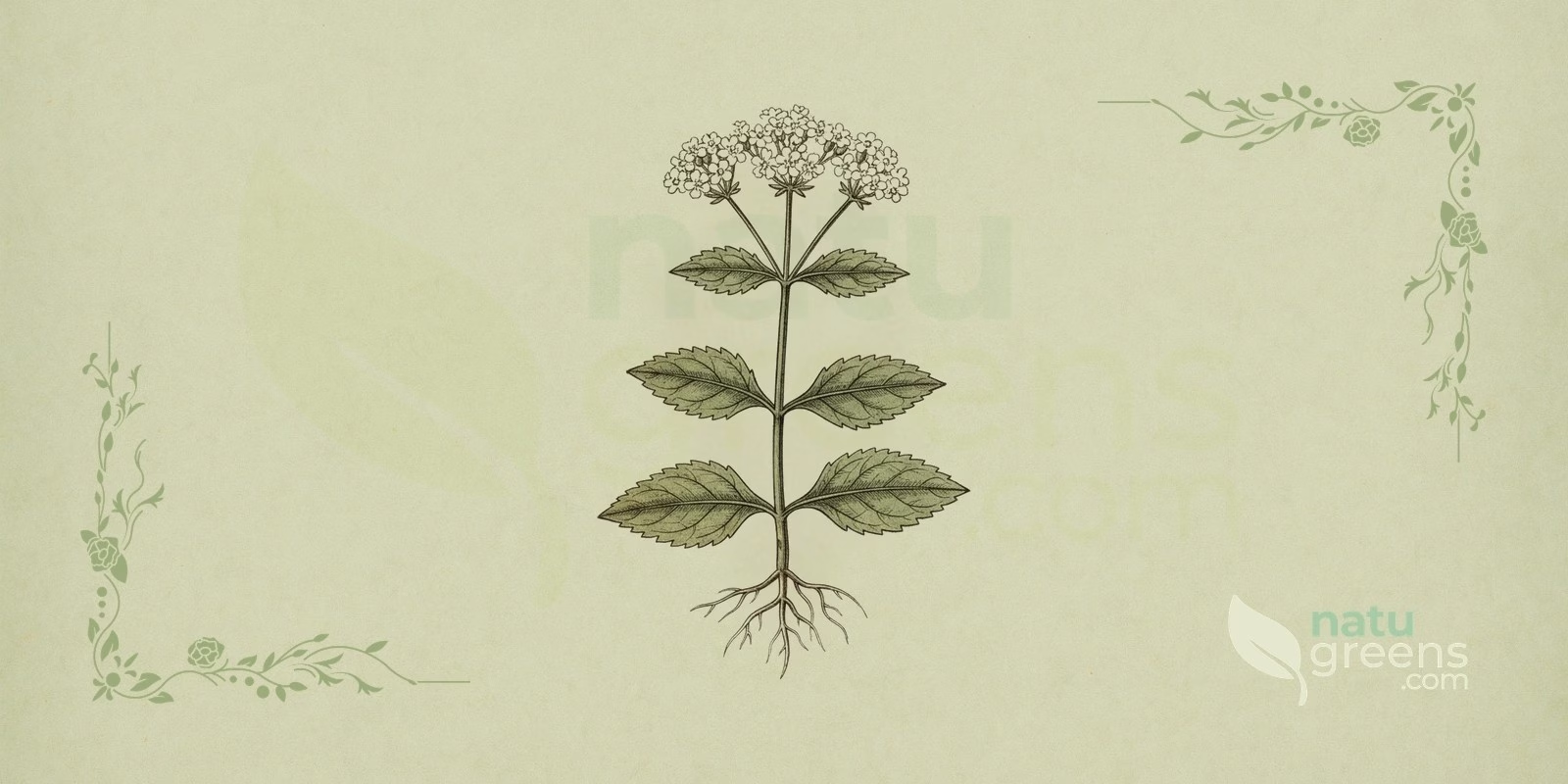
Eupatorium perfoliatum L. is a perennial herbaceous plant in the Asteraceae family, native to North America and described by Carl Linnaeus. Its range extends from Nova Scotia to Florida and reaches west as far as Texas and Manitoba. Since it lacks an established common name in most languages other than English, it is referred to here by its scientific binomial, while the English-language herbal market knows it as “boneset”. The species is easy to recognize by its perfoliate leaves, whose bases wrap around the stem as if the stem pierced them, and by the dense clusters of small white flowers at the tips of the branches.
Indigenous peoples of North America and European settlers valued the plant mainly for feverish conditions, and that traditional record explains its place in herbal compendia and in the homeopathic materia medica. Modern phytochemical research has identified several bioactive compounds in the aerial parts, but it has also confirmed the presence of pyrrolizidine alkaloids, which have documented liver toxicity with prolonged use. For this reason, any internal use is a matter of caution and professional guidance, never of self-medication.
Popular and International Names of Eupatorium perfoliatum
As a North American species little known outside its continent, its most stable common names are in English. In that language the plant has gathered dozens of names linked to fever, chills, and the sweating brought on by the hot infusion.
- English: agueweed, boneset, common boneset, crosswort, feverwort, Indian sage, sweating-plant, thoroughwort, vegetable antimony, wild Isaac.
- French: eupatoire perfoliée.
- German: Durchwachsener Wasserdost, Knochenheil.
- Italian: eupatorio perfoliato.
- Portuguese: no common name in current use; herbal medicine and homeopathy use the binomial Eupatorium perfoliatum, with “boneset” cited only as a market reference.
- Spanish: eupatoria.
Portuguese names such as erva-de-cobra and eupatório sometimes appear linked to this plant in translated texts, but in the Portuguese-speaking tradition they usually refer to other species. Using them to identify it increases the risk of confusion when buying plant material.
Botanical Synonyms of Eupatorium perfoliatum
Over the course of its taxonomic history, Eupatorium perfoliatum L. has received other scientific names that are now treated as synonyms. Knowing them helps locate the species in old herbaria, catalogs, and studies published under other names, and the most frequently cited appear in the list below.
- Cunigunda perfoliata
- Eupatorium chapmanii
- Eupatorium connatum
- Eupatorium salviifolium
- Eupatorium truncatum
Some texts also cite the combination “Eutrochium perfoliatum”, but Eutrochium is the genus that groups pink-flowered North American relatives formerly classified in Eupatorium. The accepted name of this species remains Eupatorium perfoliatum L., a detail worth checking in scientific studies and when identifying herbarium specimens.
Botanical Family: Asteraceae
Eupatorium perfoliatum belongs to the Asteraceae family, also called Compositae, one of the largest and most diverse families of flowering plants. It is characterized by flower heads (capitula), in which many tiny flowers cluster into a structure that resembles a single bloom. The family is known for its richness in flavonoids, sesquiterpene lactones, and essential oils, and this chemical and morphological diversity remains a subject of research. The kinship also has a practical consequence, since people allergic to other Asteraceae, such as daisies and chrysanthemums, may react to contact with this species.
Parts of Eupatorium perfoliatum Used
Tradition focuses on the aerial parts harvested during flowering, which are dried for infusions or used fresh in tinctures and homeopathic mother tinctures, and some records also include the roots.
- Aerial parts (leaves and flowers)
- Dried leaves
- Roots
Because pyrrolizidine alkaloids have been identified in the species, with direct implications for its herbal use as “boneset”, none of these parts is free of risk with repeated internal use.
Ethnobotanical and Traditional Uses
The most consistent ethnobotanical record comes from the Indigenous peoples of North America, who introduced the plant to the first European settlers. They used it to induce sweating and, following the logic of the time, to “break” the fever of common colds and flu. Over time, North American folk medicine broadened this repertoire and began using the infusion for acute bronchitis, catarrh, dropsy, rheumatism, and skin conditions. These uses rested on empirical observation, without the evaluation criteria that modern pharmacology requires.
Older texts also credited the plant with the ability to increase resistance to viral and bacterial infections and regarded it as a reliable remedy for feverish conditions. These descriptions reflect the perception of those who used it and are not equivalent to demonstrated efficacy. Today, scientific interest focuses on activities observed in the laboratory, while prolonged traditional use is discouraged precisely because of the pyrrolizidine alkaloids.
Therapeutic Properties of Eupatorium perfoliatum
The properties below bring together what tradition attributes to the plant and what laboratory studies have investigated, without confirmation from robust clinical trials. Some of them, such as the emetic and purgative effects, are in fact unwanted reactions that occur at high doses.
- Antibacterial (activity observed in a laboratory study with an ethanol extract of the leaves, not clinically proven)
- Anti-inflammatory (activity observed in in vitro studies with macrophages, not clinically proven)
- Antispasmodic (traditional record, not confirmed in clinical studies)
- Antiviral (inhibition of influenza A virus attachment to cells observed in vitro, not clinically proven)
- Cholagogue (traditional record of stimulating bile secretion)
- Cytotoxic (toxicity to cells observed in laboratory studies, with no established clinical application)
- Diaphoretic (induction of sweating, the main use described by tradition)
- Emetic (causes vomiting at high doses, an adverse effect and not an indication)
- Febrifuge (traditional record of use in feverish conditions, not clinically proven)
- Laxative (cathartic effect at high doses, considered adverse)
- Purgative (intense bowel evacuation at high doses, considered adverse)
- Stimulant (traditional record of general physiological activation)
- Vasodilator (traditional record, not confirmed in clinical studies)
Detailed Phytochemical Profile of Eupatorium perfoliatum
The phytochemical profile of Eupatorium perfoliatum is complex and brings together compounds that explain part of the pharmacological interest and, at the same time, the plant’s main risks. The constituents described include polysaccharides containing xylose and glucuronic acid, tannins, volatile oils, sterols, triterpenes, and sesquiterpene lactones. This last group includes a dimeric guaianolide, investigated in a macrophage study alongside the flavone eupafolin.
Flavonoids such as quercetin and kaempferol, along with caffeic acid derivatives, complete the picture of phenolic compounds. Pyrrolizidine alkaloids, on the other hand, are the main safety concern, because they can cause liver damage and were detected in the species in analyses focused on its use as a medicinal herb. For this reason, the biological activity observed in the laboratory does not justify continuous internal use of the plant.
- Caffeic acid derivatives
- Flavonoids (eupafolin, kaempferol, quercetin)
- Polysaccharides (with xylose and glucuronic acid)
- Pyrrolizidine alkaloids
- Sesquiterpene lactones (including guaianolides)
- Sterols
- Tannins
- Triterpenes
- Volatile oils
Preparation and Administration Forms of Eupatorium perfoliatum
Traditional records describe three main forms of preparation, and homeopathy adds a fourth, obtained by diluting and potentizing the fresh flowering plant.
- Extracts
- Homeopathic preparations (from the fresh flowering plant)
- Infusion (hot tea made from the dried leaves and flowers)
- Tincture (from the fresh flowering plant)
In any of these forms, the use described by tradition is occasional and short-term, never continuous. The amount depends on an individual assessment by a healthcare professional, who should consider age, liver health, and current medications. Extracts and tinctures concentrate the plant’s constituents and therefore call for even greater caution than the infusion.
Synergy with Other Medicinal Plants
Specific research on combinations of Eupatorium perfoliatum with other species is limited, and what is known comes from traditional Western herbal formulas. In these records, the plant appears alongside elder (Sambucus nigra) and linden (Tilia cordata), both traditionally used as diaphoretics in flu-like conditions. In respiratory support blends, it is paired with eucalyptus (Eucalyptus globulus) and thyme (Thymus vulgaris), traditionally used to ease expectoration.
These associations describe a traditional record, not a promise of results, and combining plants does not reduce the risk tied to pyrrolizidine alkaloids. Any combination should be guided by a healthcare professional and follow the same short-term restrictions that apply to use of the plant on its own.
Recipes and Usage Protocols of Eupatorium perfoliatum
Traditional Infusion of the Aerial Parts
A hot infusion of the dried leaves and flowers is the form of use most often cited in traditional North American records, which used it to induce sweating during colds and flu. The amount of herb and the number of doses should be set by a healthcare professional, because the species contains pyrrolizidine alkaloids and has no safe dose established for home use.
In the traditional preparation, boiling water is poured over the dried herb and the mixture steeps in a covered container for 10 to 15 minutes. The closed container retains the volatile oils, and the infusion is strained and drunk while still hot. The described use is occasional and short-term, and it should be stopped at any sign of nausea, vomiting, diarrhea, or abdominal discomfort. Persistent fever, or fever without a known cause, requires medical evaluation before any tea.
Tincture of the Fresh Flowering Plant
The tincture is traditionally prepared from the fresh plant harvested during flowering and, being a concentrated form, tends to be more potent than the infusion. Herbal records associate this tincture with periods of greater susceptibility to infections, always as a short-term traditional use.
The dose should be set by a healthcare professional, who will assess the product’s concentration, liver health, and current medications. The tincture should never be extended to continuous use, so consult a healthcare professional before using any concentrated preparation of this plant.
The preparations above follow traditional records and do not replace professional guidance. Before any internal use, check the contraindications and interactions described in this article.
Associated Therapies
Homeopathy
In homeopathy, Eupatorium perfoliatum is a classic remedy of the materia medica, described for flu-like and feverish states accompanied by intense bone pain. The description also includes intermittent fevers, chills, and deep muscle aches, an association that echoes the English name “boneset”. The homeopathic mother tincture is prepared from the fresh flowering plant, following the principles of dilution and potentization. The choice of potency and frequency depends on the totality of symptoms and should be guided by a qualified homeopathic physician.
It is important to distinguish the potentized homeopathic preparation from herbal teas, extracts, and tinctures. The undiluted forms contain the plant’s constituents in significant amounts and are subject to all the restrictions described in the contraindications. None of these forms replaces a medical evaluation of fever, especially when it comes with severe body aches, skin rashes, or bleeding.
Contraindications and Side Effects of Eupatorium perfoliatum
Pyrrolizidine Alkaloids and Short-Term Use
The plant contains pyrrolizidine alkaloids (a class of compounds with documented liver toxicity in prolonged use), so traditional use is short-term only, never continuous. The liver damage caused by these substances can be cumulative. For that reason, teas, extracts, and tinctures of the species should not become part of daily routines or be taken as self-medication.
General Contraindications
Eupatorium perfoliatum is contraindicated during pregnancy and breastfeeding, since pyrrolizidine alkaloids can cross the placental barrier and be excreted in breast milk. It is also contraindicated in people with hepatopathy, meaning any pre-existing liver disease. Do not use it in children, regardless of age or form of preparation. Also avoid the plant if you have a known allergy to species of the Asteraceae family, such as daisies and chrysanthemums, because of the risk of allergic reactions.
Fever, Dengue, and Self-Medication
No preparation of this plant should be used to treat, prevent, or relieve dengue, chikungunya, or Zika, or to bring down a fever without a diagnosis. Dengue is a notifiable disease that requires medical follow-up, never self-medication. The link between the plant and dengue exists only in the historical origin of the English name “boneset”, covered in the section on historical notes.
Common Side Effects
At high doses, the plant can cause an emetic effect (vomiting) and a laxative/cathartic effect, with diarrhea, and these signs should lead to stopping use immediately. Contact with the plant can cause skin sensitization, which shows up as dermatitis in sensitive people. Prolonged use or excessive doses, in turn, can lead to liver damage due to the pyrrolizidine alkaloids. Gastrointestinal discomfort, skin reactions, dark urine, or yellowing of the skin and eyes call for a consultation with a healthcare professional.
Drug Interactions
Because of its hepatotoxic potential, the plant may add to the risk posed by medications that burden the liver, such as acetaminophen (paracetamol). Caution is also advised for people taking anticoagulants, given the possibility of enhancing the effect of these drugs and increasing the risk of bleeding. Combining it with sedatives and anxiolytics calls for attention, because it may intensify drowsiness. Anyone taking long-term medication should inform their doctor or pharmacist before considering preparations of this plant.
Historical Notes and Interesting Facts
The English name “boneset” comes from “breakbone fever”, an old popular name for dengue in the United States. The association between the plant and this disease is of interest here only as a historical and etymological record. Dengue is a notifiable disease that requires medical follow-up, never self-medication, and no preparation of Eupatorium perfoliatum should be used for this purpose.
The plant was introduced to European settlers by the Indigenous peoples of North America, who used it to induce sweating in feverish conditions. It remained part of the continent’s folk medicine for so long that it gathered English names such as “agueweed”, “feverwort”, and “sweating-plant”. Medical interest is also long-standing, and as early as 1812 the botanist Frederick Pursh signed a piece on the species in a medical journal, followed by several reports throughout the nineteenth century.
In the wild, the species almost always occupies low, damp areas such as swamps and waterlogged meadows. This preference, together with the perfoliate leaves, helps identify it in the field. Its path as a folk remedy shows how traditional knowledge guided research on medicinal plants, and also that this knowledge needs to be revisited when chemical analysis reveals risks that empirical observation could not detect.
Frequently Asked Questions about Eupatorium perfoliatum
Does Eupatorium perfoliatum Have a Common Name?
In English it is widely known as “boneset”, but the species, native to North America and little known outside its continent, has no common name in current use in Portuguese and several other languages. That is why the safest approach is to always identify it by its scientific binomial. In the international market and in historical literature, “boneset” works only as a reference and should not be confused with the common names of other plants.
Should Eupatorium perfoliatum Be Used for Dengue?
No, and no preparation of this plant should be used to treat, prevent, or relieve dengue, chikungunya, or Zika. The link with dengue exists only in the historical origin of the English name “boneset”, derived from “breakbone fever”, an old popular name for the disease in the United States. Dengue is a notifiable disease that requires medical follow-up, never self-medication, and any fever with severe body aches should be assessed by a health service.
Is Eupatorium perfoliatum Safe for Children?
No, the plant should not be used in children of any age, because it contains pyrrolizidine alkaloids, compounds with documented liver toxicity whose safety in children has not been established. In case of fever, flu, or a cold in childhood, the right course is to see a pediatrician.
What Are the Main Traditional Uses of Eupatorium perfoliatum?
North American tradition used a hot infusion of the aerial parts to induce sweating in colds, flu, and other feverish conditions, and also recorded its use for bronchitis, catarrh, and rheumatism. Modern clinical evidence is limited, and the available studies focus on anti-inflammatory and antiviral activities observed in the laboratory, without confirmation in humans. Because of the pyrrolizidine alkaloids, any internal use must be occasional and guided by a healthcare professional.
Why Should Eupatorium perfoliatum Be Used Only Short-Term?
The plant contains pyrrolizidine alkaloids, a class of compounds with documented liver toxicity in prolonged use, so traditional use is short-term only, never continuous. The same reason makes the species contraindicated during pregnancy and breastfeeding and in people with liver disease. At high doses, it can also cause vomiting and a strong laxative effect.
Does Eupatorium perfoliatum Interact with Medications?
Yes, caution is advised for people taking medications that burden the liver, such as acetaminophen (paracetamol), and for those taking anticoagulants, whose effect may be enhanced. Sedatives and anxiolytics also call for attention, because drowsiness may intensify. Anyone on long-term medication should talk to their doctor or pharmacist before considering preparations of this plant.
Notice: this content is for informational purposes and does not replace professional medical advice. Consult a physician or herbal practitioner before using medicinal plants, especially during pregnancy, breastfeeding, or alongside medication.
References and Scientific Studies
View All 8 Cited References
- PMC2018 Colegate SM, et al. Potentially toxic pyrrolizidine alkaloids in Eupatorium perfoliatum and three related species. Implications for herbal use as boneset. Phytochem Anal. 2018.
- PMC2016 Derksen A, et al. Antiviral activity of hydroalcoholic extract from Eupatorium perfoliatum L. against the attachment of influenza A virus. J Ethnopharmacol. 2016.
- PMC2000 Habtemariam S, Macpherson AM. Cytotoxicity and antibacterial activity of ethanol extract from leaves of a herbal drug, boneset (Eupatorium perfoliatum). Phytother Res. 2000.
- PMC2011 Hensel A, et al. Eupatorium perfoliatum L.: phytochemistry, traditional use and current applications. J Ethnopharmacol. 2011.
- PMC1977 Herz W, et al. Sesquiterpene lactones of Eupatorium perfoliatum. J Org Chem. 1977.
- PMC2008 Maas M, et al. Caffeic acid derivatives from Eupatorium perfoliatum L. Molecules. 2008.
- PMC2011 Maas M, et al. Anti-inflammatory activity of Eupatorium perfoliatum L. extracts, eupafolin, and dimeric guaianolide via iNOS inhibitory activity and modulation of inflammation-related cytokines and chemokines. J Ethnopharmacol. 2011.
- PMC Pursh F. Mr. Pursh on the Eupatorium Perfoliatum. Med Phys J. 1812.