Quick summary
Mesquite (Prosopis glandulosa Torr.), also known as honey mesquite, is a leguminous tree of the Fabaceae family native to the southwestern United States and northern Mexico, where Indigenous communities have relied on it for centuries as a source of food, firewood and home remedies. Its sweet, nutritious pods are…
Main caution: Mesquite is generally considered safe when eaten as food, in the form of pod flour, but the medicinal use of concentrated extracts calls for caution. Concentrated extracts, unlike ordinary food flour, should be avoided…
Mesquite (Prosopis glandulosa Torr.), also known as honey mesquite, is a leguminous tree of the Fabaceae family native to the southwestern United States and northern Mexico, where Indigenous communities have relied on it for centuries as a source of food, firewood and home remedies. Its sweet, nutritious pods are ground into a flour used in breads and drinks, and this food use is the safest and best-documented aspect of the species. Mesquite should not be confused with the algaroba grown in northeastern Brazil, which is a different species, Prosopis juliflora, even though both belong to the same genus and their names are sometimes swapped in translations. Leaves, bark and flowers also appear in the folk medicine of the region of origin, and modern research has looked into some of these uses, almost always in preliminary laboratory or animal studies, without clinical confirmation in humans.
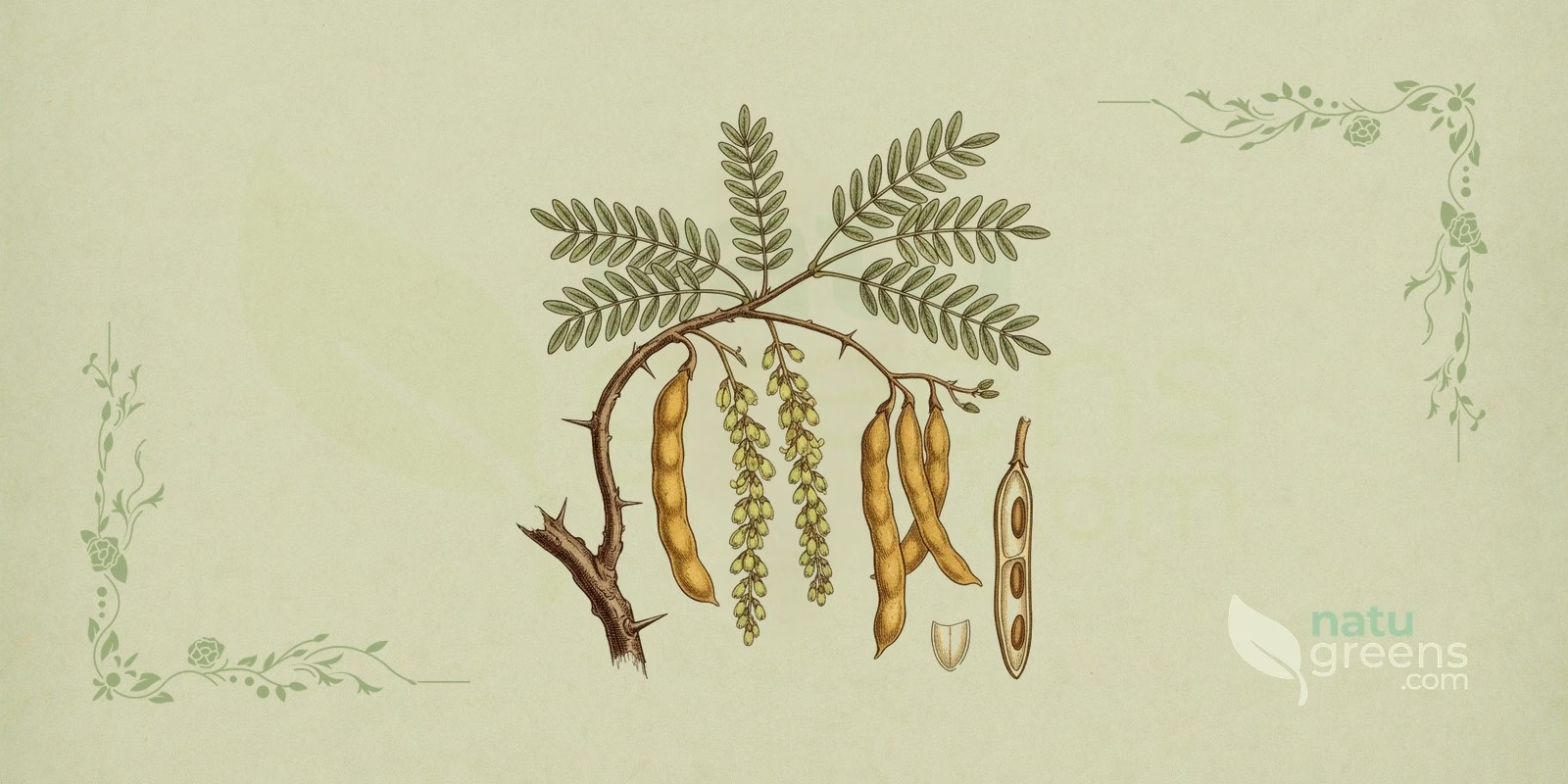
Popular and International Names of Mesquite
- English: glandular mesquite, honey mesquite, honeypod mesquite, western honey mesquite.
- French: honeypod mesquite, mesquite à miel.
- German: Honigakazien-Mesquite, Honig-Mesquite.
- Italian: mesquite dolce.
- Portuguese: mesquite, mesquite-doce (the form algaroba-doce appears in some translations, but in Brazil algaroba refers to Prosopis juliflora).
- Spanish: algarrobo, mezquite dulce.
Botanical Synonyms of Mesquite
The species was described by John Torrey in 1827 as Prosopis glandulosa Torr., the name under which it is still widely known and cited in scientific, agronomic and popular literature. Recent taxonomic databases, such as Kew's POWO, now accept the combination Neltuma glandulosa (Torr.) Britton & Rose, after phylogenetic studies led to the old genus Prosopis being split into smaller groups, which is why both names coexist in papers and catalogs. Other recorded synonyms include Algarobia glandulosa (Torr.) Cooper and Prosopis juliflora var. glandulosa (Torr.) Cockerell, an old combination that helps explain the frequent confusion with Brazilian algaroba. This variety of names reflects both the taxonomic complexity of the group and the wide distribution of the species.
- Algarobia glandulosa (Torr.) Cooper
- Neltuma constricta (Sarg.) Britton & Rose
- Neltuma glandulosa (Torr.) Britton & Rose
- Neltuma neomexicana Britton
- Prosopis chilensis var. glandulosa (Torr.) Standl.
- Prosopis juliflora var. constricta Sarg.
- Prosopis juliflora var. glandulosa (Torr.) Cockerell
- Prosopis odorata Torr. & Frém.
Botanical Family: Fabaceae
Mesquite belongs to the vast Fabaceae family, also known as Leguminosae, one of the largest families of flowering plants, with about 765 genera and more than 19,500 species. Fabaceae are known for their ability to fix nitrogen in the soil through a symbiosis with rhizobia bacteria, a trait that enriches the ground and benefits both natural ecosystems and crops. The family includes plants of great economic importance, such as beans, lentils, soybeans and peanuts, along with many species of medicinal interest.
Pod-shaped fruits and compound leaves are typical features of the family, and mesquite displays them clearly in its edible pods and bipinnate foliage. Compounds such as flavonoids and alkaloids are common among legumes and account for much of the pharmacological interest they attract. Thanks to their adaptability to very different climates and soils, Fabaceae play a central role in biodiversity and in agricultural economies around the world.
Parts of Mesquite Used
- Bark
- Flowers
- Gum
- Leaves
- Pods (fruits)
Ethnobotanical and Traditional Uses of Mesquite
- Building material and tools.
- Food: pod flour for breads and drinks.
- Fuel (firewood).
- Gum and sap used to make sweets.
- Traditionally recorded for asthma and cough.
- Traditionally recorded for eye irritation and conjunctivitis.
- Traditionally recorded for hemorrhoids and dysentery.
- Traditionally recorded for skin problems, applied topically.
- Traditionally recorded for stomachache and toothache.
Therapeutic Properties of Mesquite
- Analgesic (traditional record for toothache and stomachache, no clinical studies)
- Antibacterial (activity observed in laboratory studies)
- Antidiabetic (effect observed only in rodents, not proven in humans)
- Antifungal (leaf alkaloids active in vitro and in an animal model)
- Anti-inflammatory (preliminary findings in animals)
- Antioxidant (attributed to flavonoids and phenolic acids in laboratory assays)
- Antiparasitic (antileishmanial activity observed in vitro)
- Cardioprotective (observed in prediabetic rats, no clinical data)
- Hypoglycemic (glucose reduction observed in rodents)
- Wound-healing (traditional record of topical bark use)
Detailed Phytochemical Profile of Mesquite
Prosopis glandulosa contains a range of compounds that explain the research interest in the species, notably flavonoids, tannins, alkaloids, quinones and phenolic acids. C-glycosylated flavonoids such as schaftoside, isoschaftoside, vicenin II, vitexin and isovitexin occur in particularly high amounts and have been correlated with the biological effects observed in the laboratory, while quercetin, a widely studied flavonoid, is also present. Among phenolic acids, the literature lists gallic acid, hydroxybenzoic acid, pyrocatechol, caffeic acid and ferulic acid. The leaves concentrate piperidine and indolizidine alkaloids, such as prosopilosidine, which showed antifungal and antiparasitic activity in preliminary laboratory and animal studies, without that efficacy having been proven in people. Composition varies with the part of the plant, and pod flour, eaten as food, is very different from a concentrated leaf extract.
- Alkaloids (indolizidines, piperidines)
- Caffeic Acid
- Ferulic Acid
- Flavonoids (apigenin, isovitexin, luteolin, quercetin, schaftoside, vicenin II, vitexin)
- Gallic Acid
- Hydroxybenzoic Acid
- Pyrocatechol
- Quinones
- Tannins
Preparation and Administration Forms of Mesquite
- Decoction (bark, topical use)
- Flour (pods)
- Infusion (leaves, flowers)
- Poultice
- Sap (for sweets)
- Tincture
Pod flour is the most traditional form of use and the only one with a long history as food. Leaf and flower infusions, tinctures and concentrated extracts belong to the field of folk medicine, have little safety data and should be used with professional guidance.
Synergy with Other Medicinal Plants
Antioxidant Combination with Green Tea and Turmeric
In folk herbalism, mesquite flour or extract is paired with antioxidant-rich plants such as green tea (Camellia sinensis) and turmeric (Curcuma longa), with the idea of adding mesquite's phenolic acids and flavonoids to the polyphenols of tea and to curcumin. This pairing is traditionally used as general wellness support, but the combination itself has never been studied in humans, and any effect on oxidative stress remains a hypothesis based on laboratory assays of each plant on its own.
Pairing with Cinnamon and Gymnema in Glucose Metabolism
Some popular formulas combine mesquite with cinnamon (Cinnamomum verum) and Gymnema sylvestre, plants traditionally used in contexts of high blood sugar. Since mesquite's hypoglycemic effect has only been observed in rodents, this pairing is no substitute for medical treatment and may add to the effects of antidiabetic drugs, with a risk of hypoglycemia. People taking diabetes medication should avoid the combination without medical supervision and glucose monitoring.
Digestive Infusions with Peppermint and Lemon Balm
In traditional records, mesquite may be combined with peppermint (Mentha × piperita) or lemon balm (Melissa officinalis) in preparations used for mild digestive discomfort, such as cramps, gas and a feeling of poor digestion. The carminative and calming properties attributed to these herbs would complement the folk use of mesquite, although no studies have evaluated the blend, and persistent digestive symptoms call for medical evaluation.
Recipes and Usage Protocols of Mesquite
Bark Decoction for Topical Use
An external preparation traditionally used in washes and compresses on minor skin irritations, not indicated for deep or infected wounds.
Ingredients: 1 tablespoon of dried Prosopis glandulosa bark and 500 ml of water.
Preparation: Place the bark and water in a pan, bring to a boil and simmer over low heat for 15 to 20 minutes. Strain and let it cool completely before applying as a compress or wash. Test first on a small area of skin and stop use if redness or itching appears.
Mesquite Pod Flour
A food preparation with a long tradition among the Indigenous peoples of the Sonoran Desert, traditionally used in breads, porridges and drinks.
Ingredients: ripe, dry pods of Prosopis glandulosa.
Preparation: Harvest the ripe pods and dry them completely in the sun, discarding any that are damp, darkened or show signs of mold. Remove debris, grind the pods in a grain mill or food processor until you get a fine flour and sift to remove the larger fibers. Store in an airtight container in a cool, dry place, because poorly stored pods and flour can develop aflatoxin, a carcinogenic fungal contaminant. The flour, naturally sweet, rich in fiber and gluten-free, can replace part of the wheat flour in breads, cakes and cookies.
Leaf Infusion in Traditional Digestive Use
A folk medicine preparation from the North American Southwest, traditionally taken after meals in cases of mild stomach discomfort.
Ingredients: dried Prosopis glandulosa leaves and boiling water.
Preparation: Because the leaves contain alkaloids and there is no safety data on regular consumption, the amount and frequency should be set with a health professional. In the traditional preparation, the leaves are placed in a cup, covered with boiling water and left covered for a few minutes before straining. Do not use during pregnancy, breastfeeding or in children.
The preparations above follow traditional records and do not replace professional guidance. Before any internal use, check the contraindications and interactions described in this article.
Therapies Associated with Mesquite
Herbal Medicine
In herbal medicine, mesquite draws interest for the anti-inflammatory, antioxidant and hypoglycemic findings observed in preclinical studies, mainly in rats. Standardized extracts have been evaluated in animal models of prediabetes and muscle injury, but these results have not yet been confirmed in clinical trials with people, so the medicinal use of extracts should be decided and supervised by health professionals. The plant is seen as a promising resource for research, not as an established treatment.
Functional Nutrition
Pod flour holds a prominent place in functional nutrition because it is rich in fiber, protein and minerals and contains no gluten, which makes it useful in specific diets. It is often described as having a low glycemic index, and its fiber contributes to satiety and bowel function, besides providing antioxidant compounds. This is the safest and best-documented way of consuming the species, as long as the flour comes from clean, dry, properly stored pods.
Contraindications and Side Effects of Mesquite
General Contraindications
Mesquite is generally considered safe when eaten as food, in the form of pod flour, but the medicinal use of concentrated extracts calls for caution. Concentrated extracts, unlike ordinary food flour, should be avoided during pregnancy and breastfeeding due to the lack of safety data, and there is also insufficient information on use in young children. People with a known allergy to plants of the Fabaceae family should avoid consumption, and excessive amounts of pods or flour can cause gastrointestinal discomfort because of the high fiber content.
Mesquite pollen is a significant respiratory allergen, associated with rhinitis and asthma, including occupational cases in areas where the tree is cultivated or grows naturally. Poorly stored, damp or moldy pods can develop aflatoxin, a carcinogenic fungal contaminant, so dry and proper storage of pods and flour is mandatory, and any batch showing signs of fungi must be discarded.
Drug Interactions
Mesquite's hypoglycemic effect has only been observed in rodents, but people taking antidiabetic drugs should be cautious and under medical supervision, since there is a risk of additive hypoglycemia with extracts of the plant. People on anticoagulants should also use extracts with caution, as the interaction with blood clotting has not been adequately studied. Interactions with other medications are still poorly known, so it is essential to tell your doctor about the use of any medicinal preparation of the plant.
Historical Notes and Interesting Facts about Mesquite
Food and Forage
Mesquite pods are a valuable food resource not only for people but also for wildlife and livestock, serving as important forage in arid regions. Deer, coyotes and birds feed on the pods and leaves, and this interaction helps disperse the tree's seeds. Mesquite flour remains a staple food in some desert cultures, which shows the ecological and economic weight of the species.
Resilience in the Desert
Prosopis glandulosa stands out for its adaptability to desert environments, where it thrives in arid soils with little water thanks to very deep roots, able to reach the water table and ensure survival where other plants cannot hold out. Nitrogen fixation also contributes to the fertility of the ecosystem. Outside its native habitat, however, the species behaves as an invasive plant in several countries, including South Africa, where it forms dense thickets and is the target of control programs.
Ancient Indigenous Use
Indigenous peoples of the southwestern United States and northern Mexico, such as the Cahuilla and the Seri, made mesquite a vital source of food, medicine and raw material. The pods were ground into flour for breads and nourishing drinks, the thorns served as tattoo needles and the dense wood was used for tools and as firewood. For millennia the tree sustained entire communities in arid environments, and its cultural and ethnobotanical importance is still alive in the region.
Mesquite and Algaroba Are Not the Same Plant
The algaroba that spread across the Brazilian semi-arid region from the 20th century onward is Prosopis juliflora, a species different from North American mesquite, although it belongs to the same genus and has similar pods. The confusion comes from popular names shared in Spanish, such as algarrobo, and from old classifications that treated mesquite as a variety of Prosopis juliflora.
Frequently Asked Questions about Mesquite
Is Mesquite Safe for Animals?
Mesquite pods are a food source for many wild animals and for livestock, and in some regions the tree is considered important forage. Excessive consumption by cattle, however, can cause digestive problems, partly because of the tannin content, so the amount offered to domestic animals needs to be controlled. If in doubt about an animal's diet, consult a veterinarian.
Can Mesquite Be Eaten Raw?
Ripe mesquite pods can be eaten raw, since they are naturally sweet and nutritious, but they are more commonly turned into flour for breads, cakes and other recipes. Raw consumption should be moderate because of the high fiber content, and the pods must be clean, dry and free of mold, a condition that avoids aflatoxin contamination.
How Does Mesquite Contribute to the Environment?
Mesquite is a pioneer plant in arid environments, and its ability to fix nitrogen improves soil fertility and structure, benefiting other plants and local biodiversity. Its deep roots help hold back erosion, and the tree offers shelter and food to wildlife. Although it is invasive in some ecosystems, in its native habitat it plays a vital ecological role.
What Are the Benefits of Mesquite Flour?
Mesquite flour is rich in protein, fiber and minerals and contains no gluten, which makes it an alternative for people with gluten sensitivity or celiac disease. Its fiber supports satiety and bowel function, and its natural sweetness reduces the need for sugar in recipes. To eat it safely, the flour should come from dry, properly stored pods.
Are Mesquite and Algaroba the Same Plant?
No. In Brazil, algaroba is the name of Prosopis juliflora, a species different from mesquite (Prosopis glandulosa), although both belong to the same genus and have similar pods. For this reason, information about one should not be automatically transferred to the other.
Can People Taking Diabetes Medication Consume Mesquite?
Pod flour, in food amounts, is usually well tolerated, but medicinal extracts call for care. The hypoglycemic effect has only been observed in rodents, and people taking antidiabetic drugs should be cautious and under medical supervision because of the risk of additive hypoglycemia.
Notice: this content is for informational purposes and does not replace professional medical advice. Consult a physician or herbal practitioner before using medicinal plants, especially during pregnancy, breastfeeding, or alongside medication.
How to cite this article
NATUGREENS. Mesquite (Prosopis glandulosa): Properties and Benefits. Natugreens, 10 Nov. 2026. Disponível em: https://natugreens.com/mesquite-prosopis-glandulosa/. Accessed: Nov. 10, 2026.
Natugreens. (2026). Mesquite (Prosopis glandulosa): Properties and Benefits. Natugreens. https://natugreens.com/mesquite-prosopis-glandulosa/
References and Scientific Studies
Peer-Reviewed Scientific Studies (4)
- PMC2011 George C, et al. The efficacy of Prosopis glandulosa as antidiabetic treatment in rat models of diabetes and insulin resistance. J Ethnopharmacol. 2011.
- PMC2013 Huisamen B, et al. Cardioprotective and anti-hypertensive effects of Prosopis glandulosa in rat models of pre-diabetes. Cardiovasc J Afr. 2013.
- PMC2011 Rahman AA, et al. Antiparasitic and antimicrobial indolizidines from the leaves of Prosopis glandulosa var. glandulosa. Planta Med. 2011.
- PMC2009 Samoylenko V, et al. Indolizidine, antiinfective and antiparasitic compounds from Prosopis glandulosa var. glandulosa. J Nat Prod. 2009.
Supplementary Readings (1)
- CABI Compendium. Prosopis glandulosa (honey mesquite). CABI Digital Library.
Take your time and tell us everything you think, details included. Every response is read by someone on our editorial team and goes into the article's revision. An honest critique helps us more than a polite compliment.
Take your time and tell us everything you think, details included. Every response is read by someone on our editorial team and goes into the article's revision. An honest critique helps us more than a polite compliment.
You May Also Like