Quick summary
New Jersey Tea (Ceanothus americanus L.), also known as red root, is a perennial shrub native to North America and a member of the Rhamnaceae family, usually reaching about 1 meter in height and standing out for its dense clusters of small white flowers. The common name dates back to the American Revolutionary War…
Main caution: The tannins in New Jersey tea reduce the absorption of iron and of medicines taken at the same time, so the recommendation is to space doses at least 2 hours apart. There are no modern human safety studies, so the…
New Jersey Tea (Ceanothus americanus L.), also known as red root, is a perennial shrub native to North America and a member of the Rhamnaceae family, usually reaching about 1 meter in height and standing out for its dense clusters of small white flowers. The common name dates back to the American Revolutionary War, when the dried leaves served as a substitute for imported tea, and the part used in traditional herbal medicine is the reddish root bark, which explains the nickname red root.
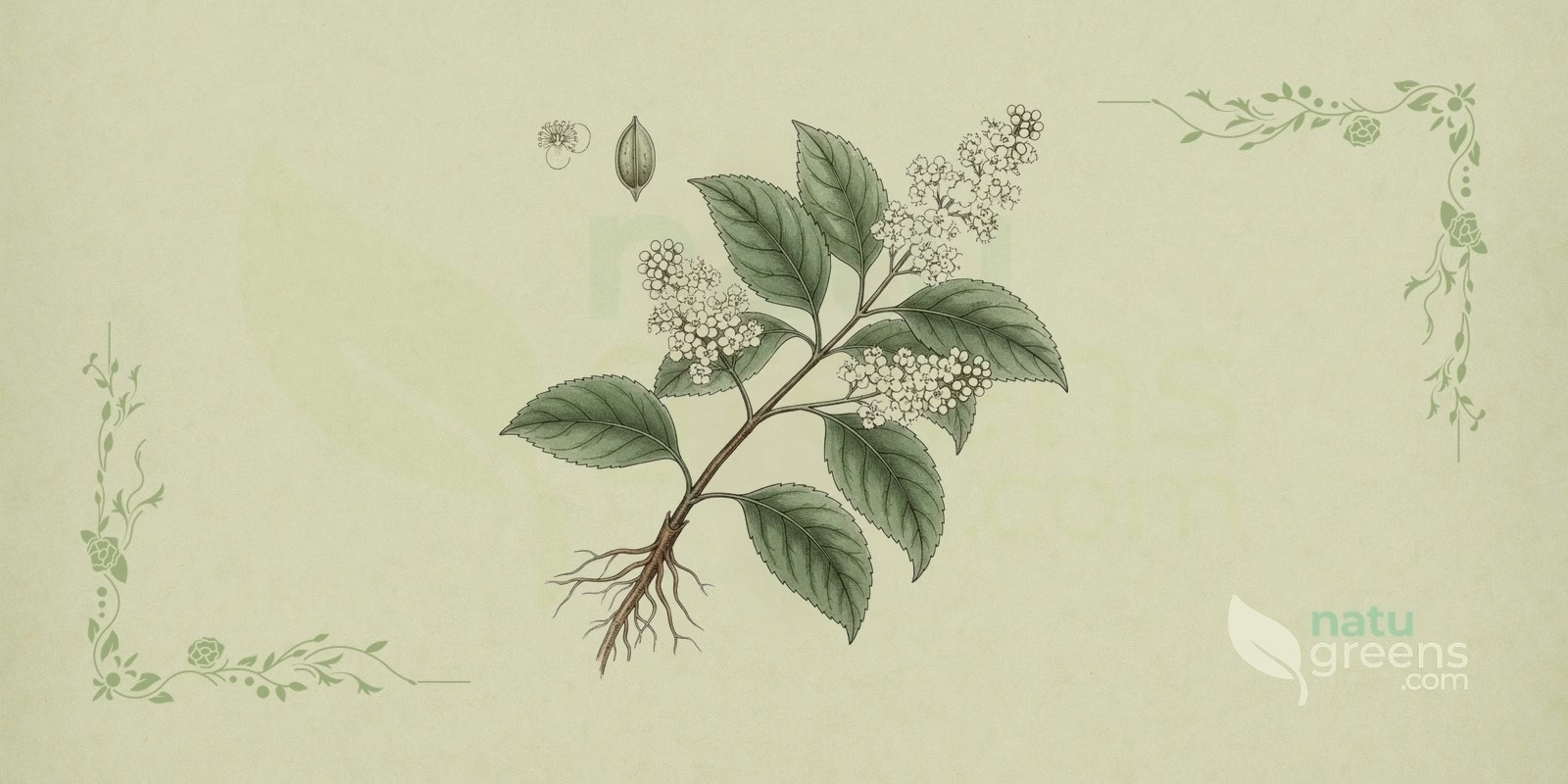
New Jersey tea has a robust root system, with deep woody roots that allow it to withstand droughts and fires, and it grows across many regions of North America, thriving on dry plains, prairies and forest clearings. Its ecological importance is considerable, since it provides food for deer, rabbits and elk, while its flowers attract many species of butterflies and other pollinators.
Popular and International Names of New Jersey Tea
- English: Indian Tea, Jersey Tea Ceanothus, Mountain Sweet, New Jersey Tea, Red Root, Wild Lilac, Wild Snowball.
- French: Racine Rouge, Thé du New Jersey.
- German: New Jersey Tee, Rote Wurzel.
- Italian: Radice Rossa, Tè del New Jersey.
- Portuguese: ceanoto, ceanoto-americano, chá-de-nova-jersey, chá-do-novo-mundo, red root.
- Spanish: Raíz Roja, Té de Nueva Jersey.
Botanical Synonyms of New Jersey Tea
Ceanothus americanus L., a name published by Linnaeus in 1753, is the accepted binomial for the species and the only one used consistently in the botanical and pharmacological literature. Some databases, such as USDA PLANTS, recognize varieties within the species, including Ceanothus americanus var. intermedius and Ceanothus americanus var. pitcheri, which differ mainly in leaf size and hairiness. Older sources may list other historical combinations of limited use, but none of them has any real currency today, and the genus Ceanothus, with dozens of species concentrated in western North America, is well established in the Rhamnaceae family.
Botanical Family: Rhamnaceae
The Rhamnaceae family comprises about 50 genera and more than 900 species of trees and shrubs, distributed mainly in tropical and subtropical regions but also present in temperate zones. It includes plants with edible fruits, such as jujube, and species of medicinal interest, such as the cascaras of the genus Rhamnus, and its members usually have simple leaves, stipules and small flowers grouped in inflorescences. New Jersey tea is a characteristic example of the family and stands out for its ethnobotanical history and the unusual chemistry of its roots, besides being one of the plants in the family able to fix nitrogen in association with bacteria of the genus Frankia.
Parts of New Jersey Tea Used
- Flowers
- Leaves
- Root bark (main herbal drug)
- Roots
Ethnobotanical and Traditional Uses of New Jersey Tea
- Caffeine-free tea substitute (dried leaves).
- Historically recorded in washes for syphilis lesions.
- Recorded in North American eclectic medicine for complaints of the spleen and lymph nodes.
- Traditionally recorded for children's eye problems.
- Traditionally recorded for digestive problems.
- Traditionally recorded for fever and colds.
- Traditionally recorded for toothache.
- Traditionally recorded for upper respiratory tract infections and pneumonia.
- Traditionally recorded for urinary tract infections.
Therapeutic Properties of New Jersey Tea
- Antibacterial (triterpenes active against oral bacteria in a laboratory study)
- Antispasmodic (traditional record, no clinical studies)
- Astringent (attributed to the high tannin content)
- Expectorant (traditional record for cough and catarrh)
- Hemostatic (older literature reports an effect on blood clotting)
- Hypotensive (observed in rats in a 1948 study, no human data)
- Immunostimulant (traditional record, no scientific proof)
- Lymphatic (record from eclectic medicine, no supporting clinical trial)
Detailed Phytochemical Profile of New Jersey Tea
The root of New Jersey tea has a rather distinctive chemistry, marked by the cyclic peptide alkaloids described from the 1960s onward, such as the ceanothines, scutianine, pandamine and zizyphine, compounds that are rare in the plant kingdom and typical of the Rhamnaceae family. Lupane-type triterpenes are also present, among them ceanothic acid and ceanothetric acid, which in a 1997 laboratory study showed activity against bacteria associated with tooth decay and periodontal disease, along with substantial amounts of tannins, saponins and flavonoid glycosides identified in the aerial parts. Older research also investigated root fractions with an effect on blood clotting, a finding that underlies the precautions with anticoagulants described further on, but the full composition of the plant remains little explored by current science.
- Adouetines
- Ceanothetric acid
- Ceanothic acid
- Flavonoids (flavonoid glycosides)
- Peptide alkaloids (ceanothines A to E, scutianine, pandamine, zizyphine)
- Saponins
- Tannins
- Triterpenes
Preparation and Administration Forms of New Jersey Tea
- Decoction (of the root bark)
- Extracts (of root and flower)
- Tea (leaf infusion)
- Tincture (of the root bark)
Because of the high tannin content, any New Jersey tea preparation should be taken at least 2 hours apart from iron supplements and other medicines, since tannins reduce the absorption of these substances.
Synergy with Other Medicinal Plants
Digestive Combination with Peppermint and Ginger
In North American folk herbalism, New Jersey tea appears alongside carminative herbs such as peppermint (Mentha × piperita) and ginger (Zingiber officinale) in preparations traditionally used for digestive discomfort. The idea is to add the astringent action attributed to its tannins to the effect of these herbs on gas and mild cramps, but no studies have evaluated the combination, and people on anticoagulants should remember that ginger can also interfere with blood clotting.
Respiratory Pairing with Licorice and Mullein
In traditional herbal formulas for cough and catarrh, New Jersey tea is combined with licorice (Glycyrrhiza glabra) and mullein (Verbascum thapsus), two plants with a long history of use for the airways. This pairing is a traditional record, without clinical trials, and it does not replace medical evaluation in conditions such as bronchitis or pneumonia, while licorice has its own restrictions for people with high blood pressure.
Traditional Use with Cleavers and Calendula for the Lymphatic System
North American eclectic medicine often combined New Jersey tea with other herbs described as lymphatic, such as cleavers (Galium aparine) and calendula (Calendula officinalis), in preparations traditionally used for swollen glands and complaints attributed to the spleen. This use is a record of tradition, with no clinical trial to support it, and enlarged lymph nodes or spleen pain always require medical investigation before any home preparation.
Recipes and Usage Protocols of New Jersey Tea
Root Bark Decoction in Traditional Lymphatic Use
A preparation from North American eclectic medicine traditionally used for complaints attributed to the lymphatic system and the spleen.
Ingredients: dried root bark of Ceanothus americanus and water.
Preparation: In the traditional method, the root bark is placed in cold water, brought to a boil and kept over low heat for 15 to 20 minutes before straining. Since there is no safety data on doses and duration of use, the amount and frequency should be set with a health professional. Keep at least 2 hours apart from medicines and iron supplements, and do not use during pregnancy, breastfeeding, while taking anticoagulants or before scheduled surgery.
Leaf Infusion as a Historical Beverage
A preparation traditionally used as a substitute for black tea and, in folk medicine, for colds and mild cough.
Ingredients: dried leaves of Ceanothus americanus and boiling water.
Preparation: Place the leaves in a cup, cover with boiling water, put a lid on and let steep for a few minutes before straining, sweetening with honey if desired (never for children under 1 year). For frequent or medicinal use, the amount should be guided by a health professional, and the same restrictions as for the decoction apply.
The preparations above follow traditional records and do not replace professional guidance. Before any internal use, check the contraindications and interactions described in this article.
Therapies Associated with New Jersey Tea
Herbal Medicine
In North American herbal tradition, New Jersey tea is remembered mainly for its astringent properties and for the role eclectic medicine assigned to it in the lymphatic system and the spleen, as well as for its use in herbal formulas for cough, colds and dysentery. These indications come from tradition and older observations, not from clinical trials, and the best-studied constituents, such as peptide alkaloids, triterpenes and tannins, have only been evaluated in the laboratory or in animals. In current practice, use should be supervised by a qualified professional, mainly because of the possible effect on blood clotting.
Homeopathy
Homeopathy uses preparations of Ceanothus americanus in high dilutions, traditionally indicated for complaints related to the spleen and liver. The efficacy of homeopathy is not supported by consistent scientific evidence, and this history of use should not delay medical investigation of an enlarged spleen, abdominal pain or liver abnormalities.
Contraindications and Side Effects of New Jersey Tea
Contraindications
- Anticoagulants and Antiplatelet Drugs: older literature reports an effect of New Jersey tea on blood clotting, so caution is mandatory for people taking anticoagulants or antiplatelet drugs, with medical evaluation before any use.
- Children: there is no safety data for medicinal use in children, despite the traditional record for children's eye problems.
- Clotting Disorders: people with hemophilia, thrombophilia or other clotting disorders should avoid the plant.
- Low Blood Pressure and Antihypertensives: since an old study in rats observed a drop in blood pressure, people with hypotension or taking antihypertensive drugs should be cautious.
- Pregnancy and Breastfeeding: use should be avoided during pregnancy and breastfeeding due to the lack of safety data.
- Preoperative Period: use should be stopped well in advance of surgery and dental procedures, under medical guidance (traditional sources mention at least two weeks).
Side Effects and Interactions
The tannins in New Jersey tea reduce the absorption of iron and of medicines taken at the same time, so the recommendation is to space doses at least 2 hours apart. There are no modern human safety studies, so the effects of prolonged use or high doses are unknown, and stomach discomfort and constipation may occur because of the astringent effect. Allergic reactions are possible, though rarely reported, and anyone with pre-existing medical conditions or on long-term medication should consult a health professional before any preparation.
Historical Notes and Interesting Facts about New Jersey Tea
Ecological Importance and Fire Resilience
New Jersey tea plays an important role in its native ecosystem as a nitrogen-fixing plant that enriches the soil and benefits other plant species. Its resistance to fire is also striking, because after fires the plant resprouts vigorously from its sturdy roots, becoming common in burned areas and contributing to the regeneration of prairie flora and to the maintenance of biodiversity in environments subject to periodic burning.
A Tea Substitute in the American Revolutionary War
During the American Revolutionary War (1775 to 1783), when tea imported from Great Britain became scarce and expensive because of boycotts and taxes, the dried leaves of New Jersey tea were widely used by the colonists as a substitute. The name New Jersey tea arose from this custom, and the caffeine-free, mild-tasting drink became associated with the self-reliant spirit of the time, without any special effect being attributed to it.
Frequently Asked Questions about New Jersey Tea
What Is New Jersey Tea?
New Jersey tea (Ceanothus americanus) is a shrub native to North America, also called red root, which became known for replacing imported tea during the American Revolutionary War. In traditional herbal medicine, the most used part is the root bark, while the leaves served mainly as a beverage.
What Is New Jersey Tea Used For?
In North American tradition, New Jersey tea is used for the lymphatic system and the spleen, respiratory infections, digestive problems, fever and toothache, but these uses are a record of eclectic and folk medicine, with no clinical trial to support them. The astringent properties come from the tannins, and the hypotensive and antibacterial effects have only been observed in animals or in the laboratory.
Does New Jersey Tea Have Side Effects?
Modern safety studies are lacking, and the tannins can cause stomach discomfort and reduce the absorption of iron and medicines. The plant should be avoided during pregnancy and breastfeeding and calls for caution in people with clotting disorders or taking anticoagulants and antiplatelet drugs, so guidance from a health professional is essential.
How Is New Jersey Tea Prepared?
The root bark is traditionally prepared as a decoction, boiled in water for 15 to 20 minutes, and the leaves as an infusion with boiling water. The amount and frequency of medicinal use should be set with a health professional, keeping a 2-hour gap from medicines and iron supplements.
Does New Jersey Tea Contain Caffeine?
No, the leaves of Ceanothus americanus contain no caffeine, which is why the drink made from them was historically used as a caffeine-free alternative to regular tea. This does not mean the plant has no effects, since it contains tannins and compounds that interfere with blood clotting.
Can People on Anticoagulants Take New Jersey Tea?
Older literature reports an effect of New Jersey tea on blood clotting, so people taking anticoagulants or antiplatelet drugs must exercise caution and should only consider the plant after medical evaluation. Before surgery, use should be stopped well in advance, always under a doctor's guidance.
Notice: this content is for informational purposes and does not replace professional medical advice. Consult a physician or herbal practitioner before using medicinal plants, especially during pregnancy, breastfeeding, or alongside medication.
How to cite this article
NATUGREENS. New Jersey Tea (Ceanothus americanus): Benefits and Uses. Natugreens, 10 Nov. 2026. Disponível em: https://natugreens.com/ceanothus-americanus-new-jersey-tea/. Accessed: Nov. 10, 2026.
Natugreens. (2026). New Jersey Tea (Ceanothus americanus): Benefits and Uses. Natugreens. https://natugreens.com/ceanothus-americanus-new-jersey-tea/
References and Scientific Studies
Peer-Reviewed Scientific Studies (4)
- PMC1997 Li XC, et al. Antimicrobial compounds from Ceanothus americanus against oral pathogens. Phytochemistry. 1997.
- PMC1958 Lynch TA, et al. An investigation of the blood coagulating principles from Ceanothus americanus. J Am Pharm Assoc Am Pharm Assoc. 1958.
- PMC1985 Pichon-Prum N, et al. Flavonic heterosides of Ceanothus americanus L., Rhamnaceae. Ann Pharm Fr. 1985.
- PMC1960 Roscoe CW, et al. A preliminary study of the alkaloidal principles of Ceanothus americanus and Ceanothus velutinus. J Am Pharm Assoc Am Pharm Assoc. 1960.
Supplementary Readings (1)
- 1969 Servis RE, et al. Ceanothus alkaloids. II. Peptide alkaloids from Ceanothus americanus. Journal of the American Chemical Society. 1969.
Take your time and tell us everything you think, details included. Every response is read by someone on our editorial team and goes into the article's revision. An honest critique helps us more than a polite compliment.
Take your time and tell us everything you think, details included. Every response is read by someone on our editorial team and goes into the article's revision. An honest critique helps us more than a polite compliment.
You May Also Like