Quick summary
Persian Cumin (Elwendia persica (Boiss.) Pimenov & Kljuykov), also called black caraway or kala jeera, is a perennial herbaceous plant of the Apiaceae family, better known in the literature by the synonym Bunium persicum, which is still widely used in scientific papers and in the trade. Native to the cold, arid and…
Main caution: Persian cumin (Elwendia persica, synonym Bunium persicum) is not Nigella sativa (nigella, also sold as black cumin in some markets), nor Carum carvi (caraway), nor Cuminum cyminum (common cumin), nor Bunium…
Persian Cumin (Elwendia persica (Boiss.) Pimenov & Kljuykov), also called black caraway or kala jeera, is a perennial herbaceous plant of the Apiaceae family, better known in the literature by the synonym Bunium persicum, which is still widely used in scientific papers and in the trade. Native to the cold, arid and semi-arid regions of Central Asia, from Iran to the Himalayas, the species is prized for its aromatic fruits, the so-called seeds, with a smoky, earthy flavor, which have seasoned dishes of the Middle East and the Indian subcontinent for centuries and appear in the traditional medicine of the region. Despite its common names, Persian cumin is not nigella (Nigella sativa), nor caraway (Carum carvi), nor common cumin (Cuminum cyminum), so data on any of these plants should never be attributed to it.
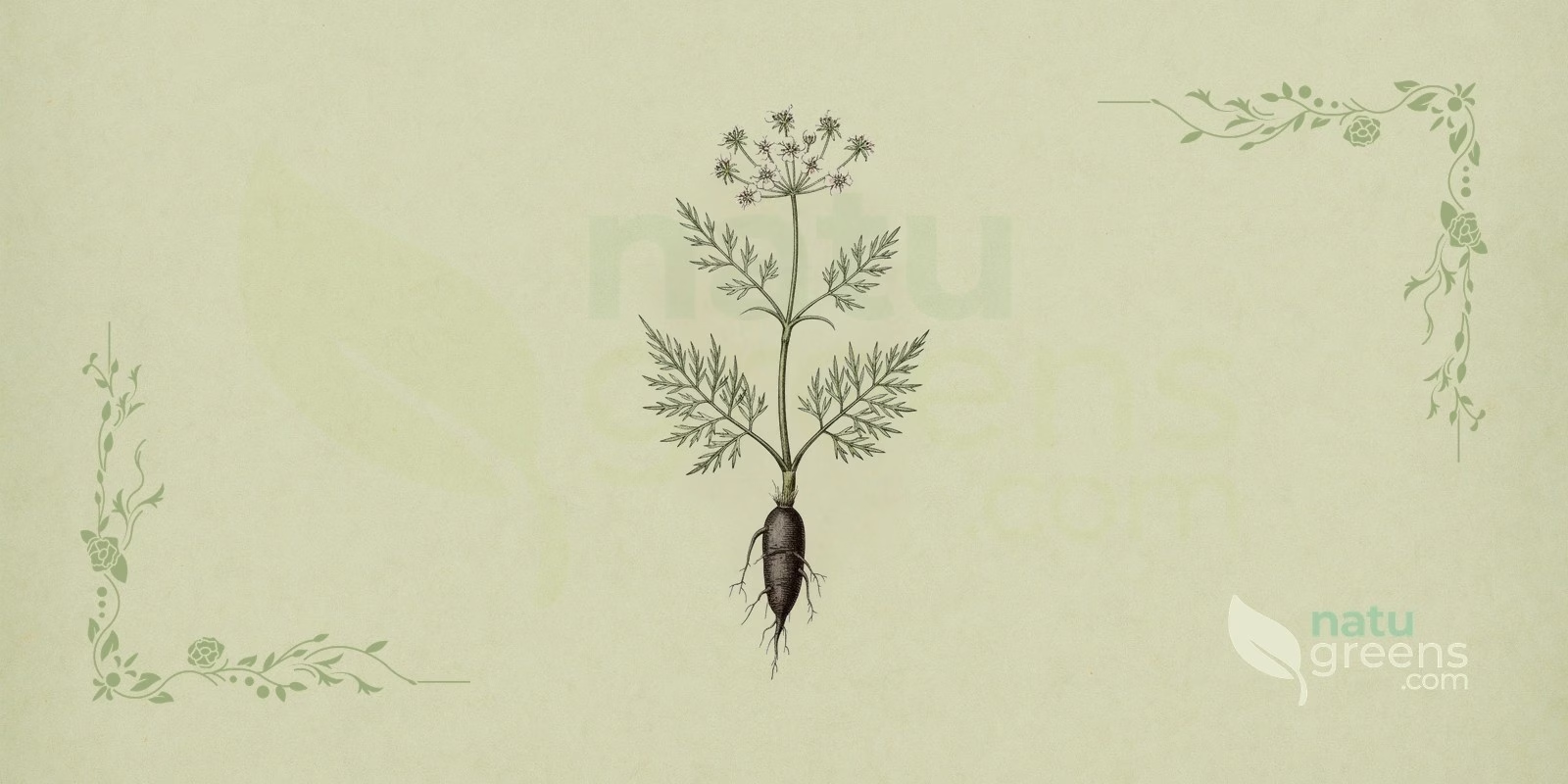
Beyond its culinary use, Persian cumin draws interest for its wealth of phytochemicals with antioxidant, antimicrobial and anti-inflammatory activity, observed mainly in laboratory and animal studies. Much of the production still comes from wild harvesting in restricted areas of the Himalayas and Iran, and this intense exploitation puts native populations under conservation pressure, which is why spice from cultivated sources is preferable whenever possible. Modern research continues to investigate the plant's potential, but most findings are still preliminary.
Popular and International Names of Persian Cumin
- English: black caraway, black cumin, imperial cumin, Persian cumin, wild cumin.
- French: cumin noir, cumin sauvage.
- Hindi and Urdu: kala jeera, shahi jeera.
- Italian: cumino nero, cumino selvatico.
- Persian: zireh kuhi.
- Portuguese: cominho-da-índia, cominho-negro (PT), cominho-persa (BR), cominho-preto-do-irã.
- Spanish: comino negro, comino persa, comino silvestre.
Names such as black cumin, cumin noir and cominho-negro are also used for nigella, which explains the frequent confusion in the spice trade, so the scientific binomial is the safest way to identify the product.
Botanical Synonyms of Persian Cumin
According to the taxonomic databases POWO and WFO, the currently accepted name is Elwendia persica (Boiss.) Pimenov & Kljuykov, and Bunium persicum (Boiss.) B.Fedtsch. has become a synonym, although it remains the name most used in older literature, in GRIN and in the trade. The transfer to the genus Elwendia reflects recent phylogenetic studies of the Apiaceae, and other recorded synonyms include the basionym Carum persicum Boiss., as well as Carum heterophyllum Regel & Schmalh., Pimpinella cyminosma (Basiner) Koso-Pol. and Sium cyminosma Basiner. The species should not be confused with Bunium bulbocastanum, a European plant now placed in a different genus and with different uses.
- Bunium persicum (Boiss.) B.Fedtsch.
- Carum heterophyllum Regel & Schmalh.
- Carum persicum Boiss.
- Pimpinella cyminosma (Basiner) Koso-Pol.
- Sium cyminosma Basiner
Botanical Family: Apiaceae
Persian cumin belongs to the Apiaceae family, also known as Umbelliferae, a vast family of flowering plants comprising about 3,700 species in more than 430 genera. Umbel inflorescences, in which small flowers are grouped in umbrella-like structures, are the hallmark of the family, which includes vegetables such as carrot and celery and spices such as coriander, fennel and common cumin itself.
The Apiaceae stand out for producing essential oils and compounds such as coumarins, flavonoids and terpenes, which account for the aroma and medicinal interest of many species. In Persian cumin, cuminaldehyde and other monoterpenes are the best example of this chemical richness, which has been explored in both cooking and traditional medicine. The botanical kinship also has a practical side, since people allergic to one plant in the family may react to others.
Parts of Persian Cumin Used
- Fruits (commonly called seeds)
- Roots (tubers)
Ethnobotanical and Traditional Uses of Persian Cumin
- Culinary spice in dishes from Afghanistan, Bangladesh, India (north), Iran, Pakistan and Tajikistan.
- Essential oil for flavoring foods and scented candles.
- Garnish for refined Indian dishes such as biryanis.
- Recorded in Unani, Iranian and Indian traditional medicine for digestive and urinary disorders.
- Traditionally recorded for headaches.
- Tuberous roots eaten raw or cooked, with a flavor similar to sweet chestnuts.
Therapeutic Properties of Persian Cumin
- Analgesic (effect observed in animal studies)
- Anticonvulsant (preliminary finding in animal models)
- Anti-inflammatory (activity observed in the laboratory and in animals)
- Antimicrobial (essential oil active against bacteria and fungi in vitro)
- Antioxidant (attributed to phenolic compounds in laboratory assays)
- Antiproliferative (activity observed in laboratory studies, no clinical proof)
- Carminative (traditional record for gas and bloating)
- Digestive stimulant (traditional Ayurvedic and Persian record)
- Diuretic (record from Iranian traditional medicine)
- Gastroprotective (preliminary finding in animals)
- Hypoglycemic (preliminary animal studies)
- Hypolipidemic (reduction of cholesterol and triglycerides in preliminary animal studies)
- Nephroprotective (preliminary finding in animals)
Detailed Phytochemical Profile of Persian Cumin
The fruits of Persian cumin are rich in essential oil, whose composition is dominated by cuminaldehyde and gamma-terpinene, along with p-cymene, beta-pinene and the aldehydes alpha-terpinen-7-al and gamma-terpinen-7-al, which together account for the spice's characteristic smoky aroma. Recent biosynthesis studies have described the pathways leading to the formation of gamma-terpinene, cuminaldehyde and p-cymene in the fruit, and the proportion of these compounds varies with origin, climate and harvest time. Besides the oil, the plant contains phenolic compounds, flavonoids, phenylpropenes and sesquiterpenes, to which the antioxidant activity observed in the laboratory is attributed. It is worth remembering that the essential oil is far more concentrated than the spice and is therefore not suitable for internal use.
- 1-Phellandrene
- 2-Methyl-3-phenylpropanal
- Benzeneacetic acid
- Cuminaldehyde
- Essential oil (rich in cuminaldehyde, alpha-terpinen-7-al, beta-pinene, gamma-terpinene, gamma-terpinen-7-al, p-cymene)
- Flavonoids
- Monoterpenes
- Phenolic compounds
- Phenylpropenes
- Sesquiterpenes
Preparation and Administration Forms of Persian Cumin
- Essential oil (only diluted topical use or aromatherapy)
- Extracts (use guided by a professional)
- Seeds (whole or ground, preferably whole to preserve the flavor)
- Teas (seed infusions)
- Tinctures (use guided by a professional)
Synergy with Other Medicinal Plants
Digestive Combination with Fennel and Peppermint
In the culinary and medicinal tradition of Central Asia, Persian cumin is combined with other carminative herbs, such as fennel (Foeniculum vulgare) and peppermint (Mentha × piperita), in infusions traditionally taken after heavy meals to relieve gas, bloating and mild cramps. Cuminaldehyde and the essential oils of these plants are assumed to add up to an antispasmodic effect, but the blend has not been evaluated in clinical studies, and fennel, celery and other Apiaceae can trigger reactions in people allergic to the family.
Antioxidant Pairing with Turmeric and Ginger
Persian cumin is also paired with turmeric (Curcuma longa) and ginger (Zingiber officinale) in spice blends with a long tradition in Indian cooking. Curcumin and gingerols, together with the phenolic compounds of Persian cumin, are being investigated for their antioxidant and anti-inflammatory activity in the laboratory, but this pairing is a traditional and culinary record, with no study proving any benefit of the combination in inflammatory diseases.
Traditional Use with Cinnamon and Fenugreek in Metabolism
In popular approaches focused on blood sugar, Persian cumin appears alongside cinnamon (Cinnamomum verum) and fenugreek (Trigonella foenum-graecum), plants traditionally used in this context. The hypoglycemic data on Persian cumin come only from preliminary animal studies, and combining these plants may enhance the effect of antidiabetic drugs, with a risk of additive hypoglycemia. Beyond culinary amounts, this combination should only be considered under medical supervision and never in place of conventional treatment.
Recipes and Usage Protocols of Persian Cumin
Digestive Persian Cumin Infusion
A home preparation traditionally taken after main meals in cases of mild indigestion, gas and abdominal cramps.
Ingredients: 1 teaspoon of whole Persian cumin seeds (an amount equivalent to seasoning) and 200 ml of boiling water.
Preparation: Lightly crush the seeds to release their aroma, place them in a cup and cover with the boiling water. Cover, let steep for 7 to 10 minutes, strain and drink. Use only the seeds, never the essential oil, to prepare the drink.
Massage Oil with Diluted Essential Oil
A preparation for external use only, traditionally used in massages on tired, sore muscles.
Ingredients: 5 drops of Persian cumin essential oil and 30 ml of a carrier vegetable oil, such as sweet almond or jojoba oil.
Preparation: Mix the essential oil into the vegetable oil in a dark glass bottle, apply a small amount to the desired area and massage gently until absorbed. Test first on a small area of skin, avoid direct sun exposure after application and do not use on young children, pregnant women or broken skin. The essential oil must never be swallowed.
Aromatic Seasoning for Cooking
A classic culinary use in the cuisines of northern India, Pakistan and Iran, where the whole seeds perfume rice, legumes and breads.
Ingredients: whole Persian cumin seeds.
Preparation: Lightly toast the seeds in a dry pan for a few minutes until fragrant, and add them whole to rice, lentil, vegetable or meat dishes for the characteristic smoky, earthy flavor. The seeds can also go into breads and other baked goods, and it is best not to grind them before use, because grinding reduces the intensity of the flavor.
The preparations above follow traditional records and do not replace professional guidance. Before any internal use, check the contraindications and interactions described in this article.
Therapies Associated with Persian Cumin
Ayurveda
In Ayurvedic medicine, Persian cumin, known as kala jeera or shahi jeera, is valued for the carminative, digestive and stimulating properties that tradition attributes to it. It is used to balance the Vata and Kapha doshas and to stimulate Agni, the digestive fire, appearing in traditional preparations for bloating, gas and poor digestion and, to a lesser extent, for respiratory complaints. Concepts such as digestive tonic and blood purifier belong to the Ayurvedic system and do not correspond to scientifically proven effects.
Modern Herbal Medicine
Modern herbal medicine is interested in Persian cumin because of the antioxidant, anti-inflammatory and antimicrobial activities attributed to its chemical makeup, almost all of them observed in the laboratory or in animals. Extracts of Elwendia persica are being investigated in animal models of diabetes and dyslipidemia and in tumor cell cultures, and these preliminary findings do not justify any use in treating those diseases. A randomized clinical trial evaluated a formula of Persian cumin with coriander in patients with functional dyspepsia, which shows the growing interest in the plant, but evidence in humans is still scarce.
Iranian Traditional Medicine
In Iranian Traditional Medicine, Persian cumin, called zireh kuhi, is considered hot and dry in nature and is included in traditional remedies for digestion, abdominal pain and fluid retention, as well as preparations for cough and asthma. Persian tradition also describes it as stimulating and restorative and includes it in herbal blends and diets aimed at general well-being, but these indications are a historical record, not the results of clinical studies.
Contraindications and Side Effects of Persian Cumin
Plant Identity
Persian cumin (Elwendia persica, synonym Bunium persicum) is not Nigella sativa (nigella, also sold as black cumin in some markets), nor Carum carvi (caraway), nor Cuminum cyminum (common cumin), nor Bunium bulbocastanum. These are different plants, some from different families, with different properties, and no safety or effect information on any of them should be transferred to Persian cumin. Always check the scientific name on the label.
General Contraindications
Persian cumin is considered safe in normal culinary seasoning amounts, but concentrated or medicinal doses call for caution. People allergic to plants of the Apiaceae family should avoid it, as cross-allergy with parsley, carrot, fennel and celery has been reported. During pregnancy, only culinary use in seasoning amounts is recommended, avoiding concentrated or medicinal doses, and the same caution applies to breastfeeding and to children, groups for which there are no safety studies. People with bleeding disorders should avoid medicinal amounts, because a mild effect on blood clotting has been suggested.
Essential Oil
The essential oil, rich in cuminaldehyde and gamma-terpinene, is not for internal use and should only be used in diluted topical application or aromatherapy. Even diluted, it can irritate the skin of sensitive people, so a patch test on a small area is always recommended.
Common Side Effects
Side effects are rare and usually mild when the plant is used as a seasoning, but excessive consumption can cause gastrointestinal discomfort, with nausea, vomiting or diarrhea. Rashes and skin irritation may appear in sensitive people after contact with the essential oil.
Drug Interactions
The hypoglycemic and lipid-lowering data come only from preliminary animal studies, but people taking antidiabetic drugs should be cautious with medicinal doses, given the risk of additive hypoglycemia, and monitor their glucose under medical guidance. Because of the possible effect on blood clotting, people taking anticoagulants should avoid medicinal amounts, and those on blood pressure medication should also be cautious. It is essential to inform your doctor or pharmacist about the use of any concentrated Persian cumin preparation.
Historical Notes and Interesting Facts about Persian Cumin
Despite its name, Persian cumin is not the same as common cumin or nigella, although it is frequently confused with both, and the names black cumin and Persian cumin refer to the dark color of the fruits and the geographical origin of the spice. For centuries it was a valuable spice in the kitchens and traditional medicines of Central Asia and the Indian subcontinent, to the point of being given the Hindi name shahi jeera, meaning royal or imperial cumin. Its scarcity and dependence on harvesting in specific wild areas have always contributed to its high price, and today that same intensive harvesting worries conservationists in the Himalayas and Iran, which makes cultivation an important alternative. The tuberous roots, less known outside the region, are also eaten cooked or raw by local people.
Frequently Asked Questions about Persian Cumin
What Is Persian Cumin?
Persian cumin (Elwendia persica, long known as Bunium persicum) is a perennial herbaceous plant of the Apiaceae family, native to Central Asia. Its aromatic fruits are used as a spice and in traditional medicine, mainly in the Middle East and the Indian subcontinent.
What Is Persian Cumin Tea Used For?
The seed infusion is traditionally taken after meals in cases of bloating, gas and mild indigestion. The antioxidant, anti-inflammatory and antimicrobial effects attributed to the plant have been observed mainly in the laboratory and in animals, with no clinical proof of benefit.
How Do You Make Persian Cumin Tea?
Lightly crush a teaspoon of seeds, cover with 200 ml of boiling water and let steep for 7 to 10 minutes before straining. The drink is usually taken after meals, and the essential oil should never be used to prepare it.
Are There Contraindications for Persian Cumin?
Yes, it should be avoided by people allergic to plants of the Apiaceae family, and during pregnancy use should be limited to seasoning amounts. People taking antidiabetic drugs or anticoagulants need to be cautious with medicinal doses, because the hypoglycemic effects observed in animals may add to those of the medicines.
Is Persian Cumin the Same as Nigella or Common Cumin?
No. Persian cumin (Elwendia persica) belongs to the Apiaceae family, while nigella (Nigella sativa), also sold as black cumin, belongs to the Ranunculaceae, and caraway (Carum carvi), common cumin (Cuminum cyminum) and Bunium bulbocastanum are other species. For this reason, safety and usage information on any of these plants should never be applied to Persian cumin.
Can Persian Cumin Essential Oil Be Swallowed?
No. The essential oil, rich in cuminaldehyde and gamma-terpinene, is highly concentrated and should only be used diluted on the skin or in aromatherapy. For food use, the safe option is the seeds in seasoning amounts.
Notice: this content is for informational purposes and does not replace professional medical advice. Consult a physician or herbal practitioner before using medicinal plants, especially during pregnancy, breastfeeding, or alongside medication.
How to cite this article
NATUGREENS. Persian Cumin (Elwendia persica): Properties and Benefits. Natugreens, 10 Nov. 2026. Disponível em: https://natugreens.com/elwendia-persica-persian-cumin/. Accessed: Nov. 10, 2026.
Natugreens. (2026). Persian Cumin (Elwendia persica): Properties and Benefits. Natugreens. https://natugreens.com/elwendia-persica-persian-cumin/
References and Scientific Studies
Peer-Reviewed Scientific Studies (3)
- PMC2025 Asgar M, et al. Synergistic potential and apoptosis induction of Bunium persicum essential oil and its pure components, cuminaldehyde and γ-terpinene, in combination with fluconazole on Candida albicans isolates: in vitro and in silico evaluation. Curr Med Mycol. 2025.
- PMC2024 Azimi M, et al. The Efficacy of the Herbal Formula of Bunium persicum and Coriandrum sativum on Clinical Symptoms of Patients with Functional Dyspepsia: A Double-Blind Randomized Controlled Trial. Complement Med Res. 2024.
- PEER2023 Bansal S, et al. A Comprehensive Review of Bunium persicum: A Valuable Medicinal Spice. Food Reviews International. 2023.
Supplementary Readings (2)
- 2018 Hassanzadazar H, et al. Bunium persicum (Boiss.) B. Fedtsch: An overview on Phytochemistry, Therapeutic uses and its application in the food industry. Journal of Applied Pharmaceutical Science. 2018.
- 2020 Majidi Z, et al. Bunium persicum: A Review of Ethnopharmacology, Phytochemistry, and Biological Activities. Traditional and Integrative Medicine. 2020.
Take your time and tell us everything you think, details included. Every response is read by someone on our editorial team and goes into the article's revision. An honest critique helps us more than a polite compliment.
Take your time and tell us everything you think, details included. Every response is read by someone on our editorial team and goes into the article's revision. An honest critique helps us more than a polite compliment.
You May Also Like