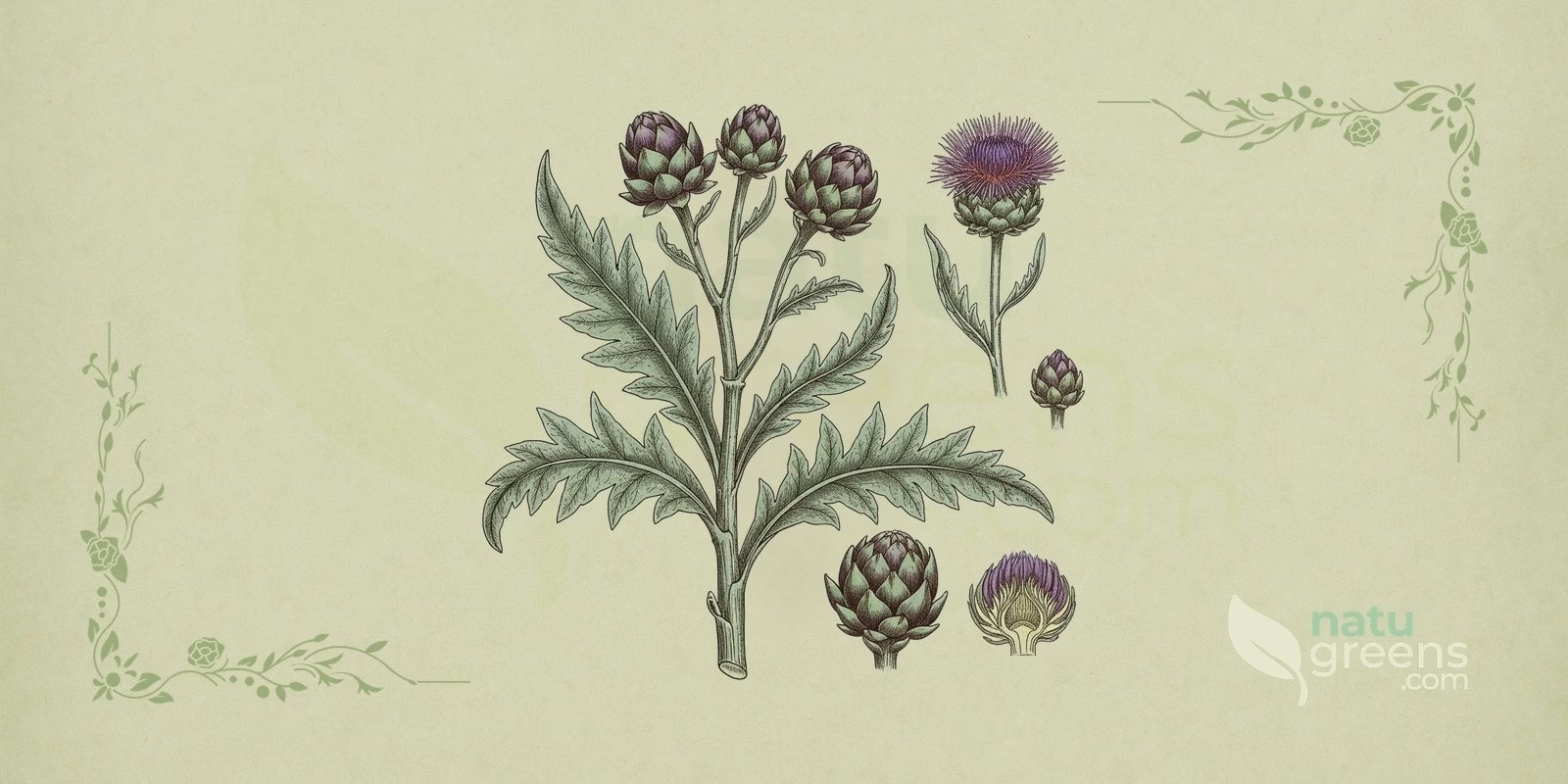
The artichoke (Cynara scolymus L., now treated by many taxonomic references as Cynara cardunculus subsp. scolymus) is a perennial plant of the Asteraceae family, native to the Mediterranean region and prized for thousands of years both in the kitchen and in folk medicine. Ancient civilizations, including those of Egypt and Greece, already used it for food and medicine, according to historical accounts, and its bracts and leaves remain the most widely used parts, since they concentrate the bioactive compounds to which tradition attributes the plant’s actions.
In herbal tradition, artichoke holds a prominent place among the plants used for digestive and liver complaints, with applications ranging from helping the body digest fats to protecting and regenerating liver cells, actions studied mainly in experimental models. Modern scientific research has examined several of these traditional uses, with the most consistent results for the relief of functional dyspepsia and for a modest reduction in cholesterol, and the richness of its phytochemical composition has made artichoke one of the most studied and widely used medicinal plants in the world.
Popular and International Names of Artichoke
- English: artichoke, globe artichoke.
- Spanish: alcachofa, alcaucil.
- Portuguese: alcachofra (Brazil and Portugal); alcachofra-comum, alcachofra-cultivada, alcachofra-da-horta, alcachofra-rosa (Portugal).
- French: artichaut.
- Italian: carciofo.
- German: Artischocke, Gemüseartischocke.
Botanical Synonyms of Cynara scolymus
Cynara scolymus L. is the name most often found in the scientific literature and, although Cynara cardunculus subsp. scolymus is the name currently accepted by many taxonomic references, the Linnaean binomial is still widely used in pharmacological and phytochemical publications, especially in Central Europe. For this reason, this article uses Cynara scolymus in its title, alongside the synonyms and related names listed below.
- Cynara cardunculus L. (species name in the broad sense, which covers both the artichoke and the cardoons)
- Cynara cardunculus var. scolymus (L.) Fiori
- Cynara scolymus L.
The name Cynara cardunculus subsp. cardunculus, which sometimes appears in these lists, refers to a different subspecies, the cardoon, and should therefore not be treated as a synonym of the artichoke.
Botanical Family: Asteraceae
The Asteraceae family, formerly called Compositae, is one of the largest families of flowering plants, with about 1,900 genera and more than 32,000 species distributed throughout the world. Its most distinctive feature is the flower head, or capitulum, in which numerous small flowers are gathered into a structure that mimics a single flower, and the group includes plants of great economic, culinary and medicinal importance, such as calendula, chamomile, lettuce and sunflower.
The artichoke follows this architecture with one peculiarity: unlike the daisy and the sunflower, whose flower heads carry ray florets around the edge, its flower head is made up only of violet tubular florets, surrounded by bracts whose fleshy base, together with the receptacle, forms the edible part. The family is known for producing bioactive compounds, especially flavonoids, sesquiterpene lactones and essential oils, and this chemical diversity has been the subject of intense pharmacological research, with an impact on the development of herbal medicines and dietary supplements.
Parts of Artichoke Used
In herbal medicine, the part of greatest interest is the leaf, the raw material for infusions and standardized extracts, while the fleshy base of the bracts and the receptacle of the flower head, known as the artichoke heart, are eaten mainly as food.
- Bracts
- Leaves
Ethnobotanical and Traditional Uses
Ethnobotanical records describe the traditional use of artichoke mainly for digestive complaints, alongside a few folk uses related to the skin and the urinary tract that still lack clinical confirmation. The main uses cited are:
- Aid to digestion
- Aid to lipid metabolism
- Diuretic use
- Eczema (recorded in folk medicine)
- Relief of dyspepsia
- Relief of flatulence
- Relief of intestinal cramps
- Relief of nausea
- Urinary system support
- Weight management support (folk use)
Therapeutic Properties of Artichoke
The properties below bring together what tradition attributes to artichoke and what studies have observed so far, with the level of evidence indicated in parentheses in each case.
- Anti-inflammatory (activity observed in laboratory studies)
- Antioxidant (neutralizes free radicals in laboratory assays)
- Antispasmodic (traditional use to relieve digestive spasms)
- Cholagogue (promotes bile flow, which is why it is contraindicated in biliary obstruction)
- Choleretic (increased bile production observed in a clinical study with volunteers)
- Diuretic (traditional use to increase urine volume)
- Hepatoprotective (liver protection observed in experimental studies and in preliminary clinical trials)
- Hypocholesterolemic (modest cholesterol reduction observed in clinical trials with leaf extract)
- Hypoglycemic (effect on blood glucose investigated in preliminary studies)
- Vasodilator (vascular relaxation observed in laboratory studies)
Detailed Phytochemical Profile of Artichoke
The composition of the artichoke leaf is dominated by caffeoylquinic acid derivatives, notably cynarin and chlorogenic acid, alongside flavonoids such as luteolin and its glycosides, while the edible flower head stands out for its content of inulin, a soluble fiber. The main groups and substances described in the literature are:
- Apigenin
- Caffeoylquinic acids (mono- and dicaffeoylquinic acids)
- Chlorogenic acid
- Cynarin
- Cynaroside
- Flavones
- Flavonoids (luteolin, quercetin)
- Hydroxybenzoic acids
- Hydroxycinnamic acids
- Inulin
- Lignans
- Luteolin
- Phenolic acids
- Polyphenols
- Proteins
- Rutin
- Saponins
- Sesquiterpene lactones (such as cynaropicrin)
- Tannins
- Triterpenes
- Veronicastroside
- Vitamin C
Preparation and Administration Forms of Artichoke
The most common preparations use the dried leaf or standardized extracts, and the choice between them usually depends on the purpose of use and on the guidance of a healthcare professional:
- Dry extract
- Extract capsules
- Fluid extract
- Juice
- Tea (infusion)
- Tincture
Synergy with Other Medicinal Plants
Digestive and Liver Health
In herbal tradition, artichoke is frequently paired with milk thistle (Silybum marianum) in formulas aimed at liver health and the relief of digestive discomfort. The traditional rationale is to add silymarin, the main active complex of milk thistle, to cynarin and the other artichoke compounds, substances studied in experimental models for their action on liver cells, although clinical trials confirming a synergistic effect of the combination are still lacking. Because milk thistle also belongs to the Asteraceae, anyone allergic to plants of this family should avoid this pairing.
Lipid Profile
Where cholesterol is concerned, artichoke appears in traditional combinations with guggul (Commiphora mukul) or with fenugreek (Trigonella foenum-graecum). Clinical trials with artichoke leaf extract have observed a modest reduction in total cholesterol, LDL and triglycerides, while guggul and fenugreek are being investigated for their own mechanisms of action on blood lipids. The idea behind the combination is to bring these actions together, although no studies have yet shown any real advantage of the mixture, and anyone already taking cholesterol-lowering drugs, diabetes medication or anticoagulants should talk to a healthcare professional before combining these plants.
Recipes and Usage Protocols of Artichoke
Artichoke Infusion for Liver Health
A preparation traditionally used to aid the digestion of fatty meals and to support liver health, according to the records of folk herbal medicine.
Ingredients:
- 1 teaspoon of dried artichoke leaves (Cynara scolymus)
- 250 ml of boiling water
Preparation:
- Heat the water and wait until it comes to the boil.
- Add the dried artichoke leaves to the water.
- Cover and leave to infuse for 10 to 15 minutes.
- Strain and drink while warm.
Dosage: tradition recommends drinking 2 to 3 cups a day, preferably before or after meals, as support for digestion and liver health. People allergic to plants of the Asteraceae family should avoid this tea, and anyone with bile duct obstruction or gallstones should not use it without medical supervision, as described under Contraindications.
Artichoke Fluid Extract for Dyspepsia
A concentrated form traditionally used to relieve the feeling of a heavy stomach and the slow digestion typical of functional dyspepsia, a complaint for which the leaf extract has already been evaluated in a controlled clinical trial.
Ingredients:
- Standardized artichoke fluid extract (concentration as indicated by the manufacturer)
How to Use:
- Dilute the dose indicated by the manufacturer or by the healthcare professional (usually 20 to 30 drops) in a little water.
- Take 2 to 3 times a day, before the main meals.
Dosage: follow the guidance of your healthcare professional or the manufacturer’s instructions regarding dose and duration of use, and stop taking it if you notice abdominal discomfort or any sign of an allergic reaction.
The preparations above follow traditional records and do not replace professional guidance. Before any internal use, check the contraindications and interactions described in this article.
Associated Therapies
Herbal Medicine
Artichoke is among the most valued plants in herbal medicine, which traditionally uses it for complaints related to the digestive system and the liver. Its cholagogue, choleretic, hepatoprotective and hypocholesterolemic actions are the most frequently cited in the literature, with the strongest clinical evidence for increased bile production and for a modest reduction in cholesterol, and herbal practice uses the leaves and bracts in various forms, such as infusions, extracts and tinctures, always within the safety limits described under Contraindications.
Functional Nutrition
In functional nutrition, artichoke is considered a nutraceutical food because of its content of bioactive compounds, such as cynarin and flavonoids, and of fiber, above all inulin. It is included in eating plans to support fat digestion, liver function and a balanced lipid profile, but adding it to the diet complements, rather than replaces, professional follow-up for anyone looking after their metabolic health or already living with a chronic disease.
Contraindications and Side Effects of Artichoke
Artichoke is generally considered safe for most adults when used at the usual doses, but there are clear contraindications and some side effects that need to be taken into account before any medicinal use.
Contraindications
Artichoke (Cynara scolymus) is contraindicated in bile duct obstruction and in cases of gallstones (cholelithiasis) without medical supervision, because it stimulates bile secretion. Anyone allergic to plants of the Asteraceae family (arnica, chamomile, daisy, sunflower) should avoid it because of the risk of cross-reactivity.
- Allergy to plants of the Asteraceae family: people with a known allergy to plants such as chrysanthemums, daisies and ragweed may react to artichoke with contact dermatitis, asthma or even anaphylaxis, and should avoid the plant in any form.
- Gallstones and bile duct obstruction: because of its cholagogue effect, which stimulates bile secretion, artichoke is contraindicated in obstruction of the bile ducts and in gallstones, as it may worsen the condition, and any use in these cases depends on medical assessment.
- Intestinal fermentation: in cases of excessive intestinal fermentation, the use of artichoke may not be advisable, because it tends to intensify the discomfort.
- Pregnancy and breastfeeding: artichoke is contraindicated during pregnancy because of the potential emmenagogue effect described in the traditional literature, and it is not recommended while breastfeeding, as it may alter the taste of breast milk.
Drug Interactions
- Anticoagulants: although there are no conclusive studies, some sources attribute a mild anticoagulant effect to artichoke, linked to the presence of coumarins, and recommend caution and medical supervision for people taking drugs such as warfarin, as well as stopping use before surgery.
- Hypoglycemic drugs: since the effect of artichoke on blood glucose is being investigated in studies, anyone taking diabetes medication should talk to their doctor before combining the plant with their treatment, to avoid excessive drops in blood sugar.
Side Effects
- Allergic reactions: in sensitive people, skin rashes, hives, swelling or difficulty breathing may occur, a situation that requires stopping use immediately and seeking medical care.
- Gastrointestinal disorders: rarely, excessive consumption of artichoke can cause gas, stomach pain or diarrhea.
Historical Notes and Interesting Facts
The artichoke has a long history and has been valued by many civilizations over the centuries. Ancient accounts indicate that the Egyptians already knew the plant and that the Greeks took its cultivation to Sicily and Magna Graecia, while Greek mythology links it to the nymph Cynara, who, according to one version of the myth, was turned into this plant by Zeus after rejecting him. In Ancient Rome, the artichoke was regarded as a noble food and was even considered an aphrodisiac.
The word artichoke reached English by way of Italian, but its ultimate origin is the Andalusian Arabic al-kharshuf, a term that many authors translate as “spiny plant”, in reference to the plant’s morphology. The artichoke is a close relative of the cardoon and was selected for human consumption over centuries of cultivation, and in Brazil commercial production is concentrated in the interior of São Paulo state, especially in the municipalities of Piedade and São Roque.
Frequently Asked Questions about Artichoke
Does Artichoke Help with Weight Loss?
There is no evidence that artichoke on its own leads to weight loss. Folk use links it to weight management because of its traditional diuretic effect, which increases the elimination of fluids rather than fat, and because of its connection with fat metabolism, since studies with the leaf extract have observed a modest reduction in cholesterol and triglycerides. The inulin in the plant may promote satiety, but any effect on weight depends on the overall diet and lifestyle.
What Is the Best Way to Take Artichoke for Liver Health?
In tradition, the most frequently cited form is an infusion of the dried leaves, which provides compounds such as cynarin, studied for their action on the liver, and the fluid extract is a more concentrated alternative. Because the plant stimulates bile secretion, anyone with liver or gallbladder disease needs to consult a healthcare professional, who will determine the appropriate form and dose for each case.
Are There Important Drug Interactions with Artichoke?
There are no conclusive studies on relevant interactions, but some sources attribute a mild anticoagulant effect to artichoke, linked to the presence of coumarins, which calls for caution and medical supervision in people taking anticoagulants such as warfarin, as well as stopping use before surgery. Anyone taking diabetes medication should also consult their doctor before using the plant, because its effect on blood glucose is being investigated in studies.
Is Artichoke Safe for Everyone?
Artichoke is generally safe for most adults, but it is contraindicated for people allergic to plants of the Asteraceae family, for pregnant and breastfeeding women, and for those with bile duct obstruction or gallstones. At high doses, it can cause mild gastrointestinal upset, so the best course is to consult a healthcare professional before starting, especially if you have a pre-existing condition.
Can People with Gallstones Use Artichoke?
Artichoke should not be used in this situation without medical supervision, because it is contraindicated in bile duct obstruction and in cases of gallstones (cholelithiasis): it stimulates bile secretion and may worsen the condition. Any use in this context depends on the assessment of a doctor who knows the patient’s history.
Which Part of Artichoke Is Used in Teas and Extracts?
In herbal medicine, the most commonly used part is the leaf, the raw material for infusions and standardized extracts, although the bracts also appear among the parts used. The fleshy base of the bracts and the receptacle of the flower head, known as the artichoke heart, are eaten mainly as food.
Notice: this content is for informational purposes and does not replace professional medical advice. Consult a physician or herbal practitioner before using medicinal plants, especially during pregnancy, breastfeeding, or alongside medication.
References and Scientific Studies
View All 8 Cited References
Peer-Reviewed Scientific Studies (7)
- PMC2015 Ben Salem M, et al. Pharmacological Studies of Artichoke Leaf Extract and Their Health Benefits. Plant Foods Hum Nutr. 2015.
- PMC2003 Holtmann G, et al. Efficacy of artichoke leaf extract in the treatment of patients with functional dyspepsia: a six-week placebo-controlled, double-blind, multicentre trial. Aliment Pharmacol Ther. 2003.
- PMC2022 Kamel AM, et al. Therapeutic Potential of Artichoke in the Treatment of Fatty Liver: A Systematic Review and Meta-Analysis. J Med Food. 2022.
- PMC1994 Kirchhoff R, et al. Increase in choleresis by means of artichoke extract. Phytomedicine. 1994.
- PMC2024 Porro C, et al. Functional and Therapeutic Potential of Cynara scolymus in Health Benefits. Nutrients. 2024.
- PMC2000 Romano C, et al. A case of allergy to globe artichoke and other clinical cases of rare food allergy. J Investig Allergol Clin Immunol. 2000.
- PMC2018 Sahebkar A, et al. Lipid-lowering activity of artichoke extracts: A systematic review and meta-analysis. Crit Rev Food Sci Nutr. 2018.
Supplementary Readings (1)
- Horto Didático de Plantas Medicinais do HU/CCS, UFSC. Alcachofra.