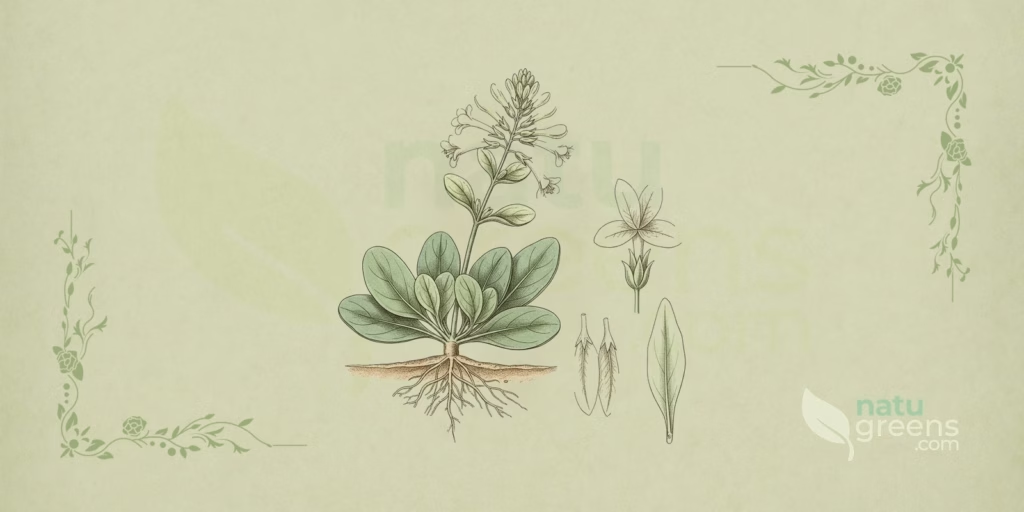
Gypsywort (Lycopus europaeus L.), also known as water horehound or European bugleweed, is a perennial herbaceous plant of the Lamiaceae family, described by Carl Linnaeus and native to Europe and Asia. The species earned its place in European herbal medicine mainly through its traditional use for thyroid disorders, recorded in folk medicine over several centuries, and its leaves and aerial parts are harvested to make extracts, tinctures, and infusions that draw on its bioactive compounds.
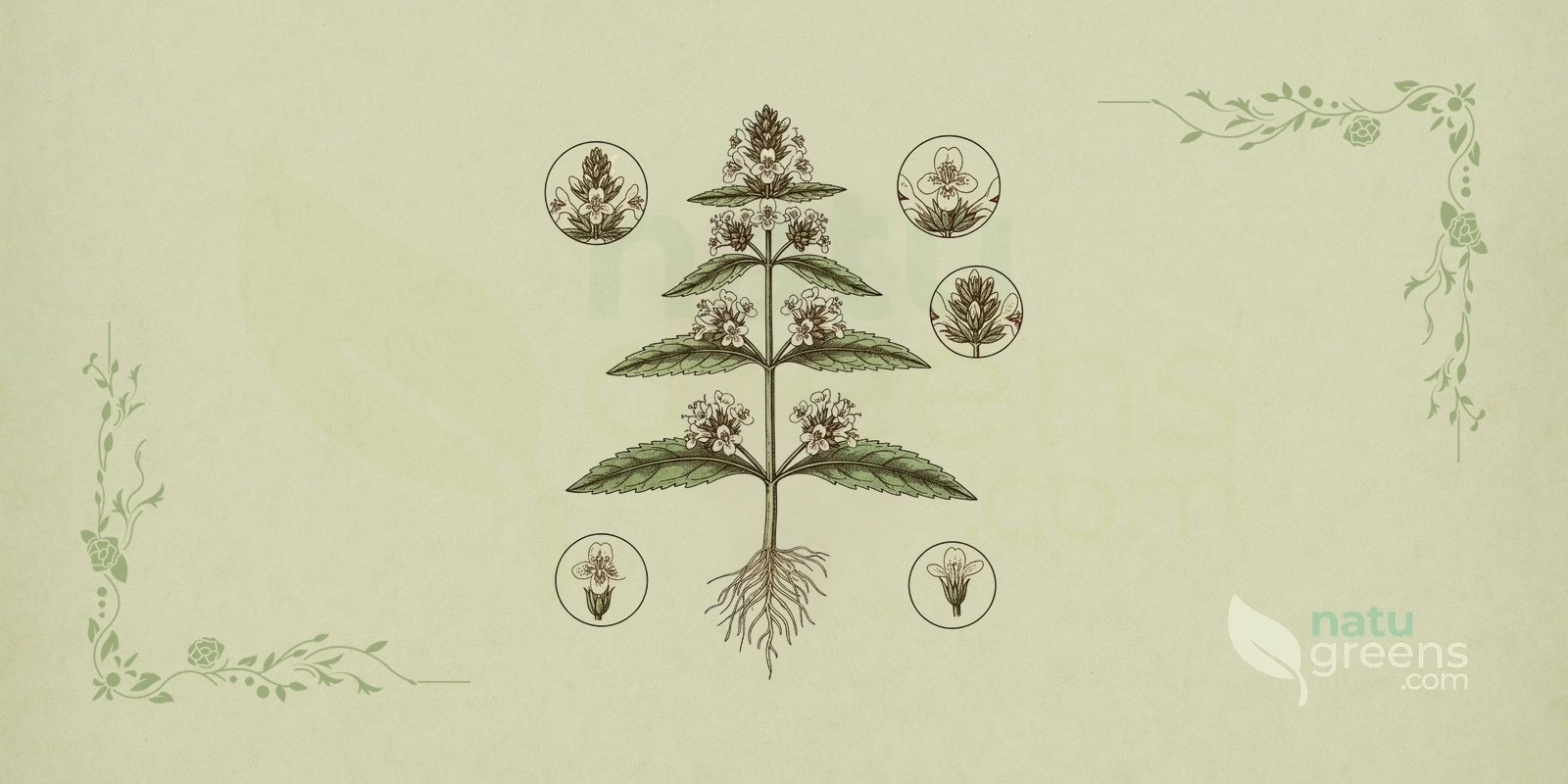
In the herbal tradition, Lycopus europaeus stands out for the antithyroid action attributed to it and has been used in cases of mild hyperthyroidism, a use that today only makes sense under medical supervision. Modern research has looked into some of these uses and identified flavonoids and phenolic acids in the plant that laboratory studies link to antioxidant, anti-inflammatory, and antimicrobial activity, while its calming effect remains largely a matter of traditional record. Because the plant can reduce thyroid function in some people, its use calls for specific precautions, which are covered in detail in the sections on preparation, contraindications, and frequently asked questions.
Popular and International Names of Gypsywort
- English: bugleweed, European bugleweed, gipsywort, gypsywort, water horehound.
- Spanish: hierba de lobo, licopo, licopo europeo, lícopus, manrrubio, manrubio de agua, menta de burro, menta de lobo, patilobo, pie de lobo.
- Portuguese: marroio-de-água, pé-de-lobo.
- French: chanvre d’eau, crumiève, grumène, lance du Christ, lycope d’Europe, marrube aquatique, patte de loup, pied de loup.
- Italian: erba sega, erba-sega comune, licopia, marrubio acquatico.
- German: Europäischer Wolfsfuß, Gemeiner Wolfstrapp, Uferwolfstrapp, Wasserandorn, Wolfsfuß.
Botanical Synonyms of Lycopus europaeus
There are no widely accepted botanical synonyms that replace Lycopus europaeus L. in the contemporary scientific literature, and this remains the name most often used in floras, databases, and pharmacological studies. Some sources do, however, record subspecies or varieties, such as Lycopus europaeus subsp. mollis (Kerner) Skalický, without any change to the accepted name of the species.
Botanical Family: Lamiaceae
The Lamiaceae family, formerly known as Labiatae, is a vast family of flowering plants comprising some 236 genera and more than 7,000 species distributed worldwide. Its members usually have square stems, opposite leaves, and two-lipped flowers that are often aromatic, and the group has great economic, culinary, and medicinal importance, since it includes kitchen herbs such as basil, mint, oregano, rosemary, and thyme, along with numerous ornamental and medicinal plants.
Gypsywort shares the morphological features typical of the family, including its floral structure and the presence of bioactive compounds such as essential oils and phenolic acids. The Lamiaceae are known for producing a wide range of secondary metabolites that have been the subject of intensive pharmacological research, which has contributed to the development of herbal medicinal products and supplements from several species in the family.
Parts of Gypsywort Used
In herbal medicine, interest centers on the aerial parts of gypsywort, which are harvested during flowering and dried to serve as the basis for the different preparations described below.
- Aerial parts (flowers, leaves, and stems)
- Dried leaves
- Extracts of the aerial parts
- Tinctures of the aerial parts
Cultivation, Harvesting, and Drying
Lycopus europaeus is a perennial plant that thrives in moist, nutrient-rich soils and is frequently found along riverbanks, in marshes, and in ditches, in full sun or partial shade. It can be propagated from seed in spring or by dividing the rhizomes in autumn or spring, and the seeds should be scattered on the surface of the growing medium, because they need light to germinate. As the plant is hardy and can become invasive under ideal conditions, it is best grown in containers or with barriers that keep its spread in check.
The aerial parts (leaves, flowers, and young stems) are usually harvested during flowering, which in the Northern Hemisphere runs from summer to early autumn, on dry days and preferably in the morning, once the dew has evaporated. The material can be dried in the shade in a well-ventilated place and stored in airtight glass or metal containers, away from light, heat, and moisture, which helps preserve its active compounds for up to a year. Careful drying is what maintains the quality of plant material intended for medicinal use.
Ethnobotanical and Traditional Uses
The ethnobotanical record of gypsywort comes mainly from European folk medicine, which used it for nervous, cardiac, respiratory, and digestive complaints, in addition to its best-known use related to the thyroid. The items below describe traditional uses, which are not the same as proven indications.
- Astringent and diuretic action, according to European folk use
- Cough and respiratory disorders, in traditional records
- Heart palpitations, in traditional records
- Insomnia and nervousness, according to folk tradition
- Mild gastrointestinal discomfort, in records of the herbal tradition
- Mild hyperthyroidism, a historical use in European herbal medicine that today requires medical supervision
Therapeutic Properties of Gypsywort
The properties listed below combine the traditional record with results from laboratory studies, animal studies, and small open-label clinical studies, and none of them replaces an assessment by a healthcare professional.
- Analgesic (pain relief according to the traditional record, not confirmed in clinical studies)
- Antidiarrheal (traditional use for diarrhea, not confirmed in clinical studies)
- Anti-inflammatory (activity attributed to phenolic compounds in laboratory studies)
- Antimicrobial (activity against bacteria and some fungi observed in laboratory tests)
- Antioxidant (free radical scavenging observed in laboratory tests)
- Antithyroid (reduced thyroid activity observed in animals and in small open-label studies of mild hyperthyroidism, for use only under medical supervision)
- Cardioprotective (lower heart rate observed in rats with induced hyperthyroidism, along with traditional use for palpitations)
- Sedative (traditional record for insomnia, anxiety, and nervousness)
Scientific Research and Clinical Studies
Research on Lycopus europaeus has focused mainly on its effect on the thyroid. In rats, an ethanolic extract given orally lowered T3, T4, and TSH levels, a result the authors attributed to both a central action and an effect on the peripheral conversion of the hormones, and in rats with induced hyperthyroidism another extract reduced heart rate, blood pressure, and cardiac hypertrophy without changing hormone concentrations. In humans, the data come from open-label studies without blinding: a prospective study in patients with TSH below 1.0 mU/l recorded increased urinary excretion of T4 and a decrease in symptoms such as an elevated morning heart rate, and a post-marketing study of 403 patients reported an improvement in the symptoms of mild hyperthyroidism and good tolerability.
Beyond its thyroid effects, phytochemical studies have identified flavonoids, tannins, and phenolic acids such as rosmarinic acid, which are associated with antioxidant, anti-inflammatory, and antimicrobial activity observed in the laboratory, including against clinical strains of Staphylococcus aureus. Research continues to explore other areas and to look for the molecular mechanisms behind these effects, but the available results do not yet amount to robust clinical evidence, and the plant is no substitute for conventional treatment of thyroid disease.
Detailed Phytochemical Profile of Gypsywort
The chemical composition of gypsywort is characterized by phenolic compounds such as rosmarinic acid and flavonoids, alongside tannins, diterpene derivatives, a bitter essential oil, and some minerals.
- Bitter essential oil
- Flavonoids (apigenin, luteolin, quercetin)
- Fluorine
- Lithospermic acid
- Manganese
- Phenolic acids (caffeic acid, chlorogenic acid, ellagic acid, rosmarinic acid)
- Pimaric acid methyl ester
- Tannins
In addition to the phenolic compounds and the pimaric acid ester, studies have isolated isopimarane- and abietane-type diterpenes from the species, and one of these abietane diterpenes, which is phenolic in nature, showed antimicrobial activity in laboratory tests. Rosmarinic acid consistently appears among the major components of the plant’s phenolic profiles, which helps explain the interest it attracts in studies of antioxidant activity.
Preparation and Administration Forms of Gypsywort
Gypsywort is used in different forms, from homemade infusions to the standardized extracts of clinical herbal medicine. Because of its action on the thyroid, the amount, frequency, and duration of use of any of these forms should be set by a healthcare professional rather than by generic dosage tables.
- Capsules and tablets (in clinical herbal medicine)
- Liquid extracts
- Teas and infusions (aerial parts and leaves)
- Tinctures
Infusion: made with dried aerial parts in freshly boiled water, left covered to steep for 10 to 15 minutes before straining, and both the amount of herb and the number of cups per day require individual guidance.
Tincture: usually prepared at a 1:5 ratio in 70% alcohol and taken diluted in water, at a dose adjusted by the professional overseeing the case.
Standardized extracts, capsules, and tablets: these contain a defined concentration of active compounds and should be used according to the prescription and the manufacturer’s instructions, without increasing the dose on your own.
Use in children: not recommended without strict medical supervision, because of the plant’s hormonal action.
Synergy with Other Medicinal Plants
Combinations Described for Thyroid Function
In the literature of endobiogeny and European clinical herbal medicine, Lycopus europaeus appears in combinations traditionally used to modulate thyroid function, always under medical prescription. When the stated aim is FSH inhibition, the combination cited includes Lithospermum officinale and Borago officinalis; for central thyrotropic activity (TRH and TSH), the plant is paired with Lithospermum officinale and Leonurus cardiaca; and for peripheral thyrotropic activity, it appears alongside Fabiana imbricata and Brassica oleracea. According to their proponents, these combinations aim for a broader and more balanced effect on the endocrine system, but no clinical trials confirm this outcome.
Combinations in Hormonal Formulations
In formulations aimed at hormonal support, the same approach describes combining gypsywort with Vitex agnus-castus, cited for peripheral estrogen inhibition, and with Achillea millefolium, cited as support for progesterone. For peripheral thyroid inhibition, gemmotherapy preparations of Cornus sanguinea and Zea mays are also mentioned, and the tradition further includes gypsywort in blends used for symptoms associated with hormonal imbalances, such as anxiety and palpitations, because of the sedative and cardiac action attributed to it.
Several of these plants have safety restrictions of their own, and borage, for example, contains pyrrolizidine alkaloids that are potentially toxic to the liver, so any combination should be designed and monitored by a healthcare professional, never put together on your own in cases of thyroid disease.
Recipes and Usage Protocols of Gypsywort
Infusion of the Aerial Parts
Ingredients: dried aerial parts of Lycopus europaeus, in an amount set by a healthcare professional, and one cup (about 200 ml) of freshly boiled water.
Preparation: Place the dried aerial parts in a cup, pour the freshly boiled water over them, cover, and let steep for 10 to 15 minutes before straining. This infusion is traditionally used in European herbal medicine for mild hyperthyroidism accompanied by nervousness and palpitations, but because the plant can reduce thyroid function, the frequency and duration of use should be set by the physician, who also monitors hormone tests. Consult a healthcare professional before use.
Tincture of the Aerial Parts
Ingredients: 50 g of dried aerial parts of Lycopus europaeus and 250 ml of 70% alcohol.
Preparation: Place the aerial parts in a dark glass jar, cover them with the alcohol, seal tightly, and leave to macerate for 2 to 4 weeks, shaking daily, then filter and store the liquid in a dropper bottle. This tincture is traditionally used for anxiety, nervousness, and palpitations associated with thyroid disorders or stress, and the dose in drops, always diluted in water, should be set by a healthcare professional, since the tincture concentrates the plant’s active principles.
The preparations above follow traditional records and do not replace professional guidance. Before any internal use, check the contraindications and interactions described in this article.
Associated Therapies
Endobiogeny
Endobiogeny, an integrative medical approach, uses Lycopus europaeus with the aim of modulating the neuroendocrine system, especially in cases of thyroid and hormonal dysregulation. Within this framework, the plant is regarded as an inhibitor of the central stimuli of gonadotropic and thyrotropic activity (FSH, TRH, and TSH) and is given as mother tinctures with the stated purpose of rebalancing physiology. It is cited above all in terrains of autoimmunity and hormonal imbalance, where modulating thyroid and gonadal activity plays a central role in the clinical reasoning of this school.
Clinical Herbal Medicine
In modern clinical herbal medicine, Lycopus europaeus is used mainly in the form of standardized extracts and capsules, often assayed to ensure a consistent concentration of active compounds, in thyroid conditions. The described use is as a modulator of thyroid function, particularly in subclinical or mild hyperthyroidism and in managing associated symptoms such as tachycardia and nervousness, always with individualized prescribing that takes into account the patient’s profile, hormone tests, and possible drug interactions.
Homeopathy
In homeopathy, the most frequently cited remedy from the genus is Lycopus virginicus, a related North American species described in the homeopathic materia medica for cardiac complaints such as tachycardia and palpitations, and for thyroid disorders. Lycopus europaeus is much less common in this practice but tends to be described in a similar way, for irritability, hypersensitivity, and nervous disorders associated with endocrine imbalances, indications that belong to the traditional record of homeopathy and have not been confirmed in clinical trials.
Contraindications and Side Effects of Gypsywort
General Contraindications
Gypsywort (Lycopus europaeus) can reduce thyroid function in some people, according to traditional accounts and preliminary studies. Anyone with hypothyroidism or hyperthyroidism, or who takes thyroid medication, should avoid it or consult a doctor before use. In hypothyroidism the plant is contraindicated, because it can worsen the condition by suppressing the gland’s function even further.
Use is contraindicated during pregnancy and breastfeeding, owing to the lack of safety studies and the potential for hormonal interference. People with goiter (enlargement of the thyroid gland) should use it only with extreme caution and under medical supervision, because in some cases the plant can induce or worsen goiter. Children and people with a known allergy to plants of the Lamiaceae family should also avoid it, and use in children is not recommended without strict medical supervision.
Side Effects
Side effects of Lycopus europaeus are usually rare and mild but may include gastrointestinal upset such as nausea or diarrhea, as well as drowsiness linked to the sedative properties attributed to the plant. Prolonged use or high doses can lead to the development of goiter or worsen pre-existing hypothyroidism, and stopping abruptly after prolonged use can intensify thyroid symptoms, which is why discontinuation should also be guided by a doctor. Allergic skin reactions, such as contact dermatitis, are possible in sensitive individuals.
Drug Interactions
Lycopus europaeus can interact significantly with thyroid medications such as levothyroxine, interfering with the hormonal control these drugs are meant to achieve, and when combined with treatments that already reduce the gland’s activity it may promote hypothyroidism. The plant can also interfere with thyroid tests that use radioactive iodine, such as thyroid scintigraphy, so the doctor should be told about its use before these procedures.
Because of the sedative properties attributed to the plant, caution is needed when it is combined with sedatives and anxiolytics, as drowsiness may increase, and the same caution applies to anticoagulants, which should be reported to the doctor before any combination. People taking diabetes medications (blood glucose-lowering drugs) need to monitor their blood sugar, since the plant may have a mild hypoglycemic effect, and anyone on long-term medication should consult a healthcare professional before starting Lycopus europaeus.
Historical Notes and Interesting Facts
The genus name Lycopus comes from Greek and means wolf’s foot, an image that reappears in several of the plant’s common names, such as pé-de-lobo in Portuguese, patte de loup and pied de loup in French, pie de lobo in Spanish, and Wolfsfuß in German. Other names take a different route and liken the species to horehound, as with water horehound, marroio-de-água, marrube aquatique, and the old German name Wasserandorn, which also evoke the damp riverbanks, marshes, and ditches where the plant usually grows.
The species was described by Carl Linnaeus, which explains the abbreviation L. after the scientific name, and it belongs to a family long known as Labiatae, a reference to its two-lipped flowers. In traditional European medicine, records of gypsywort use go back several centuries, and interest in the plant’s thyroid effects reached the pharmaceutical industry: an extract marketed in Germany was followed in a post-marketing study of 403 patients, published in 2013.
In homeopathy, the most widely used species of the genus is not the European one but Lycopus virginicus, from North America, although the two plants have similar phytochemical profiles. People who grow gypsywort are also often surprised by its vigor, since it can become invasive under ideal conditions and its seeds germinate well only when exposed to light, which is why they are left on the soil surface. The plant is also listed in the database of the EPPO, the European and Mediterranean Plant Protection Organization, under the code LYAEU.
Frequently Asked Questions about Gypsywort
Does Gypsywort Help Regulate the Thyroid?
European herbal medicine traditionally uses gypsywort for mild hyperthyroidism, and preliminary animal studies and small open-label clinical studies have observed a reduction in symptoms and changes in thyroid parameters. These results do not amount to definitive proof, and because the plant can reduce thyroid function in some people, it should only be used under medical supervision, without replacing conventional treatment.
Can People with Thyroid Disorders Use Gypsywort?
Anyone with hypothyroidism or hyperthyroidism, or who takes thyroid medication, should avoid the plant or consult a doctor before using it. In hypothyroidism, gypsywort is contraindicated because it can worsen the condition, and people with goiter should use it only with extreme caution and under medical supervision.
Can Gypsywort Be Taken Daily?
Daily use should only happen for set periods and under the supervision of a healthcare professional, because of the plant’s action on the thyroid. Prolonged use or high doses can lead to goiter or worsen pre-existing hypothyroidism, and stopping should also be guided by a doctor.
Does Gypsywort Interact with Medications?
Yes, the plant can interact with thyroid medications such as levothyroxine, and with sedatives and anxiolytics, increasing drowsiness. It also calls for caution with anticoagulants and diabetes medications, and anyone on long-term medication should consult a healthcare professional before starting it.
Can Pregnant or Breastfeeding Women and Children Use Gypsywort?
Gypsywort is contraindicated during pregnancy and breastfeeding because of its hormonal action and the lack of safety data. In children, use is not recommended without strict medical supervision, since the plant can interfere with hormonal development and specific studies for this age group are lacking.
How Does Gypsywort Differ from the North American Species?
Lycopus europaeus grows in Europe and Asia, whereas Lycopus virginicus is native to North America, and the two species of the genus have similar traditional uses, mostly related to the thyroid. Their phytochemical profiles are alike, but there may be subtle variations in the concentrations of active compounds, and in homeopathy the North American species is the one used most.
Notice: this content is for informational purposes and does not replace professional medical advice. Consult a physician or herbal practitioner before using medicinal plants, especially during pregnancy, breastfeeding, or alongside medication.
References and Scientific Studies
View All 10 Cited References
Peer-Reviewed Scientific Studies (8)
- PMC2008 Beer AM, et al. Lycopus europaeus (Gypsywort): effects on the thyroidal parameters and symptoms associated with thyroid function. Phytomedicine. 2008.
- PMC2013 Eiling R, et al. Improvement of symptoms in mild hyperthyroidism with an extract of Lycopus europaeus (Thyreogutt mono). Wien Med Wochenschr. 2013.
- PMC2015 Fialová S, et al. Lycopus europaeus: phenolic fingerprint, antioxidant activity and antimicrobial effect on clinical Staphylococcus aureus strains. Nat Prod Res. 2015.
- PMC2000 Hussein AA, et al. Isopimarane diterpenoids from Lycopus europaeus. J Nat Prod. 2000.
- PMC2010 Radulović N, et al. Antimicrobial phenolic abietane diterpene from Lycopus europaeus L. (Lamiaceae). Bioorg Med Chem Lett. 2010.
- PMC2020 Trajčíková E, et al. Antimicrobial and Antioxidant Properties of Four Lycopus Taxa and an Interaction Study of Their Major Compounds. Molecules. 2020.
- PMC2006 Vonhoff C, et al. Extract of Lycopus europaeus L. reduces cardiac signs of hyperthyroidism in rats. Life Sci. 2006.
- PMC1994 Winterhoff H, et al. Endocrine effects of Lycopus europaeus L. following oral application. Arzneimittelforschung. 1994.
Supplementary Readings (2)
- EPPO Global Database. Lycopus europaeus (LYAEU).
- 2019 Hedayat KM, Lapraz JC. The Theory of Endobiogeny. 2019.