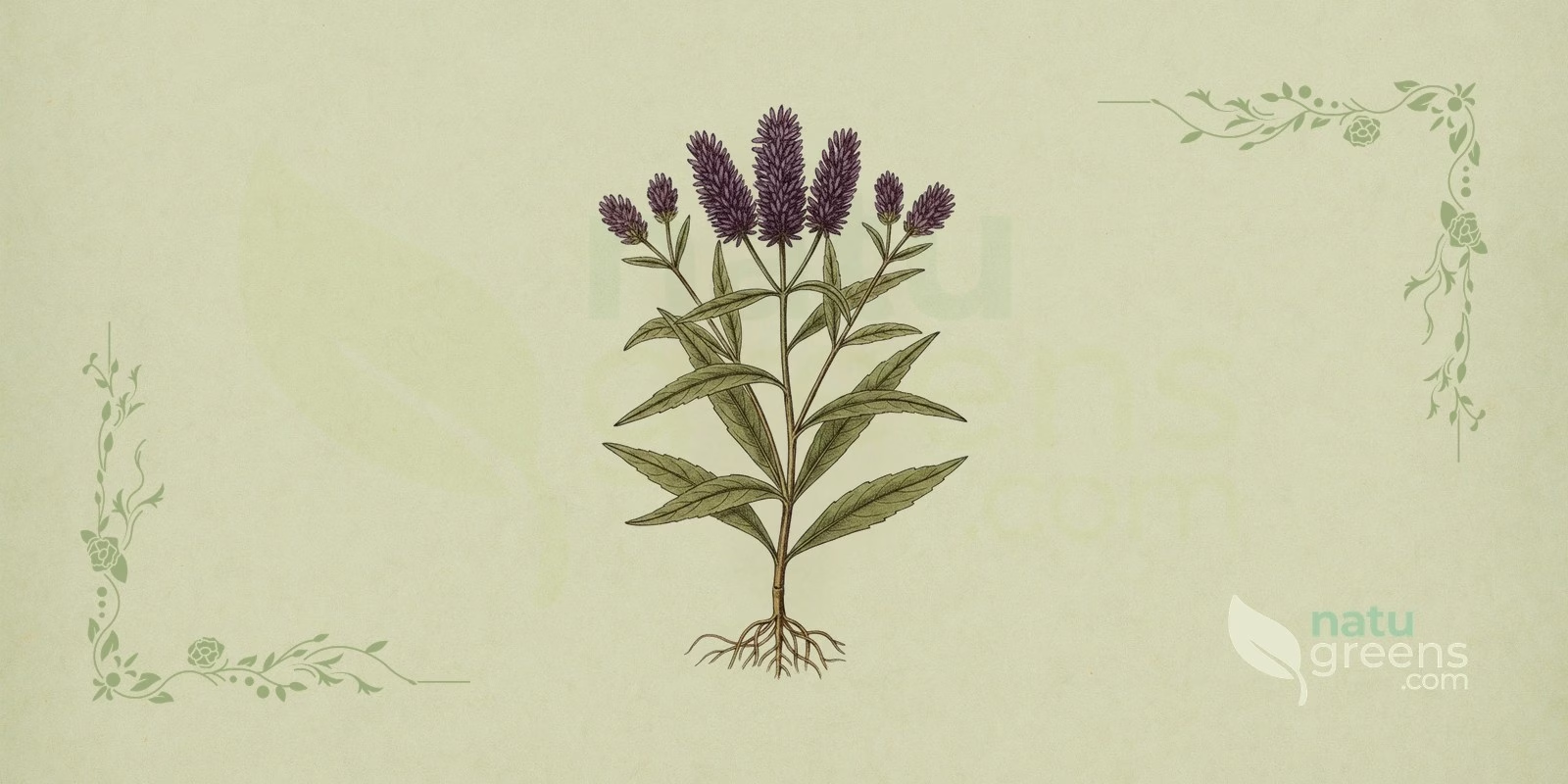
Vernonia fasciculata Michx., commonly known as ironweed, is a perennial herbaceous plant of the Asteraceae family, described by Michaux in 1803 and native to the north-central United States and the Canadian province of Manitoba. Between July and September, its intense purple-magenta flowers stand out in prairies and moist soils, attracting bees, butterflies, and other pollinators, while its sturdy stem explains the common name the species received.
Popular and International Names of Ironweed
The Portuguese names are largely direct adaptations of the English ones, since the species is native to North America and appears only rarely in botanical literature written in Portuguese.
- English: bunched ironweed, common ironweed, prairie ironweed, smooth ironweed, western ironweed.
- Portuguese: erva-de-ferro, erva-de-ferro-comum, erva-de-ferro-da-pradaria, vernônia-das-pradarias.
Botanical Synonyms of Vernonia fasciculata
Throughout the history of botanical classification, Vernonia fasciculata has received a few synonyms that reflect taxonomic reclassifications, such as the combinations in the genus Cacalia proposed by the German botanist Otto Kuntze, although the current name is widely accepted by the scientific community. Knowing these names is useful in research, as it allows the species to be identified accurately in older botanical and pharmacological sources that still use the earlier nomenclature.
- Cacalia corymbosa (Schwein.) Kuntze
- Cacalia fasciculata (Michx.) Kuntze
Botanical Family: Asteraceae
Vernonia fasciculata belongs to the Asteraceae family, formerly called Compositae, one of the largest and most diverse families of flowering plants, distributed worldwide and including many species of economic, food, and medicinal importance. Its members are characterized by the flower head, or capitulum, in which numerous small flowers cluster into a structure that resembles a single flower, and they commonly contain bioactive compounds such as sesquiterpene lactones, flavonoids, and essential oils, which account for much of the pharmacological interest in the group.
Parts of Ironweed Used
Traditional records focus on the leaves, prepared as an infusion, and on the root, which appears dried in decoctions and as a powder, or fresh and mashed in poultices for external use.
- Leaves
- Root
Ethnobotanical and Traditional Uses
The uses listed below belong to the traditional record, with particular emphasis on the knowledge of the Yuchi, an Indigenous people of eastern Oklahoma whose relationship with the plant was described in an ethnobotanical study, and none of them has been validated by clinical trials in humans.
- Amenorrhea
- Bleeding
- Dysmenorrhea
- Fever and chills
- Leg pain relief (Yuchi use)
- Leukorrhea
- Menstrual regulation
- Postpartum pain relief
- Skin conditions
- Stomachaches
- Ulcers
Therapeutic Properties of Ironweed
- Alterative (a traditional herbalism category for plants regarded as blood cleansers, without clinical confirmation)
- Antibacterial (activity reported for extracts of Vernonia species in laboratory studies)
- Anti-inflammatory (traditional record; activity investigated in species of the genus, with no clinical studies on this plant)
- Antioxidant (capacity associated with flavonoids such as genkwanin, assessed in laboratory studies)
- Bitter tonic (traditional record of use to stimulate appetite and digestion)
- Blood tonic (a category of North American Indigenous medicine, without scientific confirmation)
- Deobstruent (a traditional herbalism term for plants used against congestion, with no defined clinical equivalent)
Antiplasmodial and antiproliferative activities appear frequently in the literature on the genus, especially in studies of Vernonia amygdalina, but no research has demonstrated them in ironweed, which is why they are not included in this list and should not be attributed to the species.
Detailed Phytochemical Profile of Ironweed
Like other species of the genus Vernonia, ironweed is a source of bioactive compounds from several classes, and chemical studies in the 1970s isolated two previously unknown sesquiterpene lactones from the leaves, named fasciculide-A and fasciculide-B, while also identifying flavonoids such as genkwanin and a flavone disaccharide not described before. Other secondary metabolites, such as alkaloids, steroids, tannins, and terpenoids, complete the profile attributed to the plant, although the biological activities of this set have received little investigation in the species itself.
- Alkaloids
- Carotenoids
- Fasciculide-A
- Fasciculide-B
- Flavonoids (including genkwanin)
- Phenolics
- Sesquiterpene lactones
- Steroids
- Tannins
- Terpenoids
Preparation and Administration Forms of Ironweed
Traditionally, the preparation of ironweed varied with the plant part and the purpose, with infusions and decoctions used to extract the water-soluble compounds and external applications of the fresh root for localized pain and skin problems. Since there are no studies on the concentration of the active constituents or on the safety of these preparations, the choice of form and amount should be made with a qualified health professional.
- Decoction (of the root)
- Poultice (fresh mashed root, external use)
- Powder (of the root)
- Tea (leaf infusion)
Synergy with Other Medicinal Plants
Plants for Circulatory Health
Because tradition regards ironweed as a blood tonic and records its use for bleeding, some people pair it with plants traditionally used for circulation and blood vessels, such as horse chestnut (Aesculus hippocastanum) and ginkgo (Ginkgo biloba). No study has evaluated these combinations, and ginkgo may increase the risk of bleeding in people taking anticoagulants or antiplatelet drugs, so any combination calls for professional guidance.
Anti-Inflammatory Plants
Given its traditional use for pain and inflammation, ironweed also appears alongside plants with a similar tradition, such as turmeric (Curcuma longa) and ginger (Zingiber officinale), in combinations for internal or external use whose joint benefit has never been demonstrated. The interaction between the phytochemicals of these species has not yet been studied, and both turmeric and ginger call for caution in people taking anticoagulants, which underscores the need for professional supervision.
Recipes and Usage Protocols of Ironweed
Leaf Infusion for Gargling
In the traditional record, an infusion of the dried leaves of Vernonia fasciculata was used as a gargle for sore throat and, in some accounts, was also swallowed to soothe local irritation. For the gargle, boiling water is poured over a small portion of dried leaves, left to steep for about 10 minutes and strained, and the liquid is used warm, without swallowing. Since there are no safety data and no established dose for ingestion, internal use, amount, and frequency should be determined by a health professional.
Root Decoction for Digestive Complaints
Root decoction is traditionally used for stomachaches and to stimulate the appetite, and the same preparation appears in records of use during episodes of fever and chills. The traditional method consists of placing the dried, chopped root in cold water, bringing it to the heat, boiling for 10 to 15 minutes, and straining, with the liquid taken in small portions before meals. Owing to the lack of safety and dosage studies, the amount of root, the volume consumed, and the duration of use should only be set under the guidance of a health professional.
Root Poultice for Muscle Aches
Among the Yuchi, the fresh root was traditionally applied as a poultice to muscle aches and leg pain. The preparation consists of mashing the root into a paste, applying it to the painful area, and covering it with a clean cloth, leaving it in place for a few hours, according to the traditional record. Before applying it, it is advisable to test a small amount on the skin, since plants of the Asteraceae family can cause dermatitis in sensitive people, and use should be stopped at the first sign of redness, itching, or burning; no studies confirm the local relief of pain and inflammation described in these accounts.
The preparations above follow traditional records and do not replace professional guidance. Before any internal use, check the contraindications and interactions described in this article.
Associated Therapies
Homeopathy
Vernonia fasciculata is not a common remedy in homeopathy, and some popular sources mention homeopathic preparations of other species of the genus, loosely labeled “ironweed”, with indications such as aphrodisiac or snakebite, without any support from studies. Snakebites are medical emergencies that require immediate hospital care and, when indicated, antivenom, never homemade or homeopathic preparations; homeopathy, according to its practitioners, seeks to stimulate the body’s capacity for self-healing through minimal, highly diluted doses.
Native American Herbal Medicine
Ironweed has a long history in the medicine of the Indigenous peoples of North America, and several communities, including the Yuchi, used the plant in a wide range of situations. In these records, it was valued as a blood tonic and analgesic and appeared in the care of ulcers and other skin conditions, a body of knowledge that forms a valuable ethnobotanical legacy but has not yet undergone clinical evaluation.
Contraindications and Side Effects of Ironweed
Ironweed (Vernonia fasciculata), native to North America, has a traditional use that is less documented in the scientific literature than that of other species of the genus, such as Vernonia amygdalina, and therefore the possible benefits described in this article need to be weighed against the lack of data on its risks. Because robust safety and dosage studies are lacking, use is recommended only under the guidance of a qualified professional.
As a member of the Asteraceae family, the plant can trigger allergic reactions in sensitive people, especially skin irritation, and ingestion in large amounts can be toxic to livestock, a finding that calls for extra caution in human use. The main precautions are gathered in the list below:
- Allergy to plants of the Asteraceae family: avoid skin contact and consumption.
- Anticoagulants and antiplatelet drugs: do not use without medical advice, especially in combination with ginkgo, turmeric, or ginger.
- Children: do not use in children.
- Pre-existing conditions or ongoing medication use: consult a health professional before any use.
- Pregnancy and breastfeeding: do not use during pregnancy and breastfeeding, a precaution reinforced by the traditional record of use to regulate menstruation.
- Prolonged internal use: avoid prolonged internal use without supervision.
- Unusual symptoms: if any unusual symptom appears, stop use and seek medical advice.
Historical Notes and Interesting Facts
Origin of the Name “Ironweed”
The common name ironweed refers directly to the sturdiness of the plant, whose stems are remarkably tough and display a color ranging from green to rusty green, reminiscent of iron. This trait makes it attractive as an ornamental plant and, in the popular imagination, became associated with the resilience and strength of the species in the wild.
Description by André Michaux in 1803
The species was described in 1803 by the French botanist André Michaux, known for his collecting expeditions in North America, and the abbreviation Michx., which follows the binomial, identifies precisely the author of that original description. Nearly a century later, the German botanist Otto Kuntze proposed transferring it to the genus Cacalia, a combination that survives today only as a synonym.
Documented Use among the Yuchi
One of the few ethnobotanical studies devoted exclusively to this species, published in 2000 in the journal Economic Botany, described the customary uses of ironweed by the Yuchi of eastern Oklahoma, in the United States, and many of the traditional uses cited in this article trace back to this people.
Attraction of Pollinators
Of great ecological importance, Vernonia fasciculata acts as a magnet for pollinators, as its purple flowers offer abundant nectar and pollen to bees, butterflies, and other beneficial insects. The plant also serves as a host for the Parthenice tiger moth, which contributes to the biodiversity and balance of the ecosystems where it grows.
Frequently Asked Questions about Ironweed
What Are the Traditional Uses of Ironweed?
Traditionally, ironweed was valued as a blood tonic and used to regulate menstruation, ease postpartum pain and stomachaches, and in cases of fever, chills, and skin conditions. These uses come from the ethnobotanical record, and the presence of sesquiterpene lactones and flavonoids helps explain the scientific interest in the plant, but no clinical studies confirm these effects in people.
How Is Ironweed Traditionally Prepared?
The most frequently cited preparations are the leaf infusion, used as a gargle for sore throat, and the root decoction, linked to digestive and menstrual complaints and fever, as well as the poultice of fresh mashed root applied to muscle aches. Since no safe doses have been established for the species, any use should be guided by a health professional.
Are There Side Effects or Contraindications for Ironweed?
Yes, ironweed can cause allergic reactions in sensitive people, especially skin irritation, because it belongs to the Asteraceae family, and ingestion in large amounts can be toxic to farm animals. It should not be used during pregnancy or breastfeeding or in children, and people with pre-existing medical conditions or who take anticoagulants need medical advice before any use.
Are There Human Safety Studies on Ironweed?
There are no robust safety and dosage studies for Vernonia fasciculata, whose traditional use is less documented in the scientific literature than that of other species of the genus, such as Vernonia amygdalina. For this reason, use is only recommended under the guidance of a qualified professional, prolonged internal use without supervision should be avoided, and if any unusual symptom appears, use should be stopped and medical advice sought.
Where Can Ironweed Be Found or Grown?
Vernonia fasciculata is native to the north-central United States and Manitoba, Canada, where it thrives in moist soils, prairies, and marshy areas. In cultivation, it adapts to rain gardens and native-plant landscaping projects, prefers full sun, and is winter-hardy in USDA hardiness zones 4 to 9.
What Is the Difference between Vernonia fasciculata and Other Vernonia Species?
The genus Vernonia, in its traditional circumscription, comprises about a thousand species, many of them with medicinal uses, and Vernonia fasciculata stands out for morphological traits such as unbranched stems and dense corymbose inflorescences with magenta flowers. Although it shares the presence of sesquiterpene lactones with other species of the genus, its ethnobotanical applications and phytochemical profile may differ, which is why correct identification of the species is essential before any use.
Notice: this content is for informational purposes and does not replace professional medical advice. Consult a physician or herbal practitioner before using medicinal plants, especially during pregnancy, breastfeeding, or alongside medication.
References and Scientific Studies
Peer-Reviewed Scientific Studies (4)
- PMC2023 El Menyiy N, et al. Genkwanin: An emerging natural compound with multifaceted pharmacological effects. Biomed Pharmacother. 2023.
- PMC2023 Mishra N, et al. Insight on Vernonia Plant for its Pharmacological Properties: A Review. Recent Adv Food Nutr Agric. 2023.
- GOV Missouri Department of Conservation. Ironweeds. Field Guide.
- PMC1977 Narain NK. Flavonoids from Vernonia fasciculata Michx. Isolation of genkwanin and a new flavone disaccharide. J Chem Soc Perkin 1. 1977.
Supplementary Readings (3)
- 2000 Jackson JB. Customary uses of ironweed (Vernonia fasciculata) by the Yuchi in eastern Oklahoma, USA. Economic Botany. 2000.
- 1977 Narain NK. Fasciculide-A, a New Sesquiterpene Lactone from the Leaves of Vernonia Fasciculata Michx. Spectroscopy Letters. 1977.
- 1978 Narain NK. Spectroscopic Studies of Fasciculide-B, a New Sesquiterpene Lactone from the Leaves of Vernonia Fasciculata Michx. Spectroscopy Letters. 1978.