Quick summary
In Brazil, almost every household has kept a bottle of almond oil in the bathroom cabinet at some point. It shows up on pregnant bellies, on skin dried out by winter and on hair that refuses to untangle. Behind such an ordinary product stands a tree cultivated for millennia, a genetic mutation that made the seed…
Main caution: Caution: sweet almond oil comes from the sweet variety of Prunus amygdalus and contains no relevant amount of amygdalin. Do not confuse it with bitter almond essential oil, a product distilled from the amara variety…
In Brazil, almost every household has kept a bottle of almond oil in the bathroom cabinet at some point. It shows up on pregnant bellies, on skin dried out by winter and on hair that refuses to untangle. Behind such an ordinary product stands a tree cultivated for millennia, a genetic mutation that made the seed edible and a dangerous mix-up with an essential oil of similar name. This guide separates what research confirms from what belongs to tradition.
What Is Sweet Almond Oil
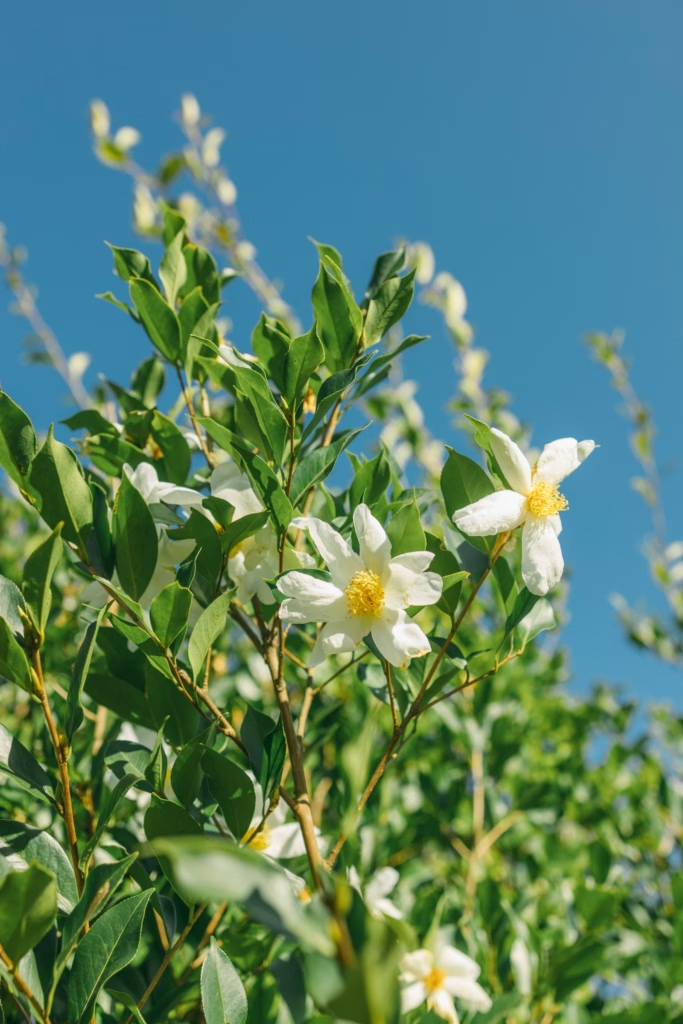
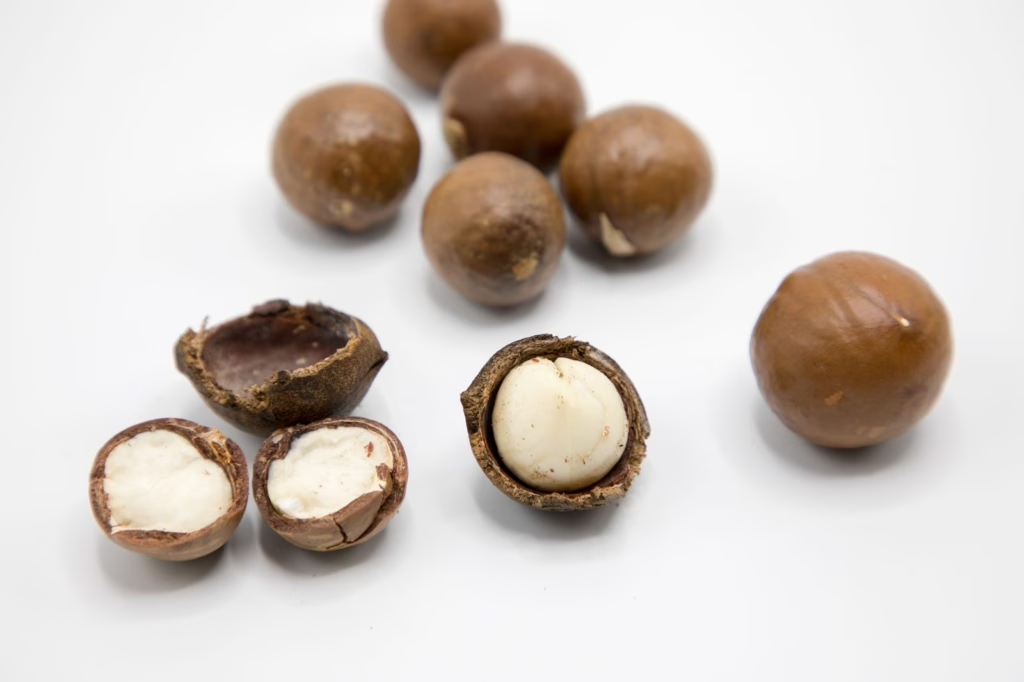
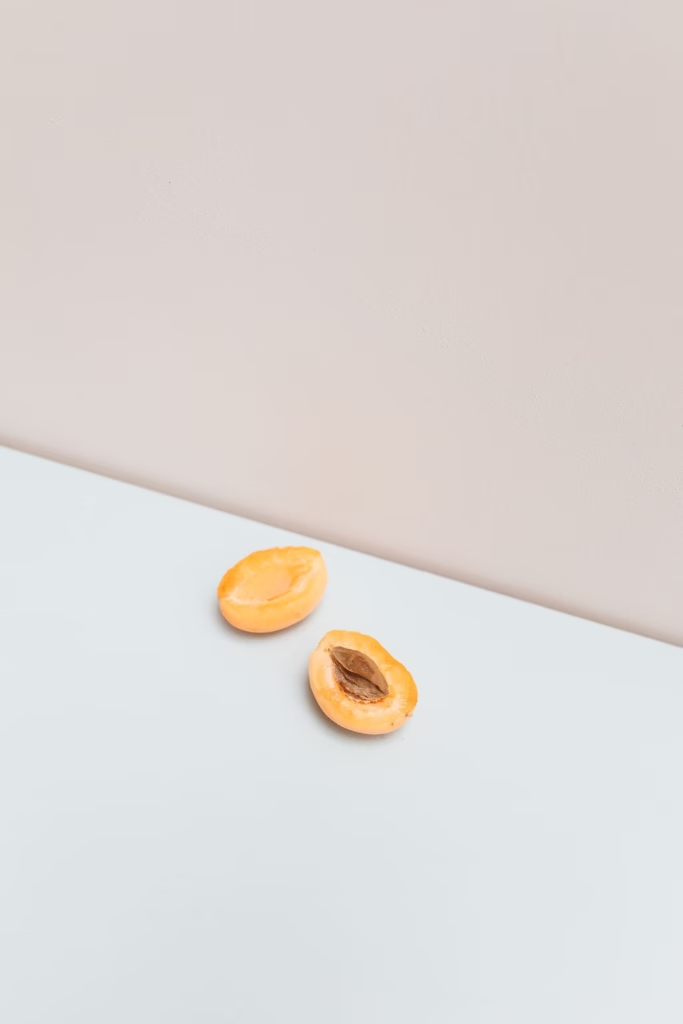
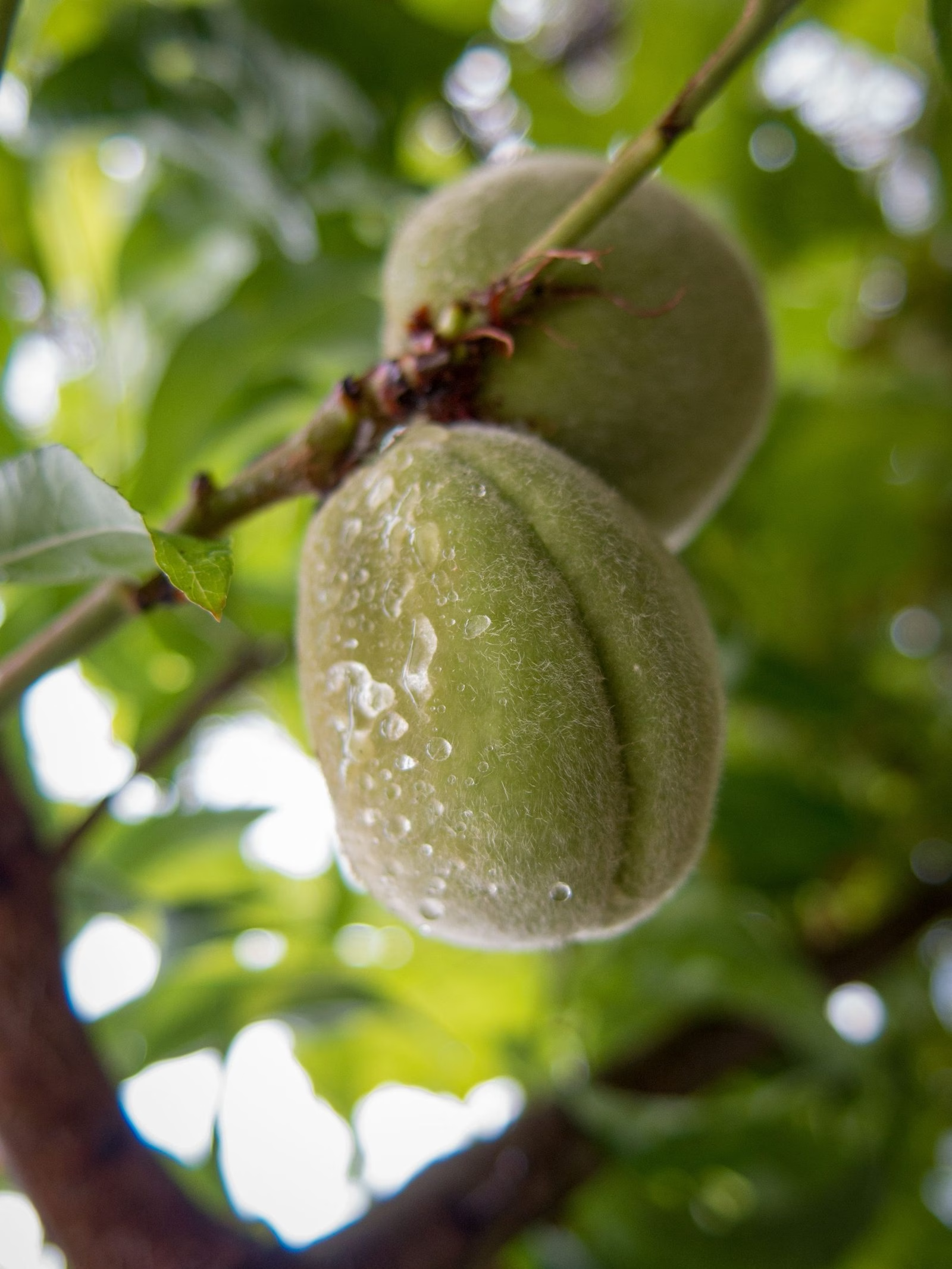
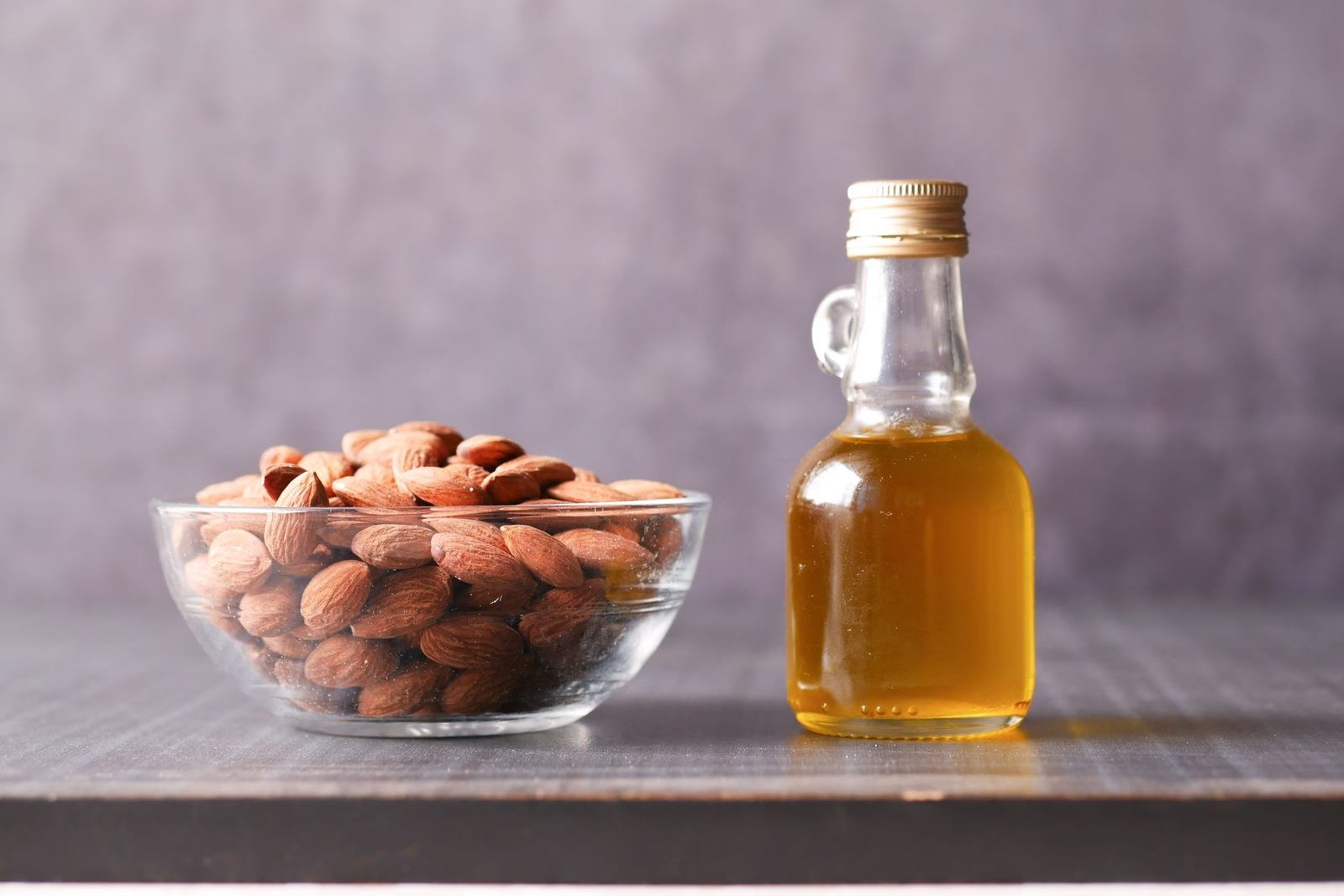
Sweet almond oil is a fixed vegetable oil extracted from the seed of the almond tree, which botanists record as Prunus amygdalus Batsch. On labels the tree appears more often as Prunus dulcis (Mill.) D.A.Webb, the synonym behind the INCI name Prunus Amygdalus Dulcis Oil. Older texts still use Amygdalus communis L. The species belongs to the Rosaceae family, alongside apricot, cherry and peach, which explains the chemical kinship among the oils of these seeds. What we call an almond is the seed held inside the stone of a green fruit that dries out and splits open as it ripens. Because it is a fixed oil, it does not evaporate the way an essential oil does. It stays liquid at room temperature and is made almost entirely of triglycerides, molecules in which three fatty acids are bound to one glycerol.
Origin and History of the Plant
The Plant and Where It Grows
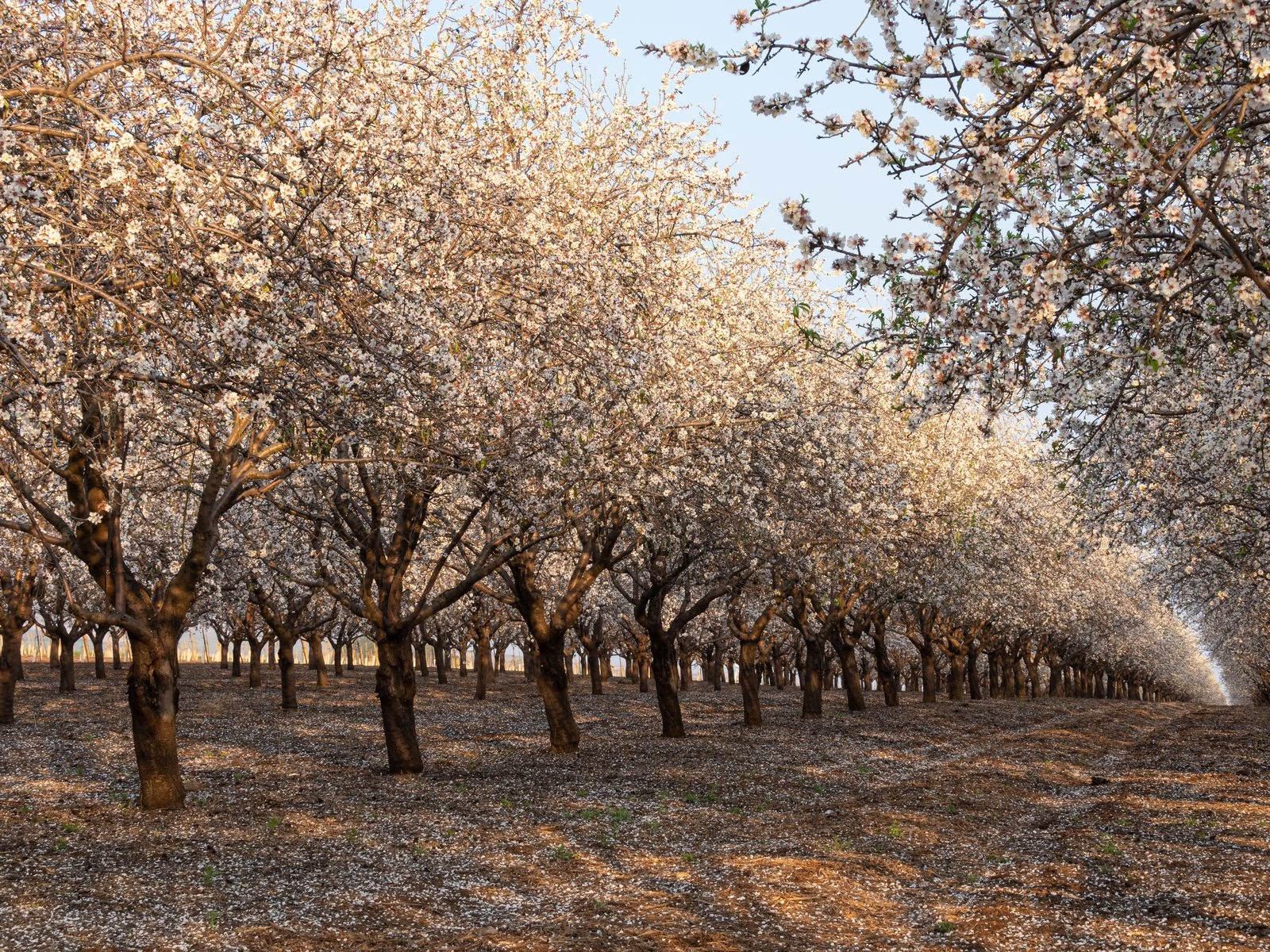
The almond tree descends from wild populations in Central and Western Asia whose seeds were bitter and toxic in quantity. The bitterness comes from amygdalin, a compound that releases benzaldehyde and cyanide when the seed is crushed. In 2019 an international team described the genetic origin of the sweet taste in the journal Science. A single mutation in the bHLH2 gene switches off two enzymes in the amygdalin pathway, and early farmers selected precisely that variant. Bitter almond still exists as Prunus amygdalus var. amara (DC.) Focke, which means the same species in another variety. The tree prefers a Mediterranean climate, with hot, dry summers and mild winters, and most cultivars rely on bees for cross-pollination. Today the United States, California above all, dominates world production, while Spain and Australia keep significant plantings.
Historical Records
Almonds appear in very old texts from the Middle East. In chapter 43 of Genesis they are among "the best products of the land" that Jacob sends as a gift to Egypt. In chapter 17 of the Book of Numbers, Aaron's staff blossoms and bears almonds overnight. According to a 2010 review by Ahmad, the oil has been used for millennia in Ayurvedic, Chinese and Unani medicine. In Brazil it became a fixture of pharmacies as a popular skin product, especially during pregnancy and in child care.
How Sweet Almond Oil Is Extracted
Almonds rank among the oiliest seeds there are. A 2008 Spanish study that evaluated 8 cultivars and 47 selections over two years found oil contents of 48% to 67% of kernel dry weight. Before extraction, producers shell and dry the almonds, since moisture interferes with pressing and speeds up rancidity.
In cold pressing, a screw or hydraulic press squeezes the kernels without external heat, and the oil is only filtered afterward. The result is virgin oil, straw yellow in color, with a soft nutty aroma and more of its vitamin E intact. A 2016 Spanish review points to pressing as the best balance between quality and cost. Solvent extraction gives higher yields but delivers the poorest oil, which can no longer be sold as virgin. Supercritical CO2 produces an excellent oil, though one too expensive for most of the market.
Refining involves neutralization, bleaching and deodorization. At the end the oil is nearly colorless and odorless, more stable and more consistent from batch to batch, even though it loses part of its tocopherols and sterols. Much of the almond oil sold in pharmacies is of this kind. None of these methods has anything to do with bitter almond essential oil, which comes from steam distillation and is covered in the safety section.
Composition and Properties of Sweet Almond Oil
Fatty Acid Profile
Oleic acid, a monounsaturated omega-9 fat, dominates the composition. Next comes linoleic acid, a polyunsaturated omega-6 that the skin uses to build part of its barrier lipids. Since the proportions shift with cultivar and climate, it makes more sense to speak of ranges than of fixed numbers.
| Fatty acid | Type | Typical range (%) |
|---|---|---|
| Oleic (C18:1, omega-9) | Monounsaturated | 63 to 78 |
| Linoleic (C18:2, omega-6) | Polyunsaturated | 12 to 27 |
| Palmitic (C16:0) | Saturated | about 5 to 7 |
| Stearic (C18:0) | Saturated | about 1 to 3 |
| Palmitoleic (C16:1) | Monounsaturated | below 1 |
Unsaponifiable Fraction and Antioxidants
The unsaponifiable fraction is the small part of the oil that does not turn into soap when it reacts with a base, and it is where the minor compounds of interest are found. The main antioxidant is alpha-tocopherol, the most active form of vitamin E. Its content varies widely across cultivars, harvests and extraction methods, and it drops with refining. Among the phytosterols, beta-sitosterol accounts for the great majority of the total, alongside campesterol and stigmasterol. There is also some squalene, in modest and variable amounts. Data on polyphenols in the oil are scarce, because these compounds concentrate in the brown skin of the seed.
The predominance of monounsaturated fats explains why the oil stays liquid even on cold days. With little polyunsaturated fat, it oxidizes more slowly than sunflower or grapeseed oil. Its comedogenicity is listed as low to moderate, but on unstandardized scales that are no substitute for watching how your own skin responds.
What Science Has Shown About Sweet Almond Oil
For all its fame, clinical research on sweet almond oil is limited. A 2010 review acknowledged that the benefits attributed to it for scars and skin rejuvenation rest mostly on anecdotal reports and clinical experience rather than on controlled studies.
Stretch marks in pregnancy are the area with the most data. In a triple-blind Iranian trial with 200 first-time mothers, published in 2016, the women applied 1 mL of oil to the abdomen twice a day, without massage, for 20 weeks. Stretch marks appeared in 59.2% of the sweet almond oil group and in 82% of controls. Sesame oil, however, performed better in the same study, which comes from a single research team. Another trial, from 2018, with 160 nulliparous women, suggests that a cream containing the oil reduced itching and the progression of stretch marks compared with the base cream. Even so, the number and diameter of the marks ended up similar between groups.
A 2012 Turkish study with 141 first-time mothers and a quasi-experimental design found stretch marks in 20% of the women who massaged with oil, against 41.2% of controls. The effect, though, appeared only in the massage group, and the product used was described as bitter almond oil. In mice, applying the oil beforehand attenuated damage from UVB radiation, an animal-model finding that does not amount to sun protection in people. Finally, a 2017 review points out that oils very rich in oleic acid can increase the permeability of the skin barrier, which calls for caution on skin with dermatitis.
Traditional Uses and Ethnobotanical Record
In Unani medicine, still practiced in Pakistan and India, and in Ayurveda, almond oil is part of the care of dry skin and the scalp, as the 2010 review summarizes. Some of these traditions also take it by mouth as a mild laxative, a traditional record of use without clinical confirmation. In Brazil and Portugal, families passed down the habit of massaging a pregnant woman's belly to prevent stretch marks. The same bottle served for baby massage and for loosening cradle cap from a newborn's scalp. Another folk practice is putting one or two drops in the ear to soften earwax, also a traditional record of use without clinical confirmation. With pain, discharge or a suspected perforated eardrum, this should never be done without a medical evaluation. Such customs explain the product's popularity, but they do not prove it works.
Sweet Almond Oil for Skin
Hydration and Skin Barrier
The oil acts mainly as an emollient, filling the gaps between cells in the outermost layer of skin and leaving the surface smooth and soft. It also forms a light film that cuts down part of the water loss, an effect that is clearest on skin still damp from the shower. The CIR, the American panel that assesses cosmetic ingredients, concluded that the oil is safe at the concentrations used in cosmetics. The caveat comes from its chemical profile: because oleic acid dominates, people with atopic dermatitis may do better with oils richer in linoleic acid. For dry skin without an underlying condition, on the other hand, the oil tends to work well on the body, especially on elbows, knees, shins and heels, areas with fewer sebaceous glands. On the face, its medium texture suits dry and mature skin, while oily skin types tend to find it heavy.
Stretch Marks and Scars
The trials in pregnant women suggest that daily use may reduce itching and perhaps the appearance of new stretch marks. Nothing indicates, however, that the oil erases old stretch marks that have already turned white. For scars, the evidence remains anecdotal.
Nails and Cuticles
A drop massaged into the base of each nail softens dry cuticles and cuts down on hangnails. There are no clinical studies on this use, although the emollient mechanism is the same as on the skin.
Sweet Almond Oil for Hair
On the hair shaft, sweet almond oil seems to work mainly on the outside. No penetration studies have been done with this species, but by analogy with oils of similar composition, its long-chain triglycerides tend to sit on the cuticle, the layer of scales that covers the strand, rather than reaching the cortex. So the oil lubricates the scales, reduces friction and tames static, which makes combing easier and brings out shine. Claims such as "strengthens the roots" or "makes hair grow" have no basis, since no robust clinical study has tested the oil against hair loss or for hair growth. Nor does it repair split ends; it only seals them until the next wash. On fine hair, too much weighs the strands down and leaves them greasy, while curly, coily and porous hair tolerates larger amounts. As a pre-shampoo treatment, the oil may reduce the dryness caused by harsh shampoos, a reasonable cosmetic benefit, though one inferred from similar oils.
The same care applies to the scalp. People with dandruff or seborrheic dermatitis may prefer not to apply oleic-rich oils at the roots, since Malassezia yeast, associated with these conditions, feeds on lipids at the skin surface. For anyone without that problem, a light massage before washing is usually well tolerated and pleasant, even if its effect on the hair is purely cosmetic.
Culinary Use
Sweet almond oil is edible, and almonds have been part of the human diet for thousands of years. The virgin version is best used raw, in salads, dressings and as a finishing oil, because its delicate nutty aroma fades with heat. The refined version handles heating better and turns up in baking and pastry work. Nutritionally, the oil follows the pattern of fats rich in oleic acid, such as olive oil. Still, not every pharmacy bottle is labeled for consumption, so buy food-grade oil for cooking. Anyone with a tree nut allergy should avoid it in food as well.
How to Use Sweet Almond Oil in Practice
Before the first use, do a patch test. Apply a drop to the inner forearm and watch the area for 24 to 48 hours. If redness, itching or swelling appears, do not use the product. Once it passes the test, the amounts below make a good starting point.
- Body: 2 to 3 mL right after a shower, on skin that is still damp, with extra attention to elbows, knees and shins.
- Cuticles: 1 drop per nail, massaged in at night.
- Face: 2 or 3 drops warmed between the palms and pressed onto clean skin, preferably at night.
- Hair: 2 to 4 drops on dry ends, or 10 to 15 mL along the lengths to the ends as a pre-shampoo treatment, left on for 30 minutes.
For everyday use, three simple home blends cover most needs.
- Bath oil for dry skin: 30 mL of sweet almond oil with 10 mL of jojoba oil, in a dark bottle.
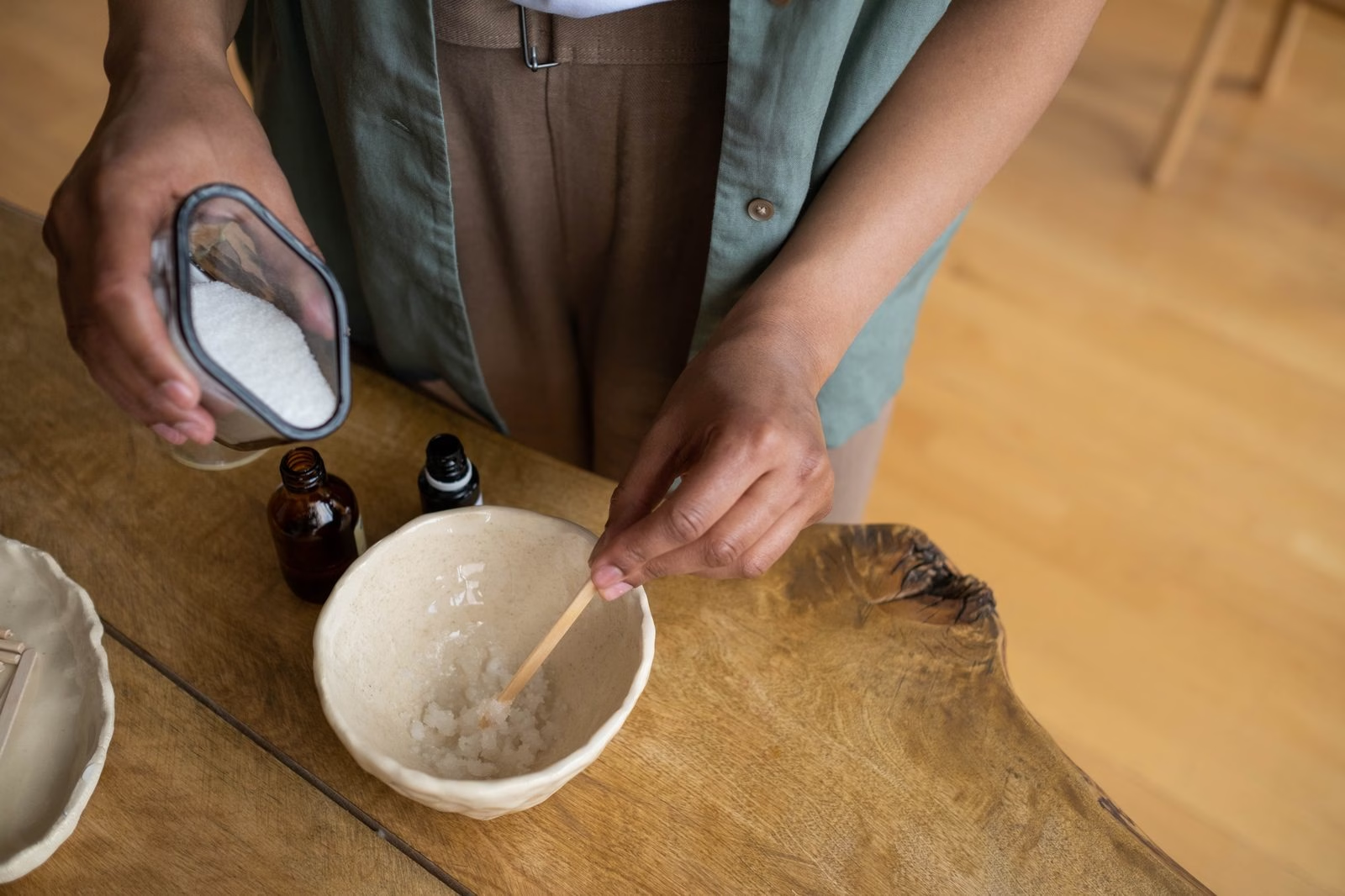
- Body scrub: 2 tablespoons of granulated sugar with 1 tablespoon (15 mL) of oil, mixed fresh each time.
- Pre-shampoo hair treatment: 1 tablespoon of oil with 2 tablespoons of conditioner, left on for 20 minutes before shampooing.
To store it, keep the bottle tightly closed, away from light and heat, and respect the date on the label. In hot climates the refrigerator extends the freshness of the virgin version, although it is not required.
How to Choose a Quality Sweet Almond Oil
The first step is to check the INCI, the standardized list of cosmetic ingredients. A pure oil lists only Prunus Amygdalus Dulcis Oil, sometimes with tocopherol as an antioxidant. If the label includes mineral oil (Paraffinum Liquidum), fragrance or other vegetable oils, the product is a blend, even if almond gets top billing on the front.
Packaging matters too. Amber glass or opaque plastic shields the oil from light, and smaller bottles spare it months of contact with air. The words "cold-pressed" or "virgin" signal the least processed oil, straw yellow with a faint nutty aroma. Refined oil, by contrast, is almost clear and odorless. Neither color points to a defect, as long as it matches what the label promises.
Seals such as COSMOS, Ecocert and USDA Organic certify organic origin and processing rules, but they say nothing about efficacy. One possible risk is adulteration with cheaper oils of similar composition, such as apricot kernel oil, which is hard to detect at home. For that reason, favor brands that disclose batch, origin and a lab report. A smell of paint, old putty or stale nuts means the oil has gone rancid, and in that case the bottle goes in the trash.
Sweet Almond Oil Compared With Similar Oils
The table sets sweet almond oil beside other oils used for the same purposes. Prices are relative to one another, not market values.
| Oil | Dominant component | Texture and absorption | Best use | Relative price |
|---|---|---|---|---|
| Sweet almond | Oleic acid | Medium, good slip | Massage, body, dry skin | Low |
| Apricot kernel | Oleic acid | Light, fast | Face, those who dislike a heavy feel | Medium |
| Argan | Balanced oleic and linoleic | Medium, dry to the touch | Face, hair ends | High |
| Grapeseed | Linoleic acid | Very light, dry | Oily skin, facial blends | Low to medium |
| Jojoba | Wax esters, not triglycerides | Light, fast | Face, oily skin, scalp | Medium to high |
In practice, sweet almond oil wins on cost and slip, which make it a favorite for massage. For oily or acne-prone skin, jojoba and grapeseed tend to feel more comfortable. Apricot kernel oil is its closest relative, with an almost identical fatty acid profile and a slightly lighter feel, so many people use the two interchangeably. Argan, the priciest of the group, makes sense when the goal is a facial oil with a dry finish.
Safety, Allergies and Contraindications of Sweet Almond Oil
Caution: sweet almond oil comes from the sweet variety of Prunus amygdalus and contains no relevant amount of amygdalin. Do not confuse it with bitter almond essential oil, a product distilled from the amara variety, which concentrates benzaldehyde and can release cyanide; this essential oil is not suitable for home cosmetic use. People allergic to almonds or other tree nuts should avoid sweet almond oil on the skin, especially on broken or eczematous areas, and should never use it on babies without professional guidance.
This distinction confuses many consumers. Whereas the fixed oil of sweet almonds is a vegetable fat, bitter almond essential oil comes from a different process, in which ground bitter seeds soak in water before going on to steam distillation. During maceration the amygdalin breaks down into benzaldehyde and hydrocyanic acid, and the distillate must be purified before it can serve as a flavoring. Indeed, the FDA list of flavorings generally recognized as safe, under regulation 21 CFR 182.20, only admits bitter almond free from prussic acid, another name for hydrocyanic acid.
Although refining removes much of the protein, the oil can retain traces capable of triggering a reaction in sensitized people. A French case report from 2000 describes a five-month-old girl with atopic dermatitis who developed an almond allergy. She had received the oil on her cheeks and buttocks for two months and had never eaten almonds. The case reinforces the advice against using nut oils on babies' damaged skin.
In pregnancy, the trials applied the oil only to the skin, and safety was not what they set out to measure. Topical use is traditional and considered low risk, but it is worth bringing up at a prenatal visit. There are no reliable data on pets, and no drug interactions are known for topical use.
Sustainability and Social Impact
Since California accounts for most of the world's production, the dilemmas of almond oil run through it. The first is water, because irrigated orchards in a region prone to long droughts have become a subject of debate over aquifer use. The second involves bees. According to the USDA Economic Research Service, almonds accounted for 61% of honey bee colony rentals in the United States in 2016. That same year they took 82% of the country's pollination spending. To meet the late-winter bloom, colonies are trucked in from other states, and this mass movement raises concern over stress and the spread of disease among bees. By contrast, traditional Spanish cultivation relies heavily on dry-farmed orchards with no irrigation. The press cake becomes flour or animal feed, and the shells serve as livestock bedding and biomass. For buyers, choosing traceable origins helps reward more responsible supply chains.
Frequently Asked Questions
Does Sweet Almond Oil Clog Pores?
It is usually rated low to moderate in comedogenicity, but those ratings come from unstandardized scales. In practice, everything depends on your skin. If you are prone to acne, you can test 1 or 2 drops at night on a small area of the face for a few weeks, or simply choose lighter oils such as jojoba.
Can I Use Sweet Almond Oil on Babies?
Only with a pediatrician's guidance. There is a documented case of a baby with atopic dermatitis who became sensitized to almond after months of oil on the skin, without ever having eaten almonds. On skin with eczema, open diaper rash or a family history of allergy, the risk goes up, and a professional can suggest safer alternatives.
Does Sweet Almond Oil Prevent Stretch Marks in Pregnancy?
A few small trials, most of them from Iran, suggest less itching and fewer stretch marks compared with no treatment. Large independent studies to confirm this are lacking, and genetics play a big role. It is an inexpensive moisturizing option, not a guarantee.
What Is the Difference Between Sweet Almond Oil and Bitter Almond Oil?
The first is a fixed oil, pressed from sweet almonds and used in cosmetics. The second is usually the essential oil distilled from bitter almonds, which concentrates benzaldehyde and may contain cyanide unless purified. Both come from the same species, in different varieties, and the essential oil is not suitable for home use on the skin.
Does Sweet Almond Oil Make Hair Grow?
No clinical study has shown that effect. The oil lubricates the cuticle, reduces friction and improves shine and detangling, which cuts down on breakage when combing. Over time this can give the impression of longer hair, but without any stimulus to the root or follicle.
Does Sweet Almond Oil Need to Be Refrigerated?
It is not required, because the oil is low in polyunsaturated fat and oxidizes slowly. In hot places, though, the refrigerator keeps the virgin version fresh for longer. What matters most is keeping the bottle closed, dark and away from heat.
Notice: this content is for informational purposes and does not replace professional medical advice. Consult a physician or herbal practitioner before using medicinal plants, especially during pregnancy, breastfeeding, or alongside medication.
How to cite this article
NATUGREENS. Sweet Almond Oil: A Complete Guide to Uses and Care. Natugreens, 9 Nov. 2026. Disponível em: https://natugreens.com/sweet-almond-oil/. Accessed: Nov. 9, 2026.
Natugreens. (2026). Sweet Almond Oil: A Complete Guide to Uses and Care. Natugreens. https://natugreens.com/sweet-almond-oil/
References
View All 13 Cited References
Peer-Reviewed Scientific Studies (11)
- DOI2010 Ahmad Z. The uses and properties of almond oil. Complementary Therapies in Clinical Practice. 2010.
- DOI2017 Burnett CL, et al. Safety Assessment of Plant-Derived Fatty Acid Oils. International Journal of Toxicology. 2017.
- PMC2000 Guillet G, Guillet MH. Percutaneous sensitization to almond oil in infancy and study of ointments in 27 children with food allergy. Allergie et Immunologie (Paris). 2000.
- DOI2018 Hajhashemi M, et al. The effect of Aloe vera gel and sweet almond oil on striae gravidarum in nulliparous women. Journal of Maternal-Fetal and Neonatal Medicine. 2018.
- DOI2008 Kodad O, Socias i Company R. Variability of oil content and of major fatty acid composition in almond (Prunus amygdalus Batsch) and its relationship with kernel quality. Journal of Agricultural and Food Chemistry. 2008.
- DOI2017 Lin TK, et al. Anti-Inflammatory and Skin Barrier Repair Effects of Topical Application of Some Plant Oils. International Journal of Molecular Sciences. 2017.
- DOI2016 Malakouti J, et al. Sesame, Sweet Almond and Sesame and Sweet Almond Oil for the Prevention of Striae in Primiparous Females: A Triple-Blind Randomized Controlled Trial. Iranian Red Crescent Medical Journal. 2016.
- DOI2016 Roncero JM, et al. Virgin almond oil: Extraction methods and composition. Grasas y Aceites. 2016.
- DOI2019 Sánchez-Pérez R, et al. Mutation of a bHLH transcription factor allowed almond domestication. Science. 2019.
- DOI2007 Sultana Y, et al. Effect of pre-treatment of almond oil on ultraviolet B-induced cutaneous photoaging in mice. Journal of Cosmetic Dermatology. 2007.
- DOI2012 Timur Taşhan S, Kafkasli A. The effect of bitter almond oil and massaging on striae gravidarum in primiparaous women. Journal of Clinical Nursing. 2012.
Institutional Sources (2)
- GOV2018 Ferrier P. Driven by Almonds, Pollination Services Now Exceed Honey as a Source of Beekeeper Revenue. USDA Economic Research Service, Amber Waves. 2018.
- GOV U.S. Food and Drug Administration. 21 CFR 182.20: Essential oils, oleoresins (solvent-free), and natural extractives (including distillates). Electronic Code of Federal Regulations.