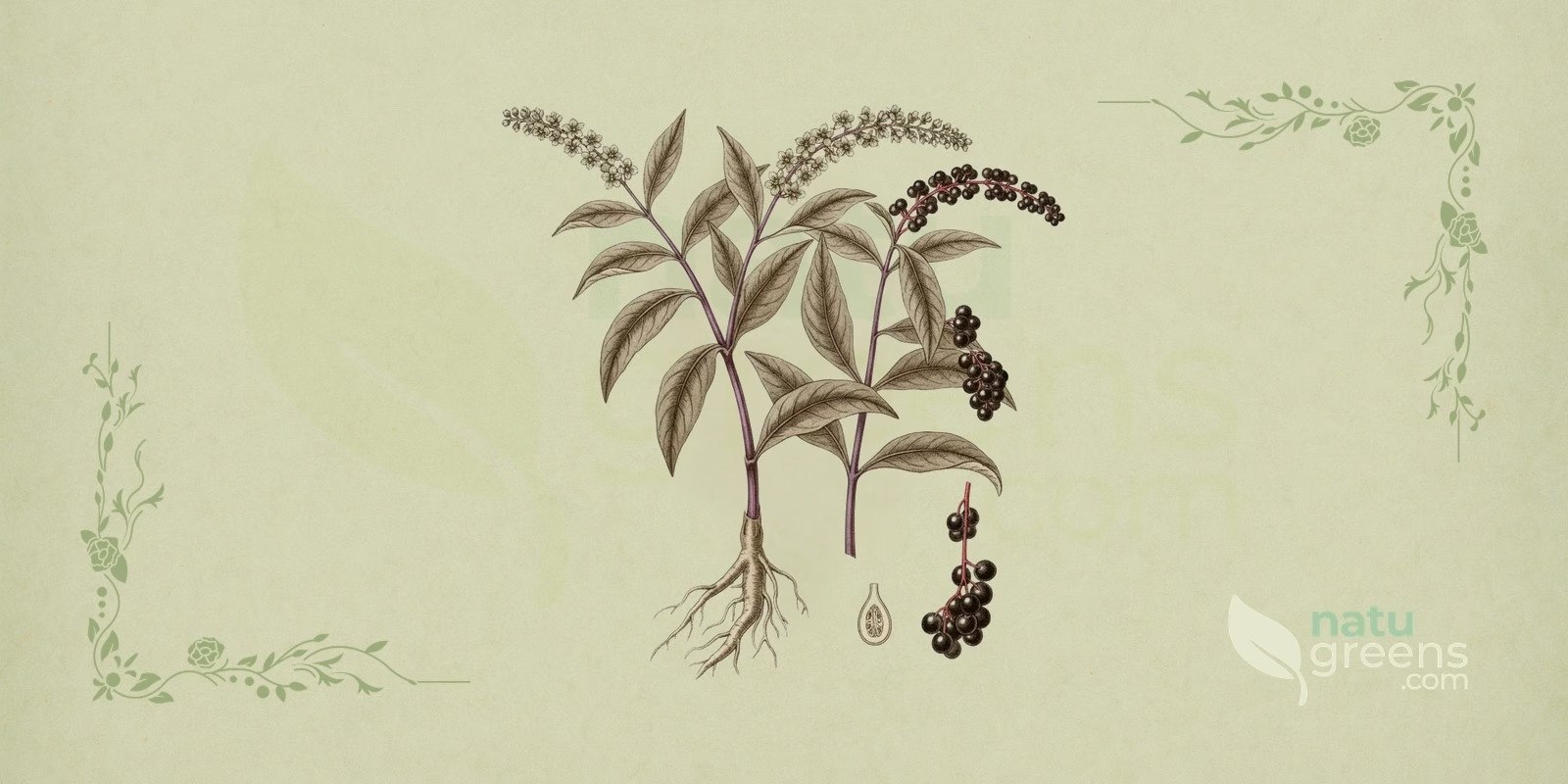
Phytolacca americana L. / Pokeweed, commonly known as pokeweed, American pokeweed, or inkberry, is a perennial herbaceous plant in the Phytolaccaceae family, described by Carl Linnaeus in 1753. Native to North America, this robust species has spread to many parts of the world, including Europe and Asia, and is frequently regarded as an invasive plant. Despite its toxicity, pokeweed has a long history of use in traditional and ethnobotanical medicine, especially among Native American communities and in the early days of European colonization.
In herbal tradition, pokeweed is a plant of dualities, being both a potent remedy and a dangerous poison, since its roots, leaves, and berries contain a complex mixture of bioactive compounds that give it anti-inflammatory, antiviral, and immunostimulant properties. Modern scientific research has been exploring these compounds, such as Pokeweed Antiviral Protein (PAP) and Americanin A, revealing significant therapeutic potential that validates some of its historical uses, while also underscoring the need for extremely careful handling and preparation.
Popular and International Names of Pokeweed
- English: American pokeweed, inkberry, poke sallet, pokeberry, pokeweed.
- Spanish: fitolaca, hierba carmín, uva de américa.
- Portuguese: baga-moira, erva-dos-cachos-da-índia, erva-dos-cântaros, fitolaca, tintureira, uva-americana, vinagreira.
- French: phytolaque d’Amérique, raisin d’Amérique, teinturier.
- Italian: cremesina, fitolacca, uva turca.
- German: Amerikanische Kermesbeere, Gewöhnliche Kermesbeere.
Botanical Synonyms of Phytolacca americana
Phytolacca decandra L. is the botanical synonym most commonly found for Phytolacca americana L. in the historical literature and in some regions. Although Phytolacca americana L. is the name accepted by most botanical authorities, including The Plant List and World Flora Online, the designation Phytolacca decandra is still used in older or regional contexts. Other synonyms include Phytolacca rigida Small and Phytolacca vulgaris Mill.
Botanical Family: Phytolaccaceae
The Phytolaccaceae family is made up of about 18 genera and 65 species, predominantly distributed across tropical and subtropical regions of the Americas, Africa, and Asia. It is characterized by herbaceous plants, shrubs, or small trees, often with succulent stems and tuberous roots. Members of this family are known for their betalain pigments, which give stems and fruit a reddish coloration, and for producing triterpenoid saponins, responsible for many of their medicinal properties as well as their toxicity.
Pokeweed shares morphological traits typical of the family, such as raceme inflorescences and berry fruit. The chemical diversity within Phytolaccaceae has been the subject of intense research, especially given the pharmacological potential of its compounds, which include alkaloids, flavonoids, and, notably, the saponins that act as anti-inflammatory and antiviral agents. The presence of these compounds underscores the family’s importance in both traditional medicine and modern phytochemical research.
Parts of Pokeweed Used
- Berries (fruit)
- Roots
- Seeds
- Young leaves
Ethnobotanical and Traditional Uses
- Emetic (induces vomiting)
- Emmenagogue (menstrual stimulant)
- Laxative and purgative
- Lymphatic support (external use)
- Natural dye (from the berries)
- Poultices for skin conditions
- Relief of rheumatic and arthritic pain
- Throat problems and tonsillitis
- Treatment of infections
Therapeutic Properties of Pokeweed
- Analgesic (traditional use to relieve pain)
- Anti-inflammatory (effect studied in reducing inflammation)
- Antifungal (activity studied against fungi)
- Antiparasitic (activity studied against parasites)
- Antiproliferative (activity observed in laboratory studies, without clinical proof)
- Antiviral (activity studied against viruses)
- Depurative (helps eliminate toxins)
- Emmenagogue (effect studied on menstrual flow)
- Immunomodulatory (effect studied on the immune system)
- Laxative (effect studied on bowel movement)
- Purgative (cleanses the bowel)
Detailed Phytochemical Profile of Pokeweed
- Alpha-spinasterol
- Americanin A
- Betanin
- Caffeic acid
- Cochliophilin A
- Esculentic acid
- Flavonoids
- Jaligonic acid
- Lectins (Pokeweed Antiviral Protein – PAP)
- Oleanolic acid
- Phytolaccagenin
- Phytosterols
- Pokeberrygenin
- Pokeweed saponins (A, B, D, E, G)
- Triterpenoid saponins
Preparation and Administration Forms of Pokeweed
- Compresses
- Dry extract
- Fluid extract
- Infusion (from young leaves, after detoxification by repeated boiling)
- Massage oil (external use, with extracts)
- Ointments
- Poultice (from young leaves, external use)
- Root decoction (for professional use only, never for self-medication)
- Root tincture (for professional use only, extremely low doses)
Synergy with Other Medicinal Plants
Lymphatic Support and Anti-Inflammatory Action
Pokeweed, owing to its lymphatic-support and anti-inflammatory properties, can be used in synergy with plants such as calendula (Calendula officinalis) and red clover (Trifolium pratense), since calendula is known for its anti-inflammatory and healing actions, while red clover is a lymphatic depurative. This combination of plants may enhance the effects in reducing glandular swelling and inflammation and in supporting detoxification of the lymphatic system, especially in topical applications such as ointments or massage oils. However, pokeweed’s toxicity requires that any formulation be prepared by experienced professionals with controlled dosages.
To enhance pokeweed’s antiviral and immunomodulatory action, synergy with echinacea (Echinacea purpurea) and elderberry (Sambucus nigra) may be considered, given that echinacea is a well-known immune stimulant and elderberry has antiviral properties. Although pokeweed contains Pokeweed Antiviral Protein (PAP), which has demonstrated antiviral activity in laboratory studies, its toxicity limits internal use. This synergy is therefore more theoretical or applicable to research contexts, or to extremely diluted homeopathic preparations, where safety is ensured by the dilution.
Relief of Joint Pain and Rheumatism
For joint pain and rheumatism, pokeweed has traditionally been combined with plants such as white willow (Salix alba), owing to their analgesic and anti-inflammatory properties, since white willow contains salicin, a precursor of salicylic acid, which complements the anti-inflammatory action of pokeweed’s triterpenes and saponins. This synergy, while promising, requires strict control of pokeweed’s dosage and form of administration, preferably in topical preparations or homeopathic doses, to avoid serious adverse effects; people taking anticoagulants should exercise extra caution, given the bleeding risk associated with both salicylates and saponins.
Recipes and Usage Protocols of Pokeweed
Poultice for Skin Inflammation
Ingredients: Young pokeweed leaves (harvested in spring), hot water.
Preparation: Collect young pokeweed leaves, wash them carefully, and boil them in water for 10 minutes. Discard the water and repeat the process at least once more to reduce toxicity. Mash the cooked leaves into a paste and apply the warm paste to the affected area for skin inflammation, such as insect bites or minor irritation, covering with a clean cloth. Leave on for 15-20 minutes and remove. Do not apply to open wounds or broken skin. This method is for external use only and must be carried out with caution.
Massage Oil for Lymphatic Support
Ingredients: 1 part pokeweed oil extract (prepared by macerating dried root in vegetable oil for several weeks), 5 parts base vegetable oil (sweet almond, jojoba).
Preparation: Mix the pokeweed oil extract with the base vegetable oil. This oil is traditionally used for gentle massage over areas with swollen lymph nodes or for relief of muscle and joint discomfort, and it is essential that the extract be prepared from dried root in safe proportions and that the finished product be tested to confirm the absence of significant toxicity. Application must be external and limited to intact skin.
Root Tincture for Homeopathic Use (Diluted)
Ingredients: Fresh pokeweed root, 70% alcohol.
Preparation: Preparing pokeweed tinctures for internal use is complex and must be carried out only by qualified professionals, due to the high toxicity of the root. In homeopathy, the mother tincture is highly diluted to produce remedies such as Phytolacca decandra 6C or 30C, traditionally used for conditions such as tonsillitis, sore throat, and glandular problems, always under the prescription of a qualified homeopath. Direct use of the undiluted tincture is dangerous and absolutely contraindicated for self-medication, including in pregnant women, nursing mothers, and children.
The preparations above follow traditional records and do not replace professional guidance. Before any internal use, check the contraindications and interactions described in this article.
Associated Therapies
Herbal Medicine (External Use and Cautious Preparation)
In herbal medicine, pokeweed is used mainly in topical preparations for inflammatory skin conditions, arthritis, and rheumatism, owing to its anti-inflammatory and analgesic properties, while internal use is restricted to very low doses under strict professional supervision, generally in standardized extracts that guarantee safety and correct dosing of the active compounds. Emphasis falls on caution, given its toxicity.
Homeopathy
Phytolacca decandra is a remedy frequently indicated in homeopathy for glandular inflammation, especially of the throat and tonsils, with pain radiating to the ears, and is also used for mastitis, rheumatism, and muscle pain. The homeopathic approach uses extremely diluted doses of the plant, which drastically reduces exposure to the original toxic compounds, though the prescription should always be made by a qualified homeopath who evaluates the patient’s individual symptoms.
Contraindications and Side Effects of Pokeweed
General Toxicity and Contraindications
All parts of mature Phytolacca americana, root, seeds, ripe berries, and mature leaves, are toxic, with the root being the most dangerous, followed by mature leaves and stems and then the berries. Ingesting any of these parts, especially raw or improperly prepared, can cause severe gastrointestinal poisoning, with nausea, vomiting, diarrhea, and cramps, as well as hematological effects and, in severe cases, seizures or death. There are documented cases of severe, including fatal, poisoning, generally associated with confusing the root with that of other plants or with improper preparation of pokeweed’s parts. It is strictly and categorically contraindicated for pregnant or nursing women, children, and individuals with heart, kidney, or liver disease, and the root, seeds, and ripe berries must never be consumed, under any circumstances. People allergic to plants in the Phytolaccaceae family should avoid any contact.
Poisoning Symptoms
Poisoning symptoms may include a burning sensation in the mouth and throat, excessive salivation, nausea, intense vomiting, abdominal cramps, bloody diarrhea, dizziness, weakness, hematological changes, seizures, and, in severe cases, respiratory depression and death. The toxicity is mainly due to the presence of triterpenoid saponins and lectins. In the event of accidental ingestion, seek emergency medical attention immediately.
Drug Interactions
Because of its saponin content, pokeweed can interact with medications, particularly anticoagulants, intensifying their effects and increasing the risk of hemorrhage, and it may also interfere with heart or blood pressure medications. Concurrent use with other sedatives or central nervous system depressants can intensify drowsiness. Always consult a healthcare professional before using any pokeweed-based preparation, especially if taking other medications.
Historical Notes and Interesting Facts
Survival Food
Despite its toxicity, young pokeweed shoots were historically eaten as food in some regions of North America, especially the southern United States, where the dish is known as “poke sallet” or “poke salad.” This culinary tradition requires a rigorous process of repeated boiling, changing the water at each stage, to reduce the toxins, and even so, some residual risk remains; the root, seeds, and ripe berries must never be consumed, under any circumstances. This practice highlights the resourcefulness and botanical knowledge of communities that learned to handle a plant that is at once useful and dangerous.
Natural Dye
Pokeweed berries produce an intense reddish-purple pigment that was historically used to make dyes and inks. Native Americans used it to dye fabrics and for body paint, and European settlers used it to color wines and other products. This trait gave rise to many of its common names, including “inkberry” and “tintureira.”
A Plant of Two Faces
Pokeweed is a classic example of a plant with a dual nature: it is both a historical source of food, when prepared correctly and with extreme caution, and of traditional medicine, and a potent, and in some circumstances fatal, poison. This duality has fascinated botanists and ethnobotanists for centuries, highlighting the importance of deep knowledge of, and respect for, toxic plants.
Frequently Asked Questions about Pokeweed
Is Pokeweed Safe to Eat?
No. Pokeweed is a toxic plant in all its mature parts, especially the root, seeds, and ripe berries, with documented cases of severe and even fatal poisoning. In American culinary tradition, young shoots and very young leaves can only be eaten after rigorous preparation involving multiple rounds of boiling and changing the water to remove the toxins, and even then some risk remains. Consumption without this proper preparation is dangerous and can be fatal, and the root, seeds, and ripe berries must never be eaten.
How Do You Identify Pokeweed?
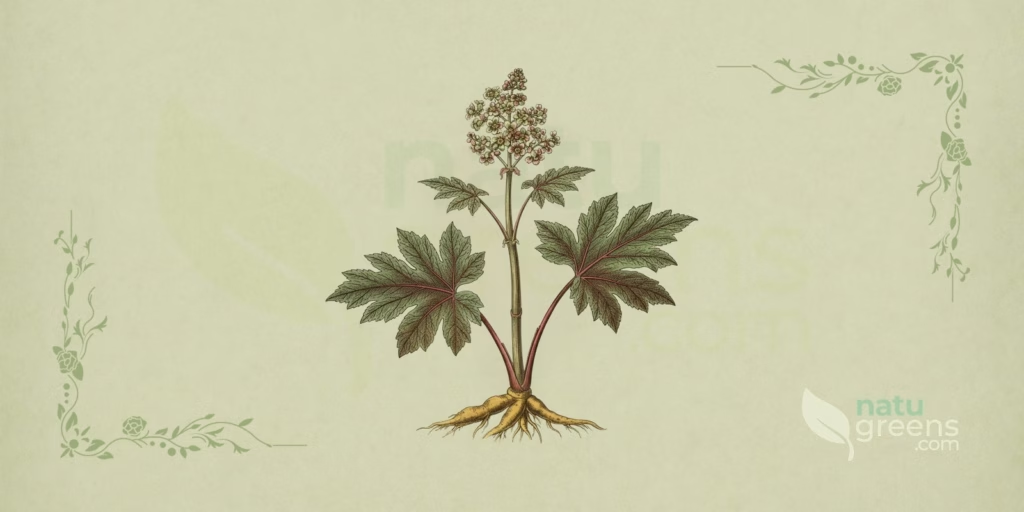
Pokeweed is a perennial herbaceous plant that can grow up to 3 meters tall, with reddish stems, large lance-shaped leaves, and clusters of berries that ripen from green to dark purple, along with a large white taproot. It is important to be certain of the identification before any interaction with the plant, since some severe poisoning cases result from confusing the root with that of other species.
Can I Use Pokeweed During Pregnancy?
No, under no circumstances. Pokeweed is strictly contraindicated during pregnancy and breastfeeding due to its emmenagogue potential, which can stimulate uterine contractions, and its general toxicity, which can be harmful to both the mother and the fetus.
What Are the Main Medicinal Uses of Pokeweed?
Traditionally, pokeweed has been used for inflammation, rheumatism, arthritis, skin problems, and as lymphatic support, always in external preparations or in very low-concentration standardized extracts. In homeopathy, it is used for inflammation of the throat and glands. Internal use of the raw plant should be avoided by anyone who is not a qualified healthcare professional, due to its toxicity.
Does Pokeweed Have Anticancer Properties?
Laboratory studies have identified compounds in pokeweed, such as Americanin A and certain saponins, with antiproliferative activity observed in isolated cancer cells. However, this research is still at an early stage, confined to the laboratory, and does not justify using the plant as a cancer treatment without medical guidance and rigorous supervision.
Notice: this content is for informational purposes and does not replace professional medical advice. Consult a physician or herbal practitioner before using medicinal plants, especially during pregnancy, breastfeeding, or alongside medication.
References and Scientific Studies
Peer-Reviewed Scientific Studies (1)
Supplementary Readings (3)
- Missouri Botanical Garden. (n.d.). Phytolacca americana. Recuperado de Plant Finder
- 2024 Forager Chef. (2024). American Pokeweed: How to Cook and Prepare Poke. Recuperado de Forager Chef
- 2015 Jung, C., et al. (2015). Antitumor Activity of Americanin A Isolated from the Seeds of Phytolacca americana. Journal of Natural Products, 78(12), 2970-2976.