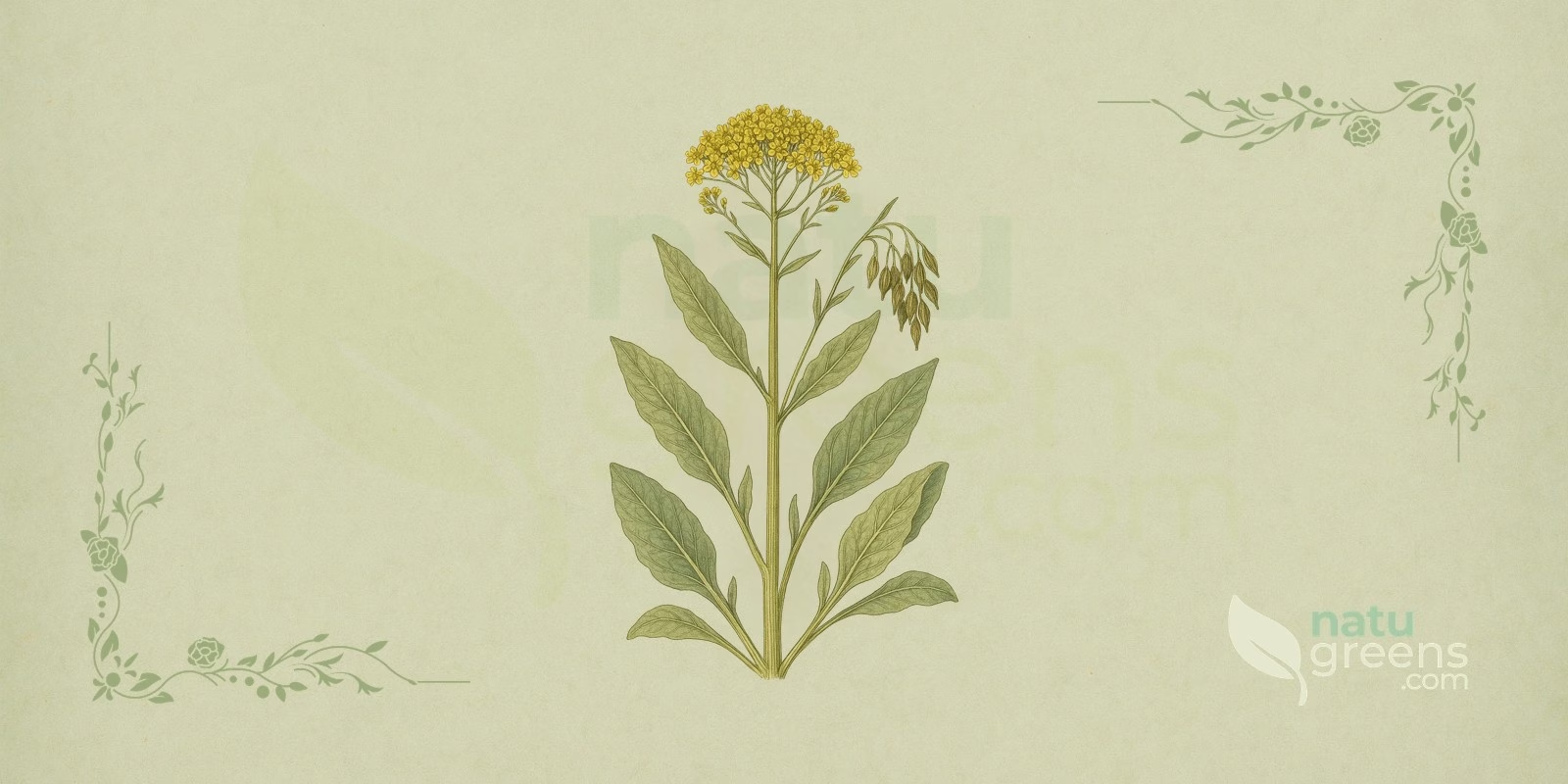
Isatis tinctoria L. / Woad, known in English as woad or dyer’s woad, is a biennial or short-lived perennial herb that belongs to the Brassicaceae family. Described by Carl Linnaeus, the species has a history spanning millennia as a source of blue dye and, more recently, has also drawn interest for its medicinal properties. Native to the steppes and desert areas of the Caucasus, Central Asia and Eastern Siberia, Isatis tinctoria has spread to many regions, including southeastern and central Europe as well as western North America.
For centuries, woad played a central role in the European economy, since it was the main source of blue pigment before imported indigo arrived on a large scale. Its importance goes beyond dyeing, however, as records of medicinal applications date back to ancient civilizations. In Traditional Chinese Medicine, for example, the root and leaves are traditionally used for fever, inflammation and viral infections, almost always as part of compound formulas. Modern research is investigating these applications and describes, mainly in laboratory and animal studies, anti-inflammatory, antimicrobial, antiviral, analgesic and antioxidant activities. Clinical data in humans, however, remain scarce and do not allow these effects to be confirmed.
Popular and International Names of Woad
The names of woad in different languages mostly reflect its long history as a dye plant, while the Chinese terms distinguish which part of the plant is used in traditional medicine.
- English: dyer’s woad, glastum, woad.
- Chinese (pinyin): Ban Lan Gen (root), Da Qing Ye (leaves), Song Lan.
- French: Guède, Pastel des teinturiers.
- German: Färberwaid, Waid.
- Italian: Guado.
- Portuguese: Isatide, Isátis, Pastel dos tintureiros.
- Spanish: Añil de pastel, Glasto, Hierba pastel, Isatide, Pastel.
Botanical Synonyms of Isatis tinctoria
Although Isatis tinctoria L. is the most widely accepted scientific name, the botanical and pharmacological literature records synonyms, which correspond to historical or regional taxonomic variations used to classify the plant over time. Knowing these names is essential for research and for accurate identification of the species, since the same material may appear under different names depending on the country and the period of publication.
- Isatis indigotica Fortune, the name under which much of the Chinese literature describes the root and leaves used in Traditional Chinese Medicine, often confused with I. tinctoria because of their similar medicinal uses.
The status of this name is still debated, as some floras treat it as a synonym of I. tinctoria, while comparative studies of chloroplast genomes are looking for criteria to separate the two forms. It is therefore worth checking the full binomial on labels, articles and monographs before comparing results.
Botanical Family: Brassicaceae
The Brassicaceae family, popularly known as the mustard or cabbage family, comprises about 3,700 species distributed across roughly 330 genera of flowering plants. Its economic importance is considerable, as it supplies foods such as broccoli, cauliflower, cabbage and radish, along with oilseed crops such as rapeseed. Many of its species are also valued for their medicinal properties and for their characteristic phytochemical compounds.
Isatis tinctoria shares botanical traits typical of the family, such as four-petaled flowers arranged in a cross, but it forms flat, winged, pendulous fruits that do not open at maturity and turn dark. The presence of glucosinolates is another hallmark of the Brassicaceae, responsible for part of their biological properties and for the pungent taste of many species. Phytochemical research on the group has revealed a wide range of bioactive compounds of interest to herbal medicine and the food industry.
Parts of Woad Used
Traditional Chinese Medicine focuses on the root and leaves, while the flowers and seeds appear less often in ethnobotanical records of the species.
- Flowers
- Leaves (Da Qing Ye in Chinese medicine)
- Root (Ban Lan Gen in Chinese medicine)
- Seeds
Ethnobotanical and Traditional Uses
The uses below reflect records from traditional medicine and from the history of dyeing, not indications proven by clinical trials. For that reason, they do not replace antiviral or antibiotic treatment when it is needed.
- Care of minor wounds, applied externally
- Dyeing of textiles (blue dye)
- Fever relief (recorded in Traditional Chinese Medicine)
- Relief of throat and skin inflammation (traditional use)
- Skin problems (traditional external use)
- Support during mild respiratory infections (traditional use)
- Viral and bacterial infections (traditional record, not a substitute for antivirals or antibiotics)
Therapeutic Properties of Woad
The properties listed come mostly from laboratory and animal studies carried out with extracts and isolated compounds. They therefore point to promising lines of research rather than to guaranteed effects from consuming the plant.
- Analgesic (pain reduction observed in experimental studies)
- Anti-inflammatory (inhibition of inflammatory mediators in cells and in animals)
- Antimicrobial (activity against microorganisms observed in the laboratory)
- Antioxidant (free radical scavenging in in vitro assays)
- Antiproliferative (activity observed in laboratory studies, with no clinical confirmation)
- Antiviral (activity against viruses in laboratory studies, not a substitute for antivirals)
Detailed Phytochemical Profile of Woad
Indole alkaloids are among the most studied groups of compounds in woad. Indirubin and tryptanthrin stand out among them as central compounds in research on the plant’s anti-inflammatory activity. The leaves also accumulate indigo precursors, which give rise to the blue dye after fermentation and oxidation, while the root holds many of the alkaloids described by Chinese phytochemistry.
Like other Brassicaceae, the species produces glucosinolates, as well as phenolic compounds, carotenoids, fatty acids, polysaccharides and volatile constituents, in proportions that vary with the plant part, the growth stage and the extraction method.
- Carotenoids
- Fatty acids
- Glucosinolates (such as glucobrassicin)
- Indigo precursors (indican and isatan B)
- Indole alkaloids (indirubin, tryptanthrin and others)
- Phenolic compounds
- Polysaccharides
- Volatile constituents
Preparation and Administration Forms of Woad
- Extracts
- Leaf poultice, for external use
- Tea by infusion (leaves) or decoction (root)
- Tinctures
In Traditional Chinese Medicine, the root and leaves are usually included in compound formulas prepared by practitioners, rather than in single-herb teas taken continuously. Whatever the form, the choice of preparation, concentration and duration of use should be made with a healthcare professional, especially because safety data in humans are still limited.
Synergy with Other Medicinal Plants
Echinacea and Elderberry in Cold and Flu Season
Isatis tinctoria can be combined with echinacea (Echinacea purpurea) and elderberry (Sambucus nigra) in blends traditionally used for immune support during periods of greater susceptibility to respiratory infections. The idea is to bring together the alkaloids of Isatis, such as indirubin, and the polysaccharides and flavonoids of these plants. There are, however, no clinical studies evaluating the blend, which also does not replace medical evaluation or antiviral treatment.
Turmeric and Ginger in Traditional Combinations
Another combination described pairs woad with turmeric (Curcuma longa) or ginger (Zingiber officinale). The intention is to add indirubin, studied in the laboratory for its anti-inflammatory action, to curcumin and gingerols. This reasoning is based on mechanisms observed separately in each plant, with no confirmation that the combination brings greater relief in acute or chronic inflammation, whether internal or external.
Calendula and Aloe Vera for Skin Care
In topical applications, Isatis tinctoria can be used alongside calendula (Calendula officinalis) or aloe vera (Aloe vera), in combinations traditionally employed for skin irritations, minor wounds and other dermatological conditions. The rationale is to pair the antimicrobial and anti-inflammatory activities observed in woad extracts with the healing actions that tradition attributes to calendula and aloe vera, with no assurance of results. Extensive, deep or infected wounds always require professional evaluation before any home application.
Recipes and Usage Protocols of Woad
Traditional Leaf Infusion
This simple infusion follows the traditional record of using the leaves during convalescence and in periods of greater exposure to colds, and it serves as a preparation reference rather than a dosing protocol.
- Ingredients: A small amount of dried Isatis tinctoria leaves and about 250 ml of boiling water.
- Preparation Method: Add the leaves to the boiling water, cover and let steep for 10 to 15 minutes; then strain and drink warm.
- Dosage: There is no standardized dose for home-made tea, and use should be occasional and short-term; consult a healthcare professional to determine amount and frequency, especially if you plan to use it for more than a few days.
Leaf Poultice for External Use
The poultice reproduces the traditional application of the leaves to the skin for localized irritation and inflammation, and it is advisable to test it first on a small area to rule out an allergic reaction.
- Ingredients: 2 tablespoons of crushed fresh or dried Isatis tinctoria leaves and a small amount of hot water.
- Preparation Method: Mash the leaves with a little hot water until they form a paste and, once it has cooled to lukewarm, apply it to the affected area.
- Dosage: Leave on for 20 to 30 minutes, up to twice a day and for a few days only; if redness, itching or worsening occurs, or if there is no relief, stop using it and seek advice. Do not apply to deep open wounds.
The preparations above follow traditional records and do not replace professional guidance. Before any internal use, check the contraindications and interactions described in this article.
Associated Therapies
Chinese Herbal Medicine
In Chinese herbal medicine, the root (Ban Lan Gen) and leaves (Da Qing Ye) of Isatis hold a prominent place and are traditionally used for fevers, inflammation, viral and bacterial infections and skin problems. Traditional records even mention influenza, measles and mumps, diseases that today require medical diagnosis and, in the case of the latter two, can be avoided through vaccination. The plant therefore does not replace vaccination or the conventional treatment of these diseases. Current research links the interest in these herbal drugs to compounds such as indirubin and tryptanthrin, whose anti-inflammatory and antiviral activities have been observed in laboratory studies. A survey of commercial Da Qing Ye and Ban Lan Gen samples published in 2025, for its part, found frequent substitution with Strobilanthes species.
Homeopathy
With a far smaller presence than in herbal medicine, Isatis tinctoria may be used in homeopathic preparations indicated, within that system, for feverish and inflammatory states. Homeopathy starts from the principle that minimal doses of substances which, in larger amounts, would cause symptoms similar to those of the disease could stimulate a response from the body itself. This premise, however, is not consistently supported by the available controlled clinical studies.
Contraindications and Side Effects of Woad
Safety data on Isatis tinctoria in humans are still limited, especially for prolonged use. Although the plant is usually described as well tolerated in short-term traditional use, it can cause unwanted effects in sensitive people or in specific situations. Allergic reactions are rare but may occur in people sensitive to plants of the Brassicaceae family, with symptoms such as skin rashes, itching or swelling.
Beyond these general points, the use of woad, also called isatis and known in Traditional Chinese Medicine as Ban Lan Gen/Da Qing Ye, requires the following precautions in any form of preparation:
- Caution in people with autoimmune diseases, because of the possible immunomodulatory effect.
- Do not use as a substitute for medical treatment for serious or persistent infections, nor as a substitute for antiviral or antibiotic treatment.
- Do not use during pregnancy and breastfeeding without medical advice.
- High fever, shortness of breath or persistent symptoms require medical evaluation, not herbal medicine alone.
- Prolonged use at high doses has been associated with gastrointestinal discomfort.
Because of a possible antiplatelet effect, caution is advised for people taking anticoagulants such as warfarin, given the increased risk of bleeding. People using immunosuppressants should also talk to their doctor first, for the same reason that calls for caution in autoimmune diseases. There are not enough safety data in children, so use should only take place under professional guidance. The same applies to anyone who has a chronic disease, takes long-term medication or plans to use the plant for extended periods.
Historical Notes and Interesting Facts
Traces Over 30,000 Years Old
The human relationship with woad may be much older than previously thought, since a study published in 2025 reported direct evidence of the plant being processed between 32,000 and 34,000 years ago. The finding is striking because it involves a species with no nutritional value, which suggests it was already being handled for other reasons.
The Blue of Antiquity
For thousands of years, Isatis tinctoria was one of the most important sources of blue dye in Europe and Asia, long before the introduction of indigo from India. Ancient peoples such as the Egyptians and the Celts used the pigment extracted from the leaves to dye fabrics and possibly for body painting, a hypothesis linked to Julius Caesar’s accounts of the Britons and still debated by archaeologists. The intense blue obtained from woad even came to serve as a symbol of status and wealth.
Decline and Revival
With the arrival of indigo, which produced a more intense and lasting color, woad cultivation went into decline. Interest in sustainability and in traditional dyeing methods, however, has driven a revival of its cultivation. Today, artisans and designers seek out woad not only for its unique color but also for its history and for the craft process involved in extracting the dye.
Uses Beyond Dyeing
Besides its role as a dye and medicinal plant, Isatis tinctoria is being explored for other applications. In Germany, for example, there are studies on the use of plant extracts as a natural wood preservative, thanks to their antifungal and antibacterial properties. This versatility keeps the species a subject of research in very different fields.
Frequently Asked Questions about Woad
Is Woad Tea Safe for Daily Consumption?
Occasional consumption of Isatis tinctoria tea is usually described as well tolerated by healthy adults, but there are no studies supporting daily, prolonged use. Prolonged use at high doses has been associated with gastrointestinal discomfort, so anyone thinking of drinking the tea often, living with a pre-existing medical condition or taking other medications should consult a healthcare professional first.
What Are the Main Traditional Uses of Woad Tea?
Traditionally, Isatis tinctoria tea is used as support for flu, colds, sore throats and other mild respiratory infections, as well as for inflammatory conditions. Laboratory studies are investigating the anti-inflammatory, antiviral and antimicrobial activities of plant extracts, but these results have not yet been confirmed in clinical trials and do not justify using the tea in place of medical treatment.
It does not, because woad only has a record of traditional use for immune support and in mild respiratory infections, and it should never take the place of a prescribed antiviral or antibiotic treatment. High fever, shortness of breath or persistent symptoms require medical evaluation, not herbal medicine alone.
Can Pregnant Women, Breastfeeding Mothers and Children Use Woad?
Woad should not be used during pregnancy and breastfeeding without medical advice, because data on the plant’s safety during these periods are lacking. The situation is similar for children, and any use depends on professional evaluation, as it does for people with autoimmune diseases, for whom caution is recommended because of the possible immunomodulatory effect.
What Are Ban Lan Gen and Da Qing Ye?
They are the names, in Traditional Chinese Medicine, of two herbal drugs obtained from the plant, with Ban Lan Gen referring to the root and Da Qing Ye to the leaves. Much of the Chinese literature describes them under the name Isatis indigotica, which several floras treat as a synonym of I. tinctoria. Both are usually included in compound formulas rather than used alone and continuously.
Where Can I Find Isatis tinctoria Products?
Dried leaves for tea, extracts and tinctures of Isatis tinctoria can be found in health food stores, herbal shops and specialized online stores. It is best to choose reliable suppliers that state the full binomial, the plant part and the origin of the material. A recent survey of commercial Da Qing Ye and Ban Lan Gen samples found frequent substitution with Strobilanthes species.
Notice: this content is for informational purposes and does not replace professional medical advice. Consult a physician or herbal practitioner before using medicinal plants, especially during pregnancy, breastfeeding, or alongside medication.
References and Scientific Studies
View All 11 Cited References
Peer-Reviewed Scientific Studies (9)
- PMC2020 Speranza J, et al. Isatis tinctoria L. (Woad): A Review of its Botany, Ethnobotanical Uses, Phytochemistry, Biological Activities, and Biotechnological Studies. Plants (Basel). 2020.
- PMC2020 Lotts T, et al. Isatis tinctoria L.-derived Petroleum Ether Extract Mediates Anti-inflammatory Effects via Inhibition of Interleukin-6, Interleukin-33 and Mast Cell Degranulation. Acta Derm Venereol. 2020.
- PMC2021 Cai C, et al. In Silico Prediction and Bioactivity Evaluation of Chemical Ingredients Against Influenza A Virus From Isatis tinctoria L. Front Pharmacol. 2021.
- PMC2023 Su Y, et al. Classification of Isatis indigotica Fortune and Isatis tinctoria Linnaeus via comparative analysis of chloroplast genomes. BMC Genomics. 2023.
- PMC2025 Ngai HL, et al. Quality assessment of medicinal material Daqingye and Banlangen from Isatis tinctoria Fort. reveals widespread substitution with Strobilanthes species. PLoS One. 2025.
- PMC2025 Longo L, et al. Direct evidence for processing Isatis tinctoria L., a non-nutritional plant, 32-34,000 years ago. PLoS One. 2025.
- PEER2006 Al-Shehbaz IA, et al. Systematics and phylogeny of the Brassicaceae (Cruciferae): an overview. Plant Systematics and Evolution. 2006.
- PEER2005 Carr G. Woad, Tattooing and Identity in Later Iron Age and Early Roman Britain. Oxford Journal of Archaeology. 2005.
- PEER2008 Spataro G, Negri V. Adaptability and variation in Isatis tinctoria L.: a new crop for Europe. Euphytica. 2008.
Supplementary Readings (2)
- 2004 Finlay V. Color: A Natural History of the Palette. Random House Trade Paperbacks. 2004.
- Hurry JB. The Woad Plant and its Dye. Oxford University Press. 1930.