Quick summary
Notoginseng (Panax notoginseng (Burkill) F.H.Chen), also known as sanqi, tianqi or Chinese ginseng, is a perennial plant of the Araliaceae family, valued for centuries by traditional Chinese medicine. Native to the mountainous regions of southwestern China, especially Yunnan, it is now obtained almost exclusively from…
Main caution: Warning: notoginseng has a real, documented interaction with anticoagulants and antiplatelet drugs, such as warfarin, aspirin, clopidogrel and direct oral anticoagulants (DOACs), with a risk of bleeding. People taking…
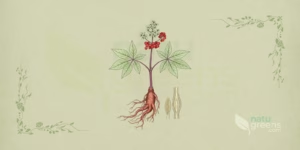
Notoginseng (Panax notoginseng (Burkill) F.H.Chen), also known as sanqi, tianqi or Chinese ginseng, is a perennial plant of the Araliaceae family, valued for centuries by traditional Chinese medicine. Native to the mountainous regions of southwestern China, especially Yunnan, it is now obtained almost exclusively from cultivation, and the root is the most prized part and the one most used as a remedy. Despite the nickname Chinese ginseng, notoginseng is not Korean ginseng (Panax ginseng) or American ginseng (Panax quinquefolius), and its traditional uses are quite different, focused mainly on the blood and circulation.
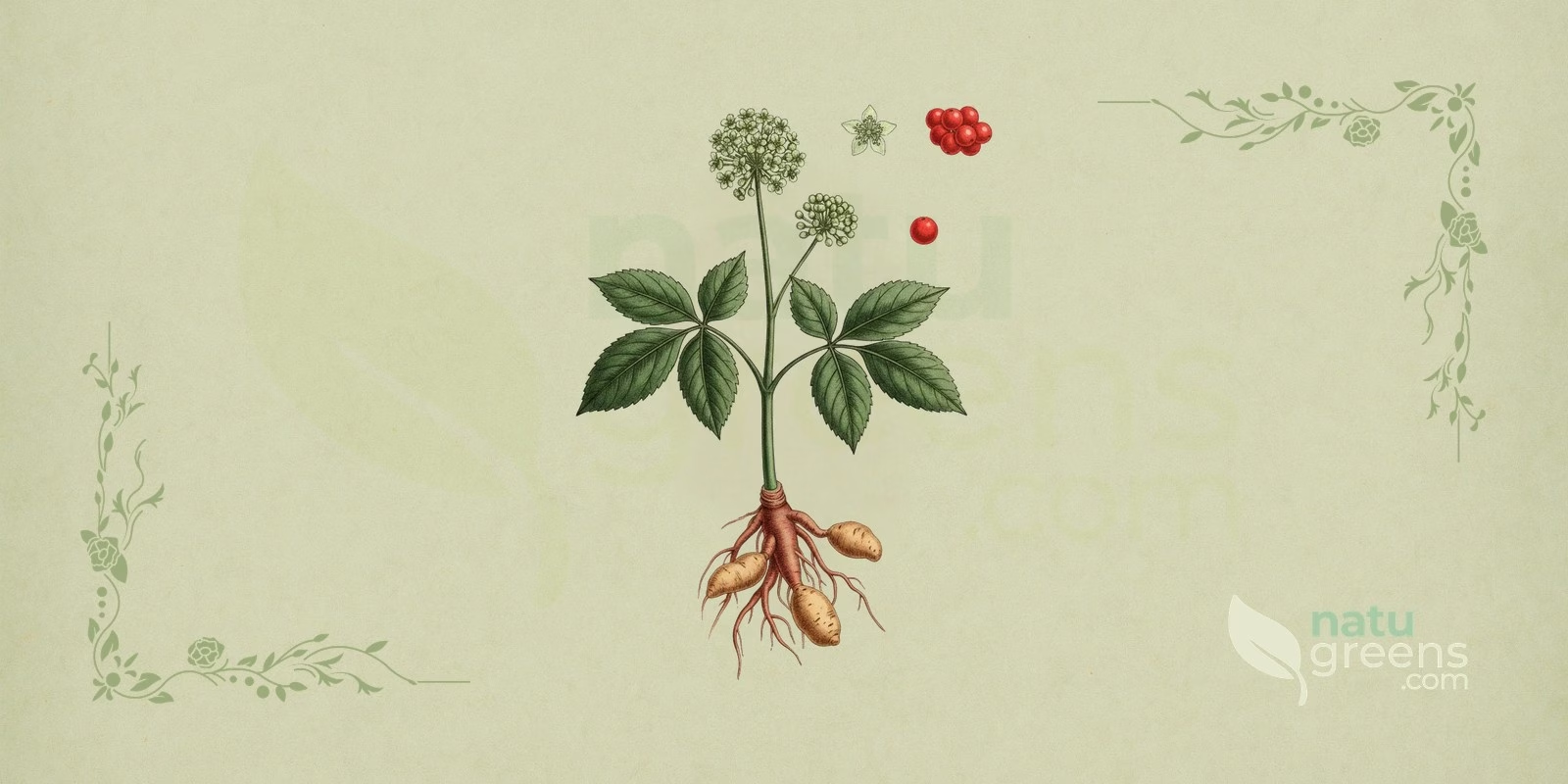
In Eastern herbal tradition, notoginseng holds a prominent place as a hemostatic, used to stop bleeding, and as a remedy for trauma, pain and swelling, and it also appears in formulas for cardiovascular complaints. Modern research is interested above all in the root's saponins, the notoginsenosides and ginsenosides, which in studies have shown antiplatelet action and effects on circulation, while preliminary laboratory studies are investigating antitumor potential, still without clinical proof. These same effects on the blood make the plant a delicate matter for people taking anticoagulants, so knowing its contraindications is an essential part of using it.
Popular and International Names of Notoginseng
- English: Chinese ginseng, mountain plant, notoginseng, sanqi, three-seven root.
- Chinese: san qi, tian qi.
- French: ginseng chinois, notoginseng, plante de montagne, racine de trois-sept, sanqi.
- German: Bergpflanze, Chinesischer Ginseng, Drei-Sieben-Wurzel, Notoginseng, Sanqi.
- Italian: ginseng cinese, notoginseng, pianta di montagna, radice di tre-sette, sanqi.
- Portuguese: ginseng-chinês, notoginseng, planta-da-montanha, raiz-de-três-sete, sanqi, tianqi.
- Spanish: ginseng chino, notoginseng, planta de montaña, raíz de tres-siete, sanqi.
The name Chinese ginseng is also used in the trade for other roots, and the name tu san qi refers to completely different plants of the genus Gynura, which are toxic to the liver. For this reason, the binomial Panax notoginseng is the safest way to identify the product.
Botanical Synonyms of Notoginseng
Panax notoginseng (Burkill) F.H.Chen is the accepted botanical name for the species, originally described by Isaac Henry Burkill as a variety of Aralia quinquefolia and later transferred to the genus Panax. During the 20th century, some authors treated it as a variety of Panax pseudoginseng, which explains the presence of that name in older studies, and these shifts reflect the taxonomic complexity of a genus that includes several species popularly called ginseng.
- Aralia quinquefolia var. notoginseng Burkill
- Panax pseudoginseng var. notoginseng (Burkill) G.Hoo & C.J.Tseng
Botanical Family: Araliaceae
The Araliaceae family, to which notoginseng belongs, comprises about 40 genera and more than 1,300 species of flowering plants, including herbs, shrubs, trees and climbers such as ivy. The family is known for including plants of great medicinal and economic importance, such as the various ginsengs of the genus Panax, and its species tend to accumulate bioactive compounds such as triterpene saponins, which account for much of the pharmacological interest in the group. Umbel inflorescences and small fleshy fruits, such as the red berries of notoginseng, are frequent traits in the Araliaceae.
Parts of Notoginseng Used
- Berries
- Flowers
- Leaves
- Root (main part)
Ethnobotanical and Traditional Uses of Notoginseng
- Recorded in traditional Chinese medicine for cardiovascular disorders.
- Recorded in traditional Chinese medicine for trauma and bruises.
- Traditional hemostatic use, to stop bleeding.
- Traditionally recorded for dissolving clots, described as blood stasis.
- Traditionally recorded for pain relief.
- Traditionally recorded for reducing swelling.
Therapeutic Properties of Notoginseng
- Antiatherosclerotic (effect investigated in animal models, no clinical proof)
- Anti-inflammatory (observed in laboratory and animal studies)
- Antiplatelet (action of the saponins observed in studies, the basis of the bleeding risk)
- Antiproliferative (activity observed in laboratory studies, no clinical proof)
- Cardioprotective (findings in experimental models)
- Hemostatic (traditional Chinese medicine use to stop bleeding)
- Immunomodulatory (preliminary laboratory findings)
- Neuroprotective (saponins studied in ischemic stroke, with still limited evidence)
- Vasodilator (observed in experimental studies)
Detailed Phytochemical Profile of Notoginseng
Notoginseng root is especially rich in dammarane-type triterpene saponins, known collectively as Panax notoginseng saponins, which include notoginsenoside R1, characteristic of the species, and various ginsenosides such as Rb1, Rg1, Rd, Re, Rg2, Rg3, Rh1, Rh2 and Rg5. Processing changes this composition considerably, because steamed root, traditionally used as a tonic, accumulates rare ginsenosides that are almost absent from the raw root, which is used as a hemostatic. Another notable compound is dencichine, a non-protein amino acid to which part of the hemostatic action is attributed, and the profile is completed by polysaccharides, flavonoids, phytosterols, cyclopeptides, fatty acids, volatile oils and aliphatic acetylenic hydrocarbons. These saponins also show antiplatelet action in studies, which explains why the plant calls for caution with anticoagulants.
- Aliphatic acetylenic hydrocarbons
- Amino acids
- Cyclopeptides
- Dencichine
- Fatty acids
- Flavonoids
- Ginsenosides (R1, Rb1, Rd, Re, Rg1, Rg2, Rg3, Rg5, Rh1, Rh2)
- Gypenosides
- Notoginsenosides
- Phytosterols
- Polysaccharides
- Saponins
- Volatile oils
Preparation and Administration Forms of Notoginseng
- Decoction
- Extract
- Root powder
- Tincture
In China, saponin extracts are also used in hospital injectable formulations, for which anaphylactic reactions have been reported. This information is given only as context, and these formulations have nothing to do with home use of the plant.
Synergy with Other Medicinal Plants
Circulatory Combinations with Hawthorn and Garlic
In popular formulas aimed at circulation, notoginseng appears alongside hawthorn (Crataegus monogyna) and garlic (Allium sativum), plants traditionally used for the heart and blood vessels. This pairing is a traditional record, with no study of the combination, and it carries a concrete risk, because garlic also has an antiplatelet effect and hawthorn may potentiate heart and blood pressure medicines, adding to the actions of notoginseng. Anyone with heart disease or taking medicines for the heart, blood pressure or clotting should not use this combination without medical guidance.
External Use with Arnica and Comfrey on Bruises
For trauma and bruises, tradition pairs notoginseng with topical preparations of arnica (Arnica montana) and comfrey (Symphytum officinale), traditionally applied to bruises and swelling. This combination is for external use only on intact skin, because arnica is toxic when taken orally and comfrey contains pyrrolizidine alkaloids that harm the liver, and serious injuries, fractures or extensive bruising call for medical evaluation.
Traditional Formulas with Echinacea and Astragalus
Some traditional formulas combine notoginseng with echinacea (Echinacea purpurea) or astragalus (Astragalus membranaceus), plants traditionally used as immune support. The immunomodulatory effects attributed to these herbs come from preliminary studies, and the combination has not been clinically evaluated, so it should not replace medical care for infections or be used by people taking immunosuppressants without guidance.
Recipes and Usage Protocols of Notoginseng
Root Decoction in the Chinese Tradition
A classic preparation of traditional Chinese medicine, traditionally used to support circulation within formulas prescribed by practitioners.
Preparation: In the traditional method, dried Panax notoginseng root is boiled in water for 20 to 30 minutes, and the liquid is strained and drunk warm. Because the plant interferes with blood clotting and may add to the effects of several medicines, the amount and frequency must be set by a health professional, and the decoction should not be used during pregnancy, by people taking anticoagulants or antiplatelet drugs, or in the two weeks before surgery.
Root Powder in Traditional Hemostatic Use
A traditional Chinese medicine use in which the root powder was applied to small cuts and scrapes to help stop bleeding.
Preparation: The dried root is ground into a fine powder, applied in a small amount to superficial wounds that have already been cleaned. Oral use of the powder, also described in tradition, should only be done with professional guidance and at a dose set by a specialist. Internal bleeding, such as vomiting blood or blood in the stool, heavy bleeding or bleeding that does not stop are medical emergencies and must never be handled at home.
Root Tincture in the Traditional Record for Pain
An alcoholic preparation from the Chinese tradition, traditionally used for pain and swelling after blows.
Preparation: The root is macerated in alcohol for a few weeks and then filtered. For external use, the tincture is applied diluted to the intact skin of the painful area; for internal use, the concentration and dose must be determined by a qualified herbalist, with the same restrictions as the decoction.
The preparations above follow traditional records and do not replace professional guidance. Before any internal use, check the contraindications and interactions described in this article.
Therapies Associated with Notoginseng
Acupuncture
In traditional Chinese medicine, notoginseng is often prescribed by practitioners who also perform acupuncture, in combined approaches to pain, inflammation and circulatory complaints. According to this tradition, the two practices complement each other by harmonizing the body's energy, but no studies have evaluated the combination, and anyone having acupuncture while using the plant should tell the practitioner, since the effect on clotting may encourage minor bleeding at needle points.
Chinese Dietary Therapy
In Chinese dietary therapy, steamed root is considered a food that nourishes the blood and Qi, the vital energy, and it is added to soups and broths traditionally used during convalescence. This is a concept of traditional medicine with no scientifically proven equivalent, and the same restrictions regarding pregnancy, anticoagulants and surgery apply to regular culinary consumption.
Western Herbal Medicine
In Western herbal medicine, notoginseng is studied mainly for its actions on the cardiovascular system and for its saponins, evaluated in Chinese clinical trials in ischemic stroke and other conditions, with results that still need confirmation. Standardized extracts are used in research to ensure a constant saponin content, but use without medical supervision is not recommended, mainly because of interactions with medicines that affect the blood.
Contraindications and Side Effects of Notoginseng
Interaction with Anticoagulants and Antiplatelet Drugs
Warning: notoginseng has a real, documented interaction with anticoagulants and antiplatelet drugs, such as warfarin, aspirin, clopidogrel and direct oral anticoagulants (DOACs), with a risk of bleeding. People taking any of these medicines should not take the plant without medical guidance, and use should be stopped at least 2 weeks before any surgery, including dental procedures.
This warning may seem to contradict the plant's hemostatic reputation, but both effects are documented. Traditional use is hemostatic, that is, aimed at stopping bleeding, while the saponins, the notoginsenosides, have shown antiplatelet action in studies, and the final effect in the body depends on the preparation, the dose and the individual, which makes it impossible to predict the outcome safely in someone already taking medicines that affect clotting.
Plant Identity
Warning: never confuse notoginseng with tu san qi (Gynura japonica or Gynura segetum), an herb with a similar common name that contains pyrrolizidine alkaloids and causes hepatic sinusoidal obstruction syndrome, serious liver damage already documented in several cases. Buy only material correctly identified as Panax notoginseng, from a reliable supplier. Notoginseng should also not be confused with Panax ginseng or Panax quinquefolius, species with different uses and precautions.
Pregnancy, Breastfeeding and Other Contraindications
- Pregnancy: contraindicated, both by the tradition of Chinese medicine and because of the lack of modern safety data; some components caused developmental changes in animals.
- Breastfeeding and Children: use should be avoided due to the lack of safety data.
- Blood Sugar-Lowering Drugs: may have an additive effect with diabetes medicines, with a risk of hypoglycemia.
- Antihypertensives: may have an additive effect with blood pressure medicines, with a risk of low blood pressure.
- Hormone-Sensitive Conditions: because of a reported possible estrogenic effect, people with breast, uterine or ovarian cancer, endometriosis or fibroids should avoid the plant.
- Other Medicines: there are reports of possible interference with medicines metabolized by the liver enzyme CYP1A2, which may alter their effectiveness.
Side Effects
- Common: dry mouth, skin flushing, insomnia, nausea and skin rashes, usually mild and temporary.
- Rare: excessive drowsiness at high doses, especially in combination with sedatives or alcohol, and, with hospital injectable formulations, reports of anaphylactic reactions.
Historical Notes and Interesting Facts about Notoginseng
A Root Worth Its Weight in Gold
In China, notoginseng is called by some a treasure for preserving life and has been compared to gold for its value, a sign of the reputation it has built over centuries. In the past, wild roots were more highly prized than cultivated ones because they were rare and considered more potent, but today the species is practically unknown in the wild and almost all production comes from plantations in Yunnan province.
The Three-Seven Ginseng
One of notoginseng's common names, sanqi, means three-seven, and tradition offers two explanations for it. According to the first, the plant would have three leaves with seven leaflets each, although in practice the number of leaflets varies; according to the other, the root was ideally harvested between the third and seventh year of cultivation, when it was believed to reach its best quality. Either way, the name shows how botany and harvesting practices blend in popular culture.
A Pillar of Chinese Medicine
Notoginseng is one of the pillars of traditional Chinese medicine and is included in several classic formulas focused on the blood, used by tradition for blood stasis and hemorrhages. The root powder is one of the components associated with well-known traditional hemostatic formulas in China, and the plant remains the subject of numerous studies on its mechanisms of action, which science continues to investigate.
Frequently Asked Questions about Notoginseng
What Is Notoginseng?
Notoginseng (Panax notoginseng), also known as sanqi or Chinese ginseng, is a perennial plant of the Araliaceae family, native to southwestern China. Its root is widely used in traditional Chinese medicine, mainly as a hemostatic and for circulatory complaints, but the cardioprotective and anti-inflammatory effects observed in studies are still largely preliminary.
What Are the Main Uses of Notoginseng?
In Chinese tradition, the root is used to stop bleeding, to relieve pain and swelling from trauma and for cardiovascular complaints. Preliminary laboratory studies are investigating antitumor and immunomodulatory potential, without clinical proof, and medicinal use should always be guided by a health professional.
How Should I Use Notoginseng?
The root is traditionally used as a decoction, powder or tincture, but the dose and form of use depend on professional assessment. Before starting, it is essential to check for use of anticoagulants, antiplatelet drugs, diabetes and blood pressure medicines, as well as any scheduled surgery.
Are There Contraindications to Using Notoginseng?
Yes. It is contraindicated during pregnancy, should be avoided while breastfeeding and has a documented interaction with anticoagulants and antiplatelet drugs, such as warfarin, aspirin, clopidogrel and DOACs, with a risk of bleeding. Use should be stopped at least 2 weeks before surgery, and there is an additive effect with blood sugar-lowering drugs and antihypertensives.
What Is the Difference between Notoginseng, Panax ginseng and Panax quinquefolius?
All three species belong to the genus Panax, but they are distinct plants, with different saponin profiles and traditional uses. Notoginseng is known mainly for its hemostatic and circulatory use, while Korean ginseng (Panax ginseng) and American ginseng (Panax quinquefolius) are associated in tradition with tonic and adaptogenic effects, so information on one species should not be applied to the others.
Is Notoginseng the Same as Tu San Qi?
No. Tu san qi refers to plants of the genus Gynura, such as Gynura japonica and Gynura segetum, which contain pyrrolizidine alkaloids and cause serious liver damage. Buy only material correctly identified as Panax notoginseng.
Notice: this content is for informational purposes and does not replace professional medical advice. Consult a physician or herbal practitioner before using medicinal plants, especially during pregnancy, breastfeeding, or alongside medication.
How to cite this article
NATUGREENS. Notoginseng (Panax notoginseng): Properties and Benefits. Natugreens, 10 Nov. 2026. Disponível em: https://natugreens.com/notoginseng-panax-notoginseng/. Accessed: Nov. 10, 2026.
Natugreens. (2026). Notoginseng (Panax notoginseng): Properties and Benefits. Natugreens. https://natugreens.com/notoginseng-panax-notoginseng/
References and Scientific Studies
- PMC2021 Tan MM, et al. Role of Bioactive Constituents of Panax notoginseng in the Modulation of Tumorigenesis: A Potential Review for the Treatment of Cancer. Front Pharmacol. 2021.
- PMC2016 Wang T, et al. Traditional uses, botany, phytochemistry, pharmacology and toxicology of Panax notoginseng (Burk.) F.H. Chen: A review. J Ethnopharmacol. 2016.
- PMC2021 Wang W, et al. Combination of Panax notoginseng saponins and aspirin potentiates platelet inhibition with alleviated gastric injury via modulating arachidonic acid metabolism. Biomed Pharmacother. 2021.
- PMC2023 Wu L, et al. Efficacy and Safety of Panax notoginseng Saponins in the Treatment of Adults With Ischemic Stroke in China: A Randomized Clinical Trial. JAMA Netw Open. 2023.
- PMC2026 Zeng X, et al. Processing-driven chemical transformations and pharmacological shifts in Panax notoginseng. J Ethnopharmacol. 2026.
Take your time and tell us everything you think, details included. Every response is read by someone on our editorial team and goes into the article's revision. An honest critique helps us more than a polite compliment.
Take your time and tell us everything you think, details included. Every response is read by someone on our editorial team and goes into the article's revision. An honest critique helps us more than a polite compliment.
You May Also Like