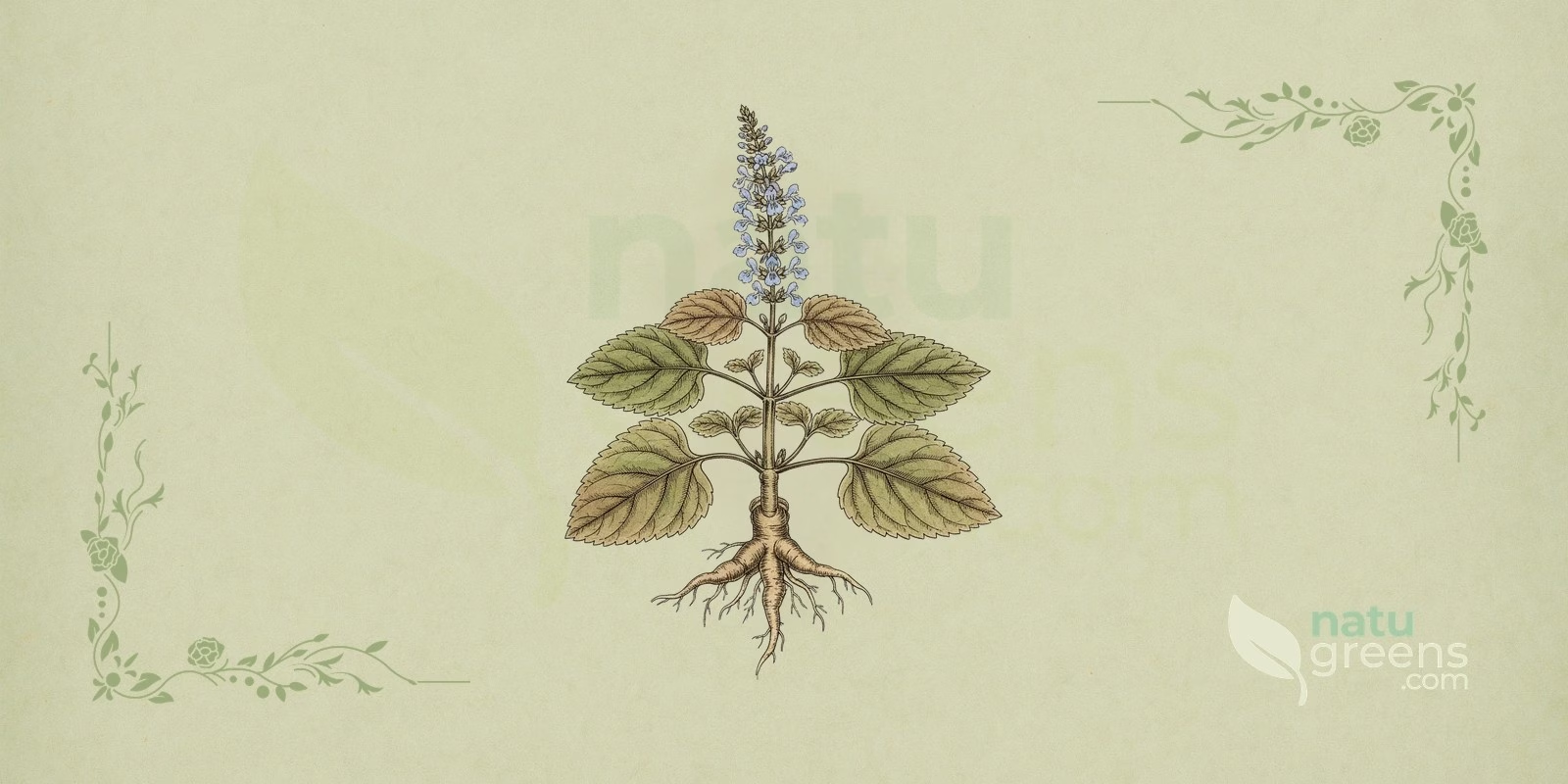
Indian coleus (Coleus barbatus (Andrews) Benth. ex G.Don), known in Brazil as boldo-brasileiro and also called falso-boldo, boldo-da-terra or boldo-de-jardim, is a perennial plant of the Lamiaceae family. Native to tropical regions of Africa and Asia, the species is widely cultivated in Brazil and in other parts of the world for its medicinal use. It is a semi-succulent shrub that can grow up to 1.5 meters tall, with velvety leaves and bluish-purple flowers, and in Brazil it is often confused with Chilean boldo (Peumus boldus), with which it shares the popular name boldo, although the two plants have different properties and chemical compounds.
In traditional medicine, particularly in Ayurveda, the plant has been used for centuries for digestive disorders, liver problems, hypertension, asthma and heart disease. Its best-known active substance is forskolin, a diterpene isolated from the roots to which much of the species’ pharmacological activity is attributed. Modern scientific research has been examining forskolin and other compounds of Indian coleus to see which traditional uses are supported, but most of the results are still preliminary and come from laboratory studies or from studies with few participants.
Popular and International Names of Indian Coleus
- English: Indian coleus, woolly plectranthus.
- Spanish: Boldo brasileño, falso boldo.
- Portuguese: Boldo-brasileiro, boldo-da-terra, boldo-de-jardim, falso-boldo, tapete-de-oxalá.
- French: Doliprane.
- Italian: Coleus.
- German: Harfenstrauch.
In India, the Ayurvedic tradition knows the plant as Makandi, and in the international scientific literature it often appears as Indian coleus or under the older name Coleus forskohlii, a detail worth keeping in mind when searching for studies on the species.
Botanical Synonyms of Coleus barbatus
- Coleus forskohlii (Willd.) Briq.
- Plectranthus barbatus Andrews
Plectranthus barbatus Andrews is the most common botanical synonym of Coleus barbatus and corresponds to the original name of the species, under which it was described and studied for many decades. Coleus forskohlii (Willd.) Briq., the name that appears in a large share of the studies on forskolin, is also treated as a synonym, although some botanists consider this placement incorrect.
Botanical Family: Lamiaceae
The Lamiaceae family, also known as the mint family, is a large group of flowering plants comprising around 236 genera and more than 7,000 species. Its members are characterized by square stems, opposite leaves and two-lipped corollas, and many of them are aromatic and rich in essential oils, which explains their use as culinary, ornamental and medicinal herbs. Among the best-known examples in the family are basil, mint, oregano, rosemary and sage.
Parts of Indian Coleus Used
For home use, the focus is on the leaves, which are prepared as a tea, while the roots supply the forskolin found in the standardized extracts sold as supplements.
- Leaves
- Roots
Ethnobotanical and Traditional Uses
The uses listed below come from folk medicine and Ayurveda and describe how the plant is traditionally employed, which does not make them medical indications, especially in the case of heart and blood pressure complaints, which require professional supervision.
- Asthma and respiratory problems
- Eczema and other skin conditions
- Headaches
- Heart problems
- Heartburn and indigestion
- High blood pressure
- Insomnia
- Relief of digestive and liver disorders
Therapeutic Properties of Indian Coleus
The properties below are attributed mainly to forskolin and are based on traditional use, on pharmacological studies carried out largely in the laboratory or in animals and on a few small clinical trials, so none of them replaces medical treatment.
- Antihypertensive (lowering of blood pressure described in traditional use and in experimental studies with forskolin, without sufficient clinical evidence)
- Bronchodilator (widening of the bronchi observed in preliminary studies)
- Cardiotonic (regarded as a heart tonic in Ayurveda; the action of forskolin on heart muscle has been investigated in the laboratory)
- Digestive (aid to digestion according to the traditional record)
- Hepatoprotective (liver protection suggested by traditional use and by preliminary studies)
- Lipolytic (stimulation of fat breakdown observed in the laboratory; small clinical trials had modest and inconsistent results)
- Vasodilator (widening of the blood vessels, an effect linked to the drop in blood pressure and to the precautions described under contraindications)
Clinical trials with root extract standardized for forskolin were conducted in small groups of overweight or obese people, in some cases combined with a low-calorie diet. They showed modest changes in body composition and in some metabolic markers without consistently demonstrating weight loss, which leaves its use for slimming in the realm of scientific research.
Detailed Phytochemical Profile of Indian Coleus
- Diterpenoids
- Essential oils
- Flavonoids (glucuronides)
- Forskolin (labdane diterpene)
- Rosmarinic acid
Forskolin, a labdane-type diterpene concentrated in the roots, is the compound behind most of the research on the species. In the leaf tea, the literature mainly points to rosmarinic acid and to flavonoids in the form of glucuronides, a difference in composition that helps explain why the home-made tea and the standardized extracts should not be treated as equivalent.
Preparation and Administration Forms of Indian Coleus
- Dry extract standardized for forskolin
- Infusion (tea) of the leaves
- Tincture
Leaf tea is the traditional home preparation in Brazil, whereas the standardized dry extract, obtained from the roots, is the form used in studies on forskolin and should only be taken under the guidance of a health professional, as should the tincture.
Synergy with Other Medicinal Plants
Weight Management
In formulas aimed at weight management, Indian coleus appears together with green tea (Camellia sinensis) and yerba mate (Ilex paraguariensis). The combination rests on the hypothesis that forskolin may act in concert with the catechins in green tea and the caffeine in yerba mate on thermogenesis and lipolysis, a mechanism that has only been investigated in a preliminary way. Because both plants contain caffeine, the pairing calls for caution in people sensitive to stimulants and in those already taking medication for blood pressure or the heart.
Cardiovascular Health
In the traditional record, Indian coleus is mentioned alongside hawthorn (Crataegus monogyna) and garlic (Allium sativum) in preparations intended for the heart. Forskolin is credited with an action on blood pressure and heart function, hawthorn with its traditional use as a tonic for the heart muscle and garlic with its traditional use in cholesterol control, effects that have not been clinically confirmed for this combination. Because their actions on blood pressure and on blood clotting add up, these plants should not be combined without medical supervision by people taking antihypertensives, anticoagulants, antiplatelet drugs or heart medication, and the combination never replaces treatment prescribed by a cardiologist.
Recipes and Usage Protocols of Indian Coleus
Forskolin-Standardized Extract
Dry extract standardized for forskolin is the form used in supplements and in clinical studies on weight management, and the appropriate amount varies with the forskolin content of each product, which is why no dose is given here. Consult a health professional before use, especially if you take medication for blood pressure or the heart, or anticoagulants.
Studies with the extract had modest results, and use at high doses can cause an excessive drop in blood pressure, as described in the contraindications section.
Leaf Infusion for Digestion
This home infusion is traditionally used to ease indigestion and stomach discomfort after meals, a common practice in Brazilian folk medicine.
Ingredients: 1 to 2 fresh Indian coleus leaves and 200 ml of boiling water.
Preparation: Crush the leaves and place them in a cup, add the boiling water, cover and let steep for 5 to 10 minutes, then strain. Tradition recommends drinking one cup before or after meals, and the infusion should not be used by pregnant or breastfeeding women or by children.
The preparations above follow traditional records and do not replace professional guidance. Before any internal use, check the contraindications and interactions described in this article.
Associated Therapies
Herbal Medicine
In herbal medicine, Indian coleus appears mainly as extracts standardized to contain a known concentration of forskolin, which have been studied as adjuncts in obesity, metabolic syndrome, hypertension and asthma, with results that are still preliminary. They should be prescribed by a qualified health professional, who will assess the medications in use and the conditions described under contraindications.
Ayurvedic Medicine
In Ayurvedic medicine, the plant, known as “Makandi”, has been used for centuries for heart problems, respiratory disorders, abdominal pain and insomnia. The tradition regards it as a heart tonic and a general rejuvenator, concepts specific to that medical system that do not amount to a proven clinical indication.
Contraindications and Side Effects of Indian Coleus
General Contraindications
Indian coleus, which much of the literature refers to as Coleus forskohlii, contains forskolin, which may lower intraocular pressure and affect platelet aggregation. For this reason, its use is contraindicated during pregnancy and breastfeeding, as well as in children, and people with glaucoma should consult an ophthalmologist before using the plant or its extracts.
Caution is needed with anticoagulants and antiplatelet drugs, as well as with antihypertensives and in cases of hypotension, because of the vasodilating effect of forskolin. People with low blood pressure or gastric ulcers, or who take medication for heart disease, should avoid the plant or seek medical advice before using any preparation.
Common Side Effects
The most frequently reported side effects include diarrhea, constipation, vomiting and throat irritation, the latter when the plant is inhaled. At high doses, the plant can cause an excessive drop in blood pressure, which is why use should be stopped if dizziness or weakness occurs and the case referred to a health professional.
Drug Interactions
Indian coleus may interact with medication for high blood pressure, anticoagulants, antiplatelet drugs and heart medication, enhancing the drop in blood pressure or the risk of bleeding, and it may also alter the way the liver metabolizes some drugs. Anyone on long-term medication should talk to their doctor before taking the tea or the extract.
Historical Notes and Interesting Facts
The name “doliprane”, given to the plant in the French Caribbean, refers to a popular brand of paracetamol and comes from the use of the leaves as a painkiller in local folk medicine. The name tapete-de-oxalá (literally Oxalá’s carpet), used in Brazil, is linked to the velvety texture of the leaves and to the use of the plant in religious rituals.
The epithet forskohlii, from the former name Coleus forskohlii, honors the naturalist Peter Forsskål, a student of Linnaeus who explored Egypt and Yemen in the 18th century. It was under this name that forskolin was isolated from the roots in the 1970s, during a screening of Indian medicinal plants that turned the species into a frequent subject of pharmacological research.
Frequently Asked Questions about Indian Coleus
Does Indian Coleus Tea Help You Lose Weight?
There is no evidence that Indian coleus tea leads to weight loss. Forskolin, the compound linked to the studies on weight management, is concentrated in the roots and used in standardized extracts, whereas the home-made tea is prepared from the leaves, and even the clinical trials with the extract, conducted with few participants, had modest and inconsistent results. Any weight-loss strategy depends on a balanced diet, physical activity and professional follow-up.
How Does Indian Coleus Differ from Chilean Boldo?
Despite sharing a similar popular name in Brazil, they are plants from different botanical families, since Indian coleus (Coleus barbatus) belongs to the Lamiaceae family and Chilean boldo (Peumus boldus) to the Monimiaceae family. Both are used traditionally for digestive complaints, but they have different active compounds and mechanisms of action, so one cannot replace the other.
Are Indian Coleus and Brazilian Boldo the Same Plant?
In current botanical classification, the name Coleus forskohlii, under which the forskolin-rich Indian plant appears in many studies, is treated as a synonym of Coleus barbatus, the species known in Brazil as boldo-brasileiro. Some botanists, however, consider this equivalence incorrect, and studies carried out with root extracts of Indian coleus do not apply directly to tea made from the leaves.
Can Pregnant and Breastfeeding Women Use Indian Coleus?
No, the use of Indian coleus is contraindicated during pregnancy and breastfeeding, and it is not suitable for children either, which applies both to the leaf tea and to extracts standardized for forskolin. If in doubt, the advice is to talk to the doctor who is following the pregnancy or the breastfeeding period.
Can People with Glaucoma Use Indian Coleus?
The forskolin in the plant may lower intraocular pressure, so people with glaucoma should consult an ophthalmologist before using Indian coleus in any form, whether as leaf tea or as standardized extract. It is up to the specialist to assess whether its use is compatible with the ongoing treatment.
Does Indian Coleus Interact with Medications?
Yes, Indian coleus may interact with antihypertensives, anticoagulants, antiplatelet drugs and heart medication, because forskolin has a vasodilating effect and may affect platelet aggregation, in addition to altering the way the liver metabolizes some drugs. People with low blood pressure or on long-term medication should talk to their doctor before taking the tea or the extract.
Notice: this content is for informational purposes and does not replace professional medical advice. Consult a physician or herbal practitioner before using medicinal plants, especially during pregnancy, breastfeeding, or alongside medication.
References and Scientific Studies
- PMC2010 Alasbahi RH, Melzig MF. Plectranthus barbatus: a review of phytochemistry, ethnobotanical uses and pharmacology – Part 1. Planta Med. 2010.
- PMC2010 Alasbahi RH, Melzig MF. Plectranthus barbatus: a review of phytochemistry, ethnobotanical uses and pharmacology – part 2. Planta Med. 2010.
- PMC2005 Godard MP, et al. Body composition and hormonal adaptations associated with forskolin consumption in overweight and obese men. Obes Res. 2005.
- PMC2015 Loftus HL, et al. Coleus forskohlii Extract Supplementation in Conjunction with a Hypocaloric Diet Reduces the Risk Factors of Metabolic Syndrome in Overweight and Obese Subjects: A Randomized Controlled Trial. Nutrients. 2015.
- PMC2006 Lukhoba CW, et al. Plectranthus: a review of ethnobotanical uses. J Ethnopharmacol. 2006.